ArchivesCurtin Archives2026-06-10T00:08:19Z/archives/feed/atom/WordPressElizabeth McKenzie<![CDATA[Under the Sea]]>/archives/?p=25282026-06-10T00:08:19Z2026-06-10T00:07:57ZThis story is a look back to 1981 and 1982 when staff from Civil Engineering, Electrical and Electronic Engineering, Computing and Quantitative Studies, Geology and Geophysics and the Media Development Unit worked with Woodside Offshore Petroleum and other consultants and groups on the North Rankin Project.
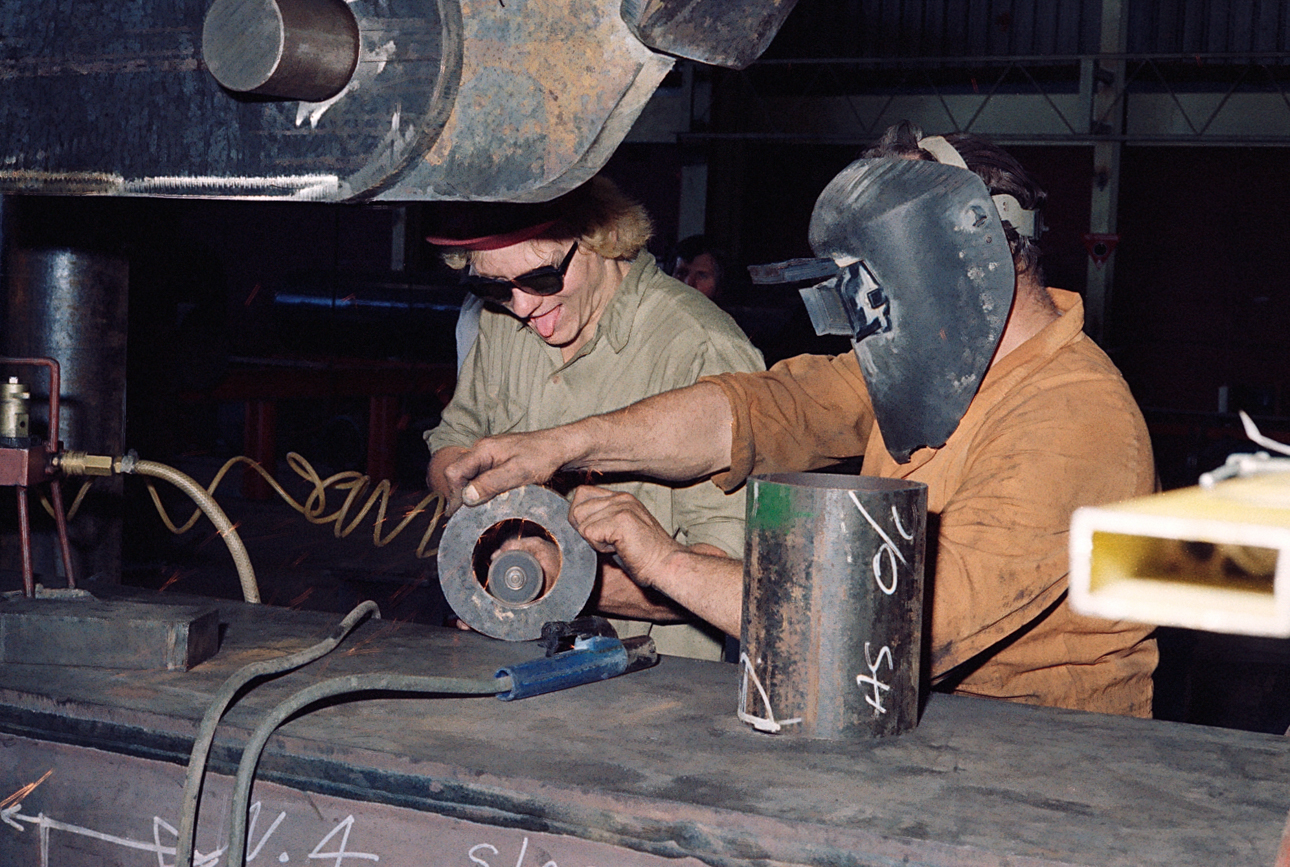
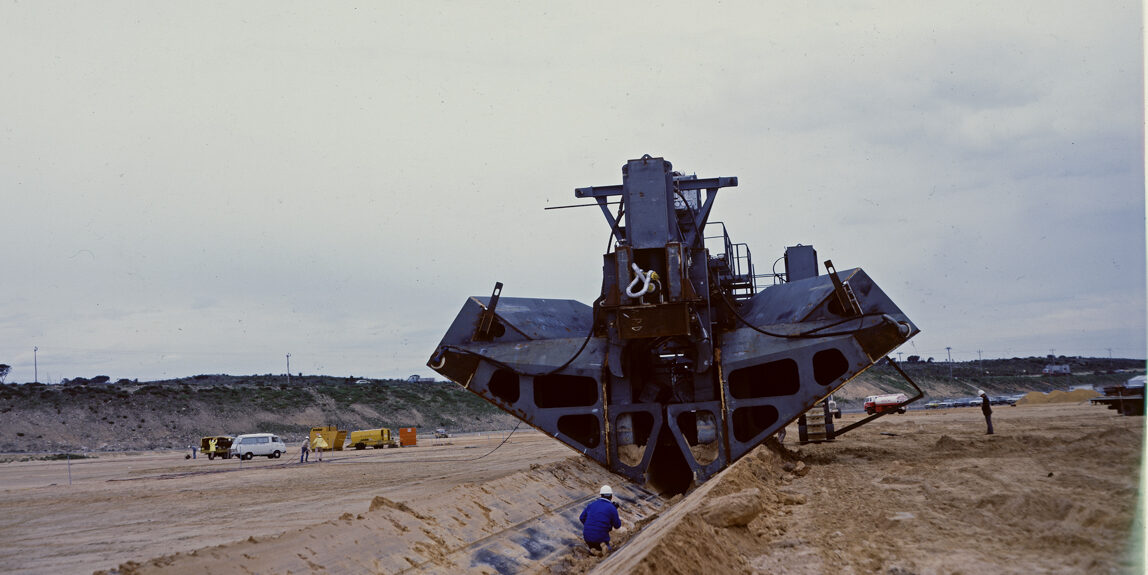
Our staff were involved in the design and fabrication of a full-scale prototype of an underwater plough, built after the testing of 1:25, 1:20, 1:5 1:3 scale models, which we also worked on. The prototype weighed 200 tonnes and measured 24 metres.
The results informed construction of the underwater plough used to lay a pipeline from a natural gas well 134 kilometres offshore from Dampier.
A secondary project was the design and building of underwater electronic data logging equipment for the offshore testing of the 1:3 scale model.
Eventually, gas from the well would be piped along the coast from Dampier to Bunbury (about 1500 kilometres). The pipeline became known as the Dampier to Bunbury Natural Gas Pipeline (DBNGP), and later as the Dampier Bunbury Pipeline (DBP).
The State Energy Commission of Western Australia (SECWA, now Synergy) was responsible for the overall project, which had many elements to it. A reliable gas supply is now simply part of our lives, but back then this was a major project for the State.
Our involvement in this work came about through a WAIT-Aid project. Established in 1971, WAIT-Aid sought to make “the wide experience available at the Institute available to industry, commerce and the community on a commercial basis�.
Another goal was to help “staff to keep in touch with the needs of business, industry and the community so that they could more effectively prepare students for their future work roles”.
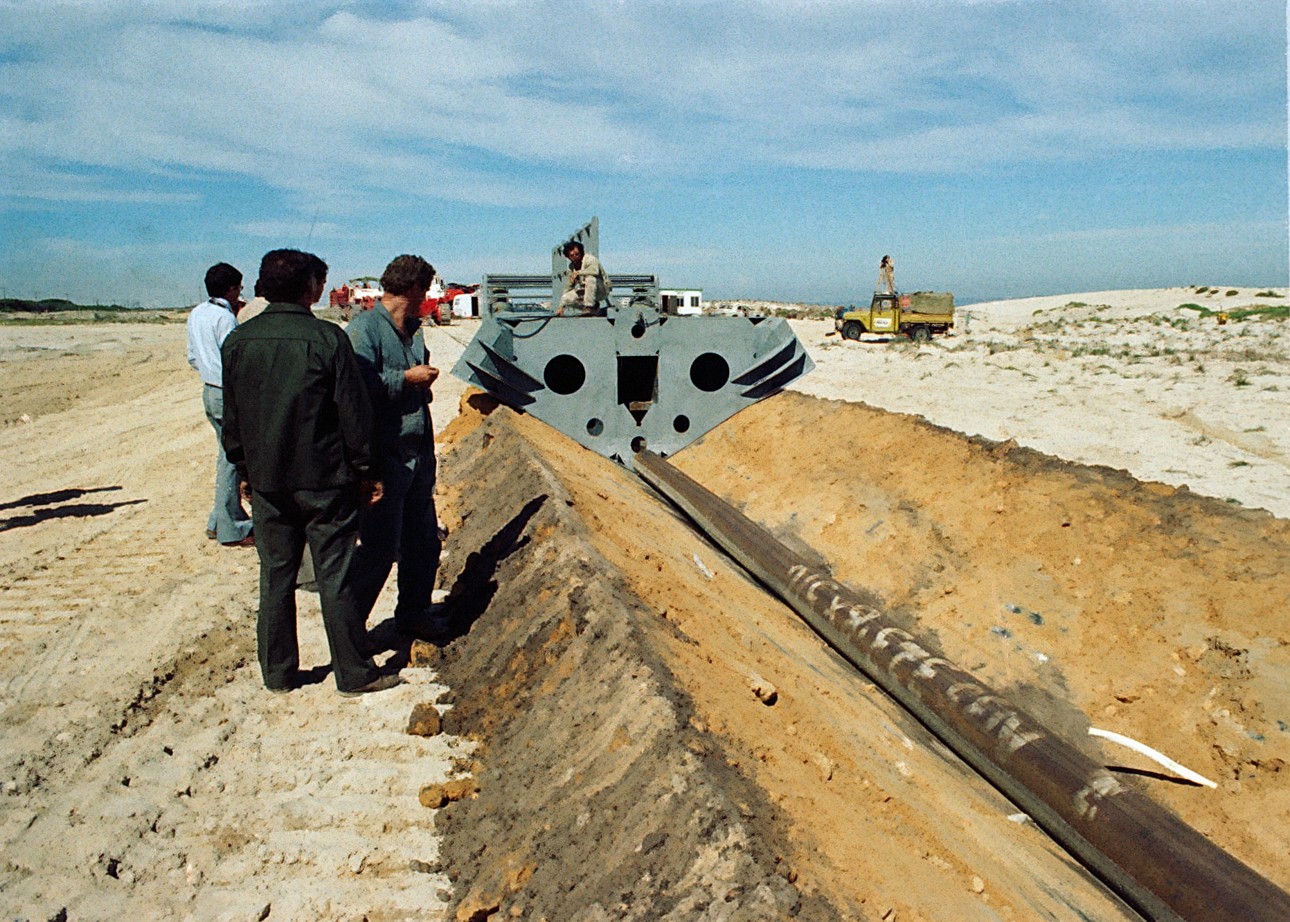
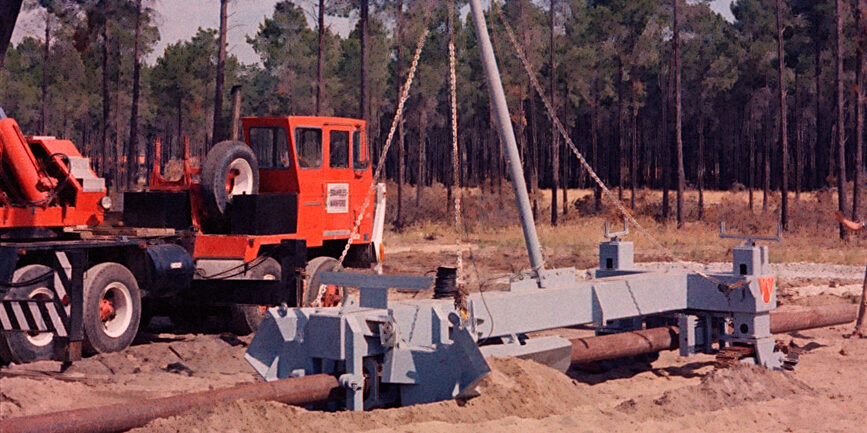
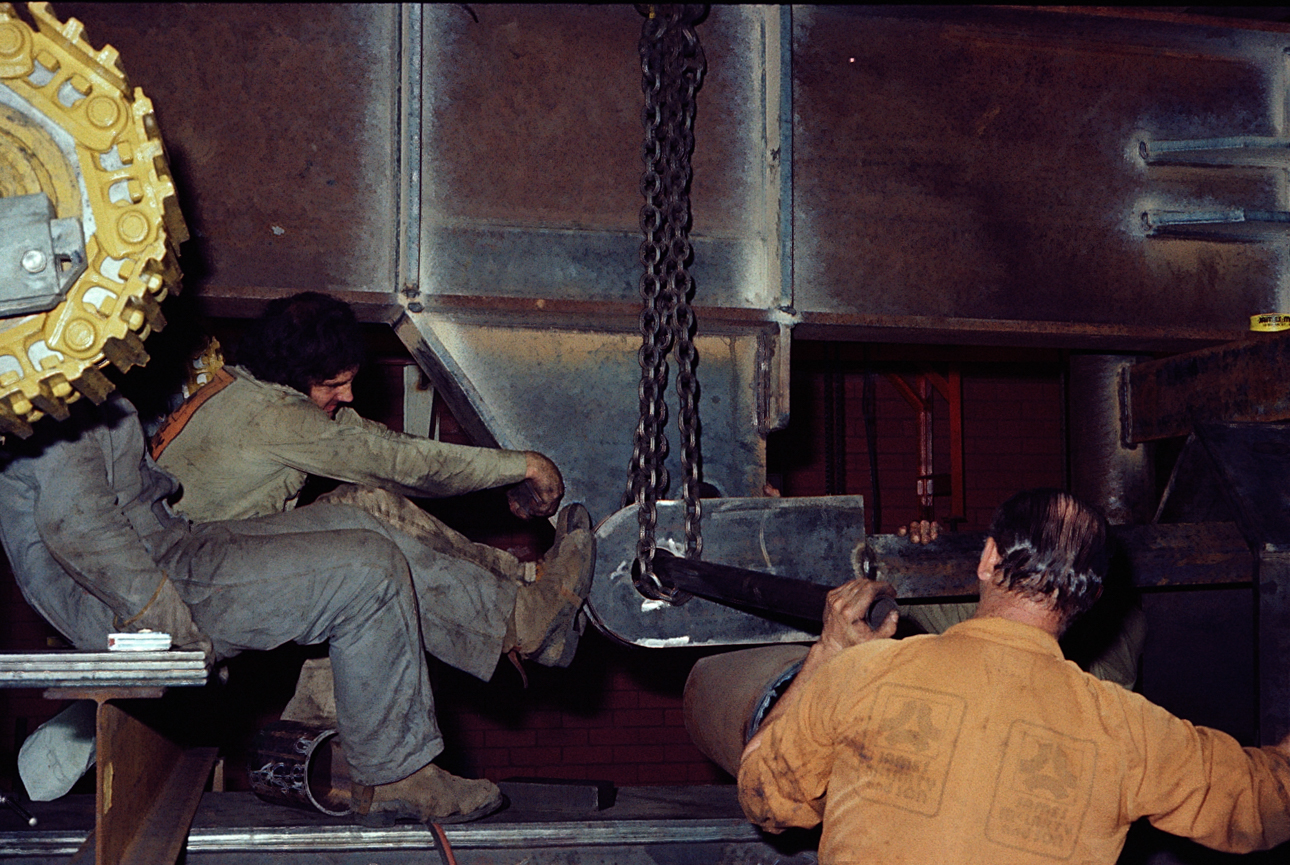
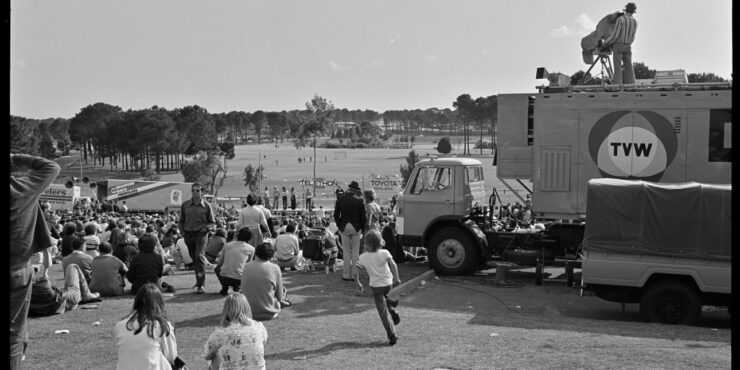
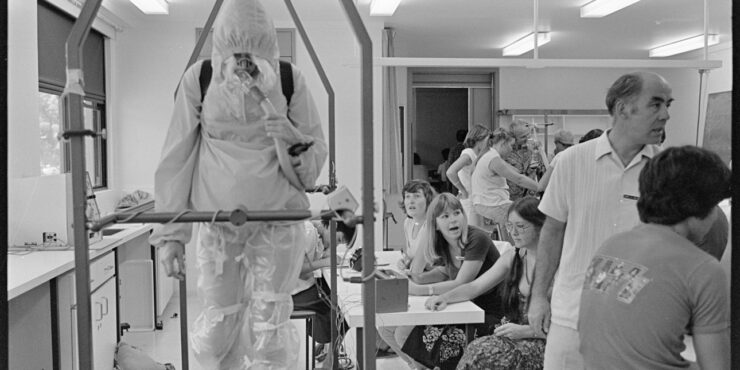
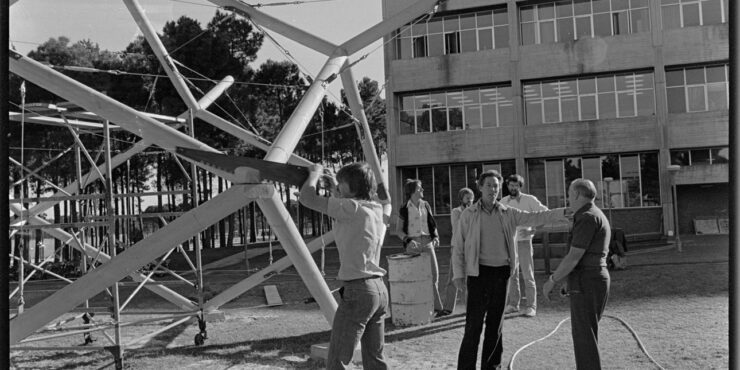
These images show the 1:3 model in test, the prototype full scale model, and some of the construction work.
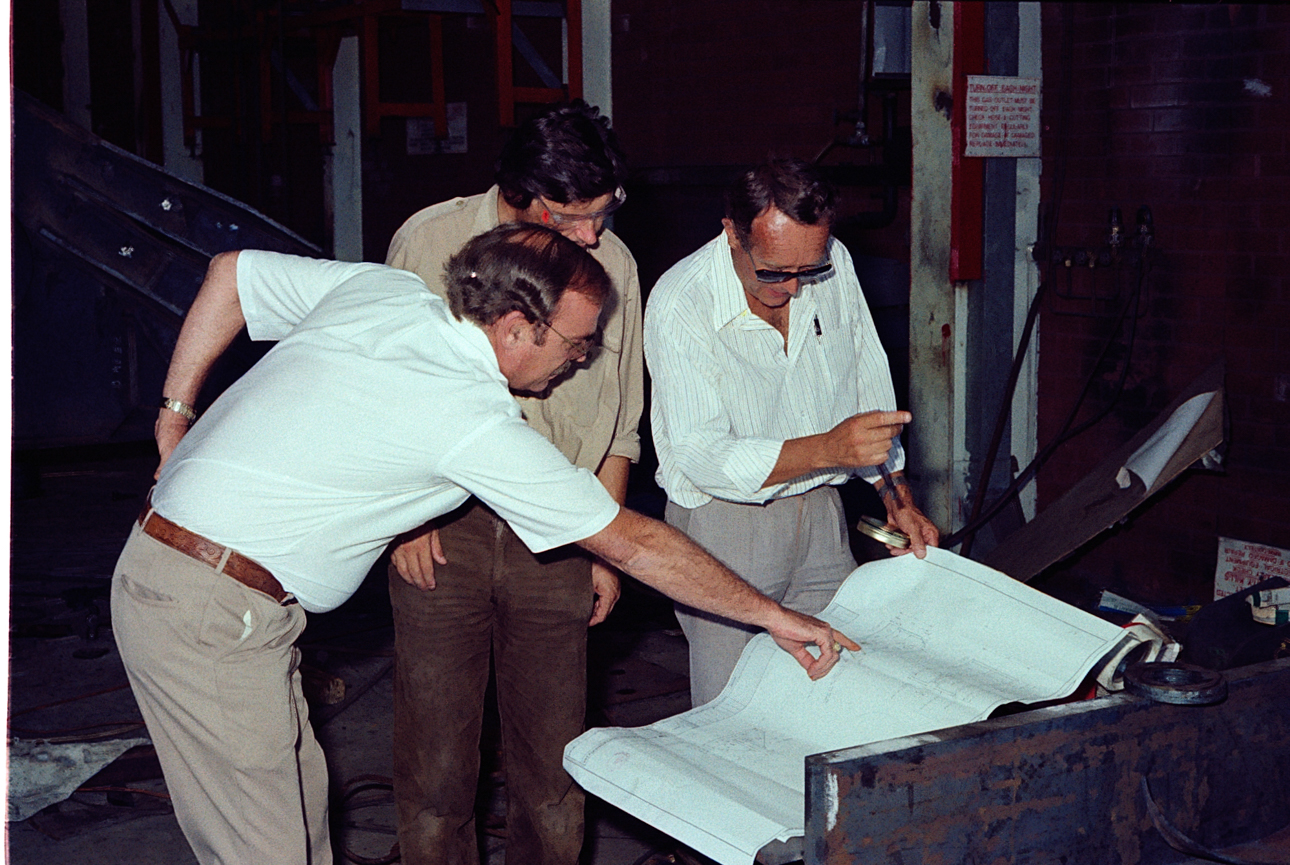
WAIT-AID and Woodside Petroleum reviewing drawings of the model, 30 March 1981Tests of Scale Model Underwater Plough. WAIT-AID Woodside Petroleum. Second impact tip test. Plough tip. 24 November 1981. Laying tracks to test the 1:3 model. This appears to be on the WAIT campus in Bentley, Perth.Working on one of the models, possibly the 1:3, WAIT campus, Bentley 1981Welding one of the models, possibly the 1:3, WAIT campus, Bentley 1981The full-scale prototype
]]>0Elizabeth McKenzie<![CDATA[Flashback to 1976]]>/archives/?p=24502026-01-20T04:57:27Z2026-01-14T08:26:34ZAn enduring Curtin characteristic is to learn by doing, an attribute which had its origins in our early WAIT days and in our days as technical colleges throughout the state. We combined the study of theory with practical learning and skill development to produce a modern, technological workforce for the 1970s.
Throughout this decade, Curtin (then WAIT) continued to grow. More courses were offered, research projects increased and we worked more and more with the community and industry. By 1976 our student numbers had increased to 11, 316 supported by 1487 staff. That year 1388 students graduated. The profile of the student population changed too. There were more international students on campus and more female enrolments than ever before.
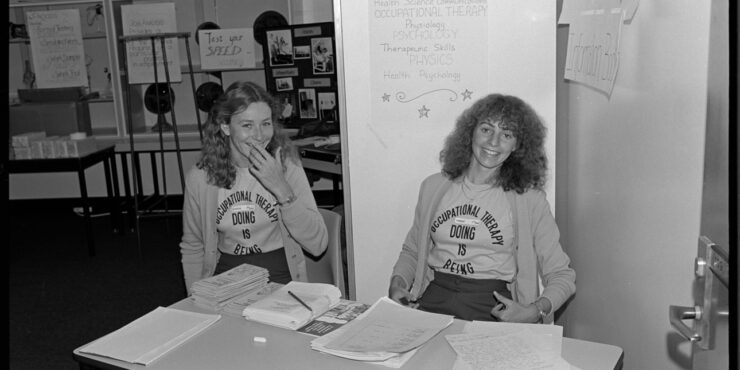
Occupation therapy students, 1970s.
New technology
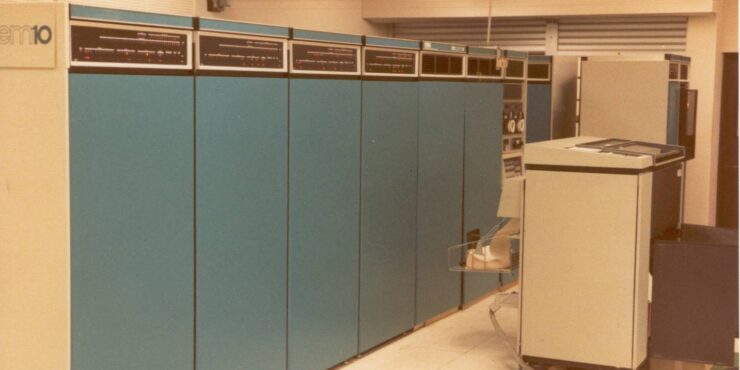
In 1976, a DEC system-10 computer was purchased by WAIT for $720 000. Described as the largest and most modern of its kind in Australia, the DEC system -10 linked up around 200 users/people on and off the Bentley campus.
By the end of the year there were 218 computer terminals on campus, a big increase from 50 terminals the year before, as staff and students seized this new capability. Practical administrative improvements were made possible: WAIT’s payroll system, the Equipment List System and the Computer Costs System all were connected to its network.
DEC10 computer system
Radio Station 6NR
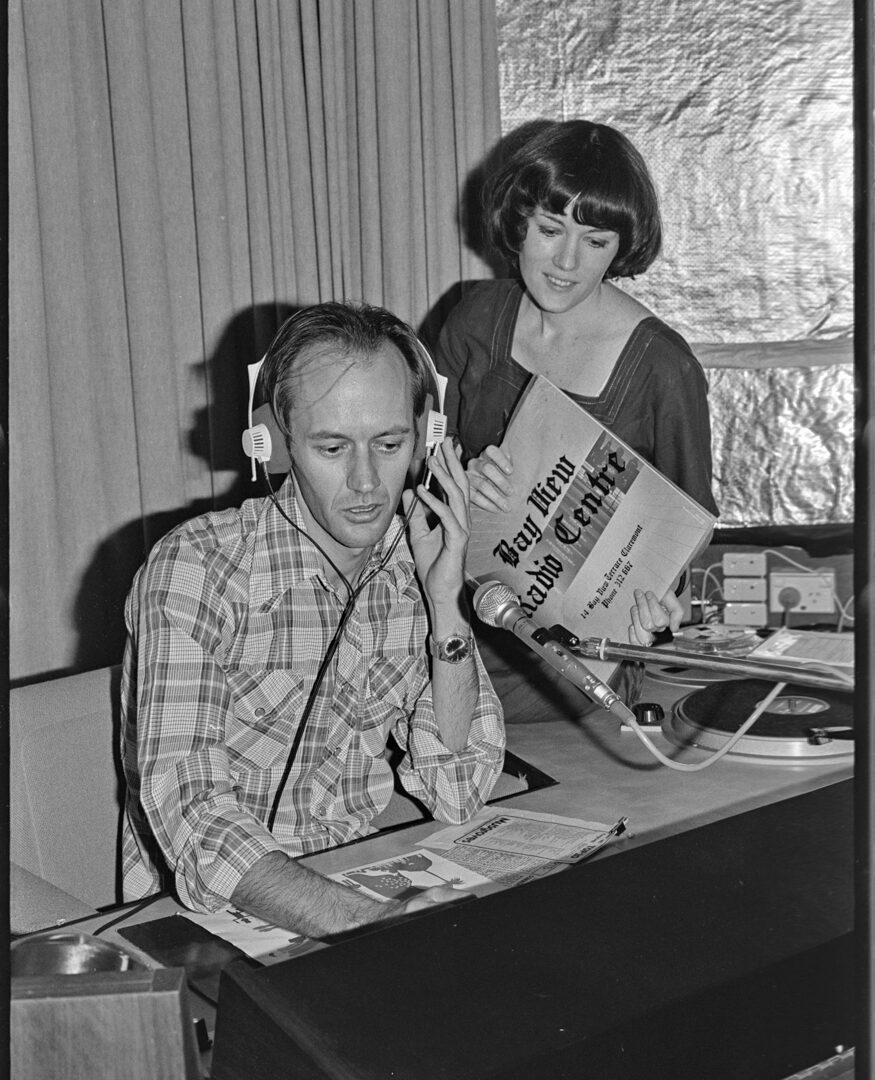
In April 1976 a special radio licence was approved by the Minister for Postal and Telecommunications for a broadcast station to operate on campus for one year. The call sign 6NR (New Radio) was adopted and the WAIT council allocated $20,000 to finance the initial capital expenditure. 6NR went to air for the first time on 16th October 1976 at 5pm when the WAIT Chairman officially declared the station open. With its educational and community bias it was the first radio service of its kind in Western Australia.
The station was immediately busy. WAIT journalism students gained valuable experience studying and working at the station. Library students produced a show called Bedtime Stories; Physics students produced science shows. There were programs such as “Out of the Gilded Cage” presented by the Women’s Electoral Lobby, “ArtView”, “Behind the Media”, “the Guild Show”. WAIT and Murdoch students interviewed experts on topical issues, and community and ethnic groups had access and produced regular programs.
The station had a broadcast radius of 20 kilometres. In 2002 it switched over to FM and became Curtin FM.
6NR Radio producers broadcasting.
Ant ecology
In 1976 our staff and students remained at work on projects that met educational needs or were designed to improve knowledge in particular subject areas. Industry, the professions and government increased their reliance on WAIT on projects or services. The following shows the diversity of our efforts in that year:
the study of ant ecology in jarrah forests
an evaluative study of nursing education
a project on prawn detection
investigations into lupin alkaloids (identification, analysis and toxicity)
the construction of an acoustic sounder
a WASM project testing cables used in vertical and incline shafts by the Chamber of Mines. The School tested around 60 cables per month using an AMIRA cable tester.
a Geophysics seismic teaching exercise which involved geophones, a shot box, gelignite and the use of a campus oval in order to understand the composition of underground material
A field biology station in Yalgorup National Park, a collaboration with the Parks Department and WAIT’s Department of Biology.
Catastrophe Theory (the Department of Mathematics and Computing Studies)
a WAIT weather station was established in the Peel area. It also monitored ground water levels near bore holes.
Language courses were offered in Ngaanyatjarra, Spanish, Russian and Indonesian through the Department of Asian Studies
And the Department of Physics reported a massive expansion of activities in the earth sciences, largely in the area of atmospheric studies.
Part of the community
In 1976, around 100 English studies students helped clean, repair and paint the exterior of the then Lucy Creeth hospital (now the Rocky Bay Centre in Mosman Park). Paint and materials were donated by Perth companies, local councils and the communities.
The WAIT 1976 Charity Fair was held on the campus on 26 September, with around 40 stalls organised by staff and students. There was a plate smashing stall, tea and cake stalls, a curry and rice stall, a stall selling pancakes, a plant and second-hand books stall. Staff organised pony-rides, a “moon-walk”, music and donations for auctioning (which was live broadcasted by Channel Seven). The money WAIT raised went to Telethon and help build a new hospital in Coolbinia for children with disabilities.
Charity Fair Auction overlooking Edinburgh Oval
New courses and new accreditations
Over the 1970s, WAIT courses were shaped and reshaped to ensure there was a balance of theory and practical learning for our students (associate level courses were phasing out during this decade)
Approved new degree courses in 1976:
Bachelor of Applied Science (Environmental Health)
Bachelor of Applied Science (Geology)
Bachelor of Applied Science (Home Economics)
Bachelor of Applied Science (Library Studies)
Bachelor of Applied Science (Mechanical Engineering)
Bachelor of Applied Science (Mining Geology)
Bachelor of Applied Science (Nursing)
Bachelor of Applied Science (Nutrition and Food Science)
Bachelor of Arts (Asian Studies)
Bachelor of Education (Teacher Education, Pre-School Primary)
Bachelor of Education (Teacher Education, Secondary)
Bachelor of Engineering (Mechanical Engineering)
Diploma of Applied Science (Diagnostic Radiography)
Diploma of Applied Science (Therapeutic Radiography)
Diploma of Teaching (Pre-school/Primary)
Associate Diploma (English)
Graduate Diploma (Business Administration)
Graduate Diploma (Chemistry)
Graduate Diploma (Computing)
Graduate Diploma (Educational Administration)
Graduate Diploma (Education)
Graduate Diploma (Government Administration)
Graduate Diploma (Pharmacy)
Master of Applied Science (Chemistry)
Master of Applied Science (Pharmacy)
Biology class late 1970s
Architecture students at work building a hexagonal pavilion
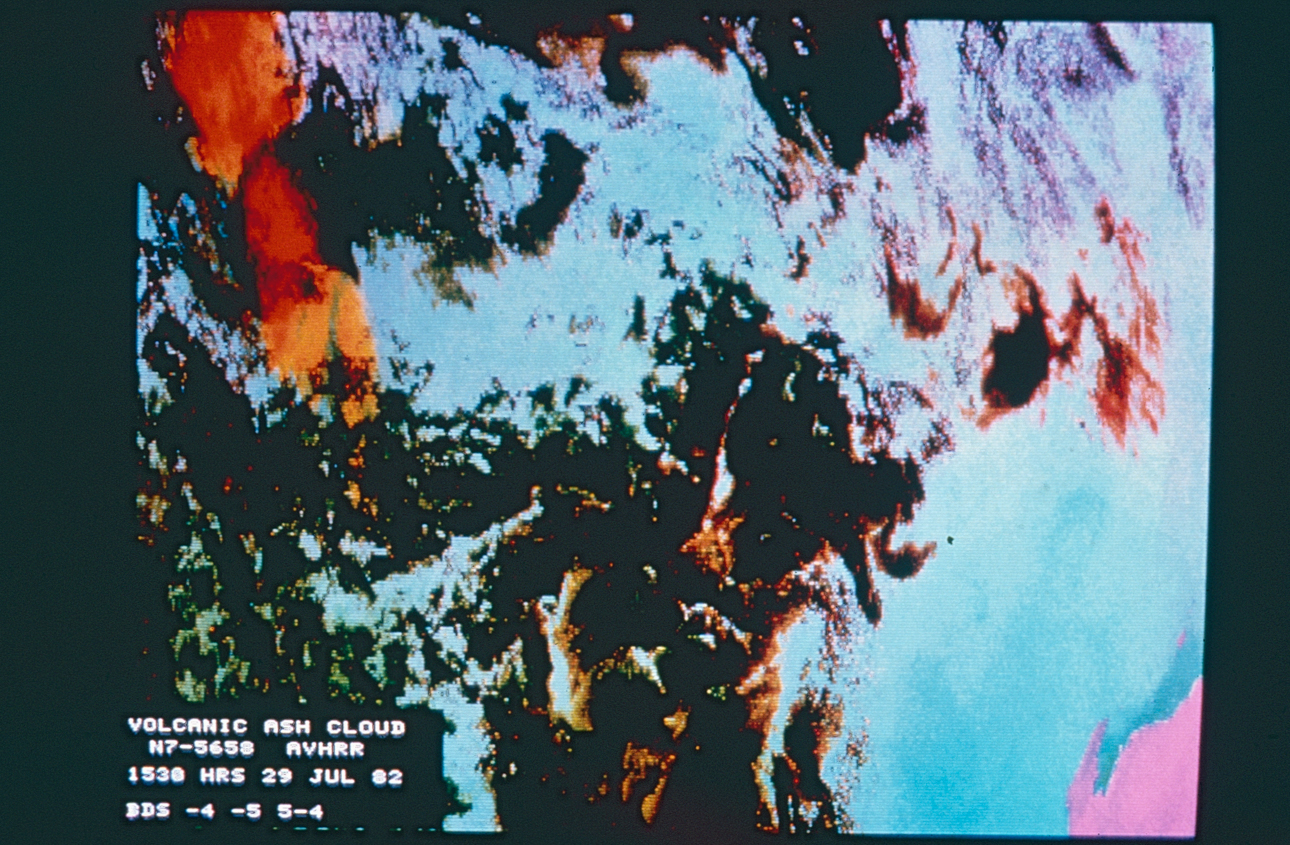
]]>0Elizabeth McKenzie<![CDATA[Satellite breakthrough]]>/archives/?p=23882025-08-07T08:40:29Z2025-08-07T03:55:00Z1982 satellite imagery of a cloud of volcanic ash from Mount Galunggung, Indonesia.
The above image from 1982 is of a large cloud of volcanic ash located somewhere between Australia and Indonesia.
The cloud resulted from Reported widely at the time (and since then), a British Airways aircraft flew into the cloud and almost crashed. The aircraft‘s four engines failed and required a restart before the plane could return to Indonesia. Aviation was disrupted in the region for some time as there was no way to distinguish the ash cloud from normal cloud activity.
WAIT and CSIRO scientists used dish antenna (previously installed by staff on the top of Civil Engineering and Electrical Engineering) to receive temperature information and imagery from the National Oceanic and Atmospheric Administration’s (NOAA) polar orbiting satellite. Working together they designed a computer program to identify the ash cloud and distinguish it from other normal cloud formations. This enabled aircraft already in the air to identify and navigate around clouds of volcanic ash.
The then Federal Minister for Science and Technology, David Thompson described the work of Dr Frank Honey, Head of CSIRO’s remote sensing group located at Floreat Park and Dr Bill Carroll, Head of WAIT’s Satellite Technology Centre as ‘ a brilliant piece of science, and a credit to the ingenuity of Australian scientists. ‘
His comments and a full story on the work of these scientists was published in the August 1982 WAIT Gazette and can be found
.
]]>0Carolyn Eaton<![CDATA[The Great WAIT Scavenger Hunt]]>/archives/?p=24022025-06-26T03:54:31Z2025-06-24T08:41:43ZIn late 1978, as part of Student Activities Week, the WAIT Student Guild organised The Great Scavenger Hunt. Meant in good fun, there was a somewhat anarchic outcome to the Hunt not foreseen by organisers.
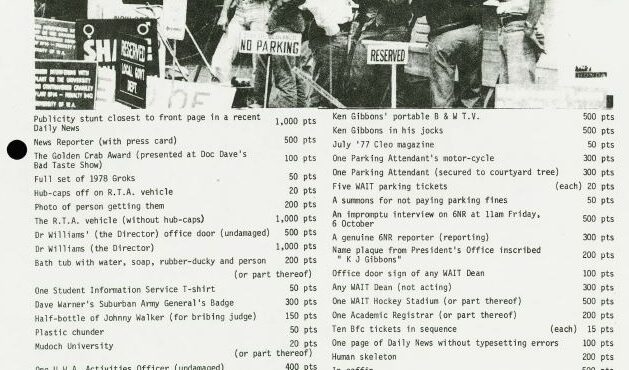
Items on the Hunt list included:
Each item was worth a certain number of points and those with the most points, won the competition. There was also a general invitation to obtain “imaginative” items not already on the list.
The Hunt took place over the week of 2-6 October, 1978. There was considerable student enthusiasm for the Scavenger Hunt, which resulted in a sizeable collection of items belonging to the campus and not belonging to the campus finding their way to the Guild courtyard by the deadline of Friday 6 October for judging.
Prizes included a $50 account at the Eureka Bar, six free passes to the “Sports Nite Out” and a carton of tins. Demerit points applied for the T. L. Robertson Bust and the Japanese Ornamental Lantern from Social Sciences. All entries were to be returned by the entrants as soon as the Hunt was over.
Consternation amongst staff grew as the week went by. After the Hunt, the November 1978 WAIT Gazette reported that the number of items appeared to ‘represent commando style raids’ on our campus, roads around the Institute, and possibly Murdoch University and the University of Western Australia. These appeared to have been undertaken with ‘military precision’ and likely to have been the work of ‘one well-organised student group’.
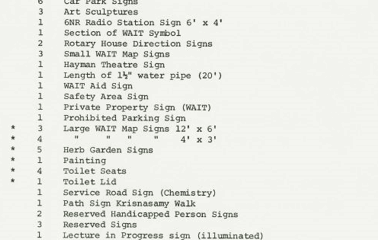
The flags at the front of the Insitute were not exempt and found their way to the Guild Courtyard. Neither was the door to the WAIT Director’s Office. There were campus signs and wall plaques, more doors, office equipment, toilet seats, a vacuum cleaner, elevator button plates (which meant the elevator had to be shut down) and external road signs from across Perth, including those pointing to the Airport.
Returning the campus to its previous condition was time consuming for WAIT building maintenance and grounds staff. Jack Finney, the Institute Architect, presented a list of scavenged items and damage to the WAIT Council, adding that the scale of the hunt and the restoration work for damage to property had demoralised and disappointed his staff.
Council list extract
Dr Haydn Stanley Williams, the then Director of WAIT advised the Student Guild that he was dismayed and disappointed that the work of a small number of students had resulted in such widespread vandalism, when the majority of students had behaved responsibly. He stated that costs for restoration would be borne by the Student Guild.
The Student Guild President while conceding that it was an error to include ‘points allotted for any imaginative find not mentioned’ on the poster, felt that ‘the attitude of some staff members left much to be desired’.
Scavenger Hunt items in the Guild Courtyard
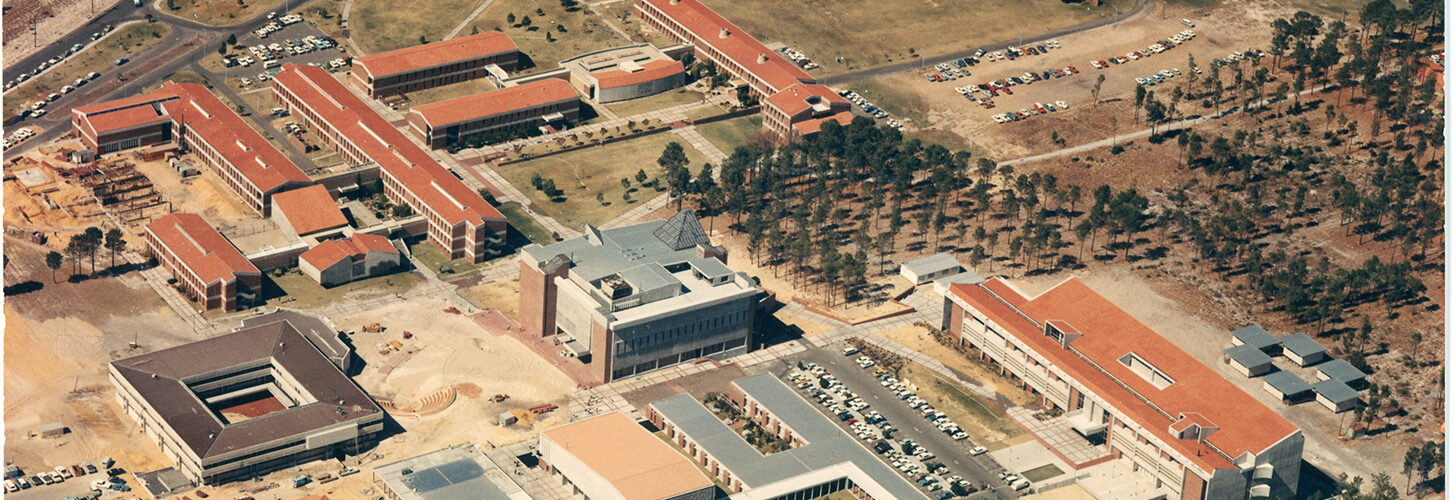
]]>0Elizabeth McKenzie<![CDATA[The roaring 70s at Curtin: flashback to 1975]]>/archives/?p=23022025-01-29T00:16:06Z2025-01-23T07:12:59ZWAIT, Curtin, Bentley campus, aerial photograph, 1972-1975
1975 was a year of consolidation at the Western Australian Institute of Technology (WAIT) (now Â鶹ֱ²¥). More courses were approved as degrees, and the campus was settling into its landscape. Student numbers climbed past 10,000 for the first time and our annual graduation topped 1000 students in another first.
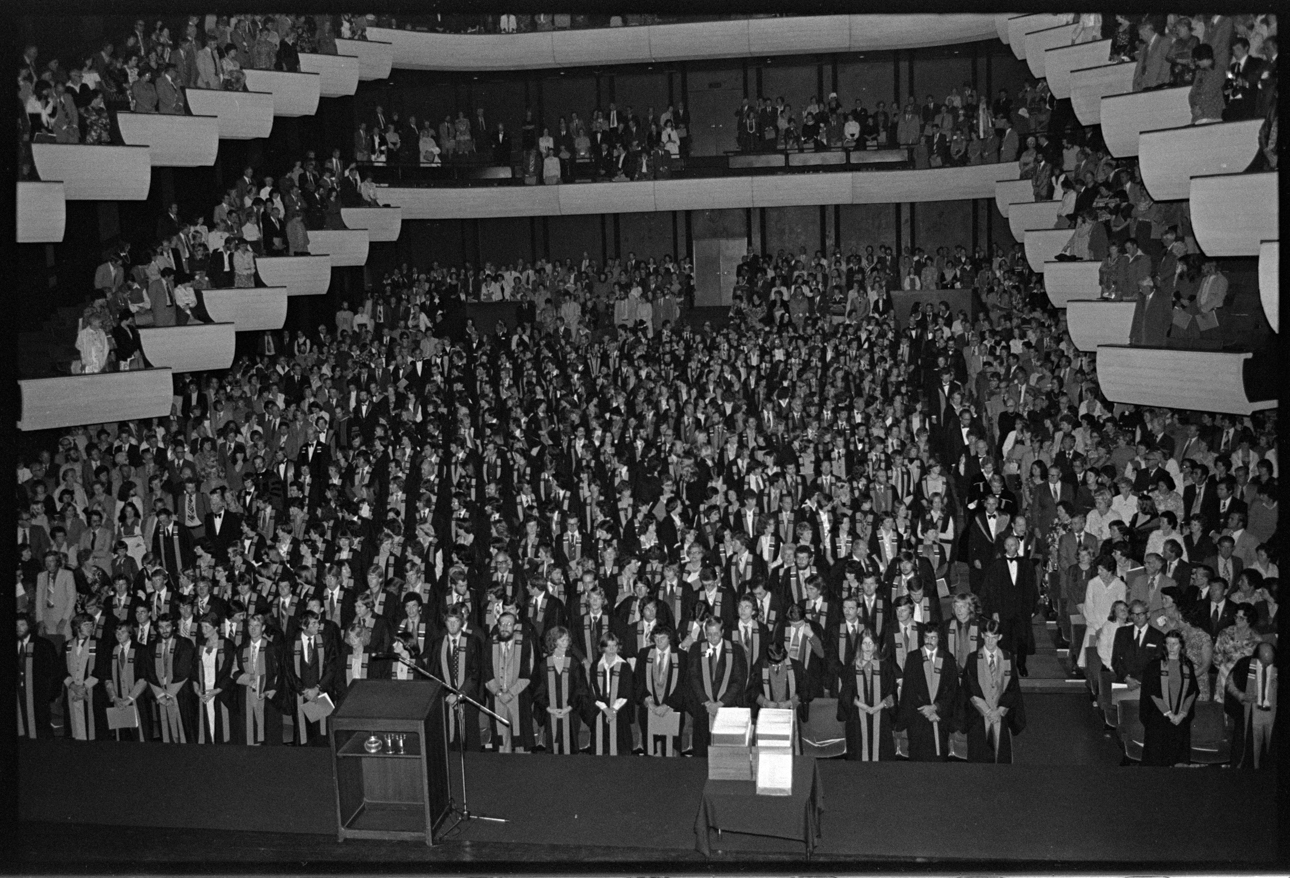
Graduation at Perth Concert Hall c1975
The United Nations had also designated 1975 as International Women’s Year. We send a delegate to the first global conference on the status of women and gender inequality in Mexico City.
A comprehensive report on women in the WAIT workforce was commissioned as part of WAIT’s contribution to the global spotlight on the status of women. The report provided detailed information about the female WAIT workforce.
The resulting report looked beyond questions of salary, into the way women in 1975 navigated a working environment which was changing slowly to meet their needs and expectations.
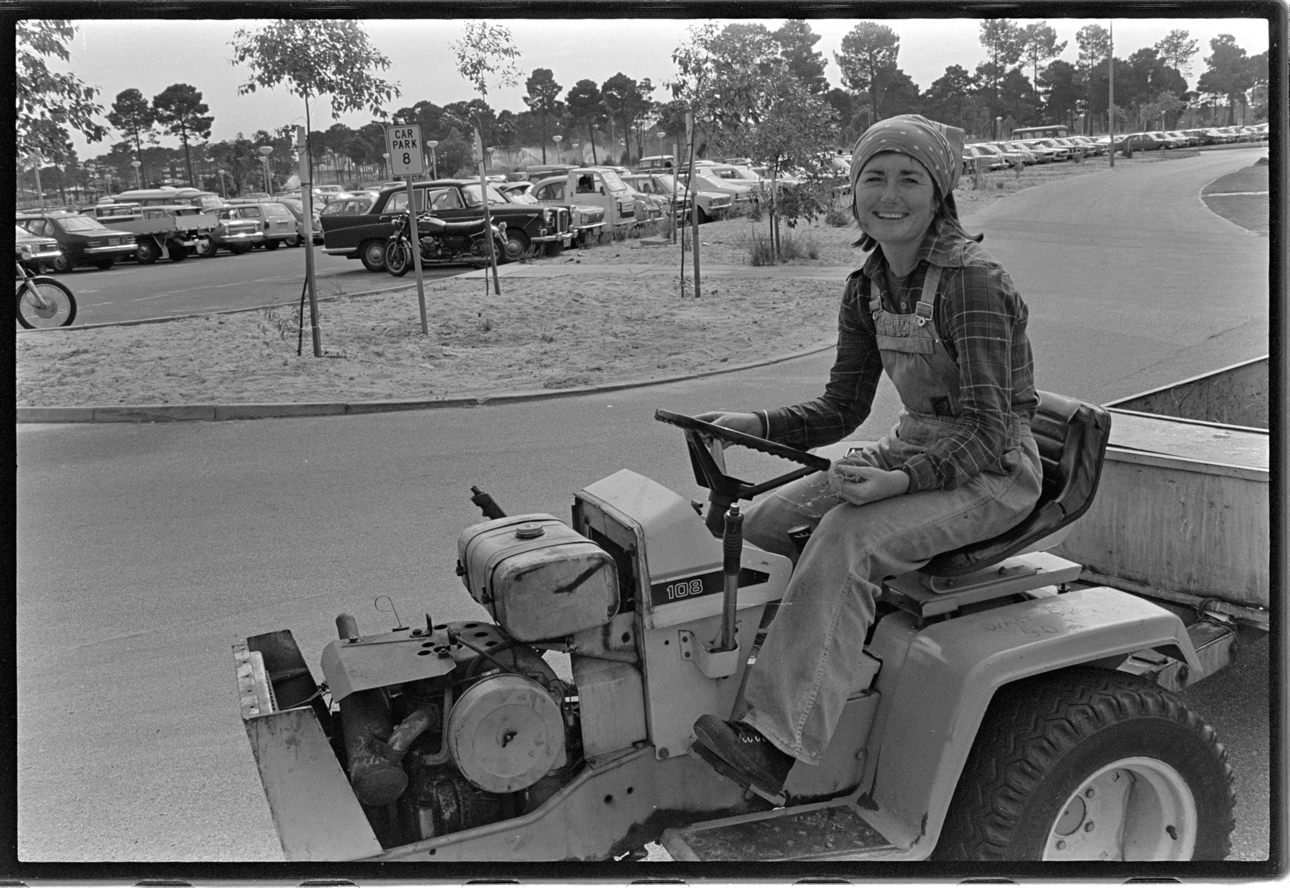
WAIT gardener on a small tractor with trailer.
In 1975 WAIT had continued to expand, introducing new schools and redesigning others to help meet student needs.
The School of Teacher Education was formed with an enrolment of 540 students in early childhood, primary and secondary education courses.
WAIT students at Pine Valley kindergarten, c1979.
The Department of Computing and Quantitative studies was also established when the teaching function of the Computer Centre (now Digital & Technology Solutions or DTS) moved to the School of Applied Science. More courses in computer science followed rapidly.
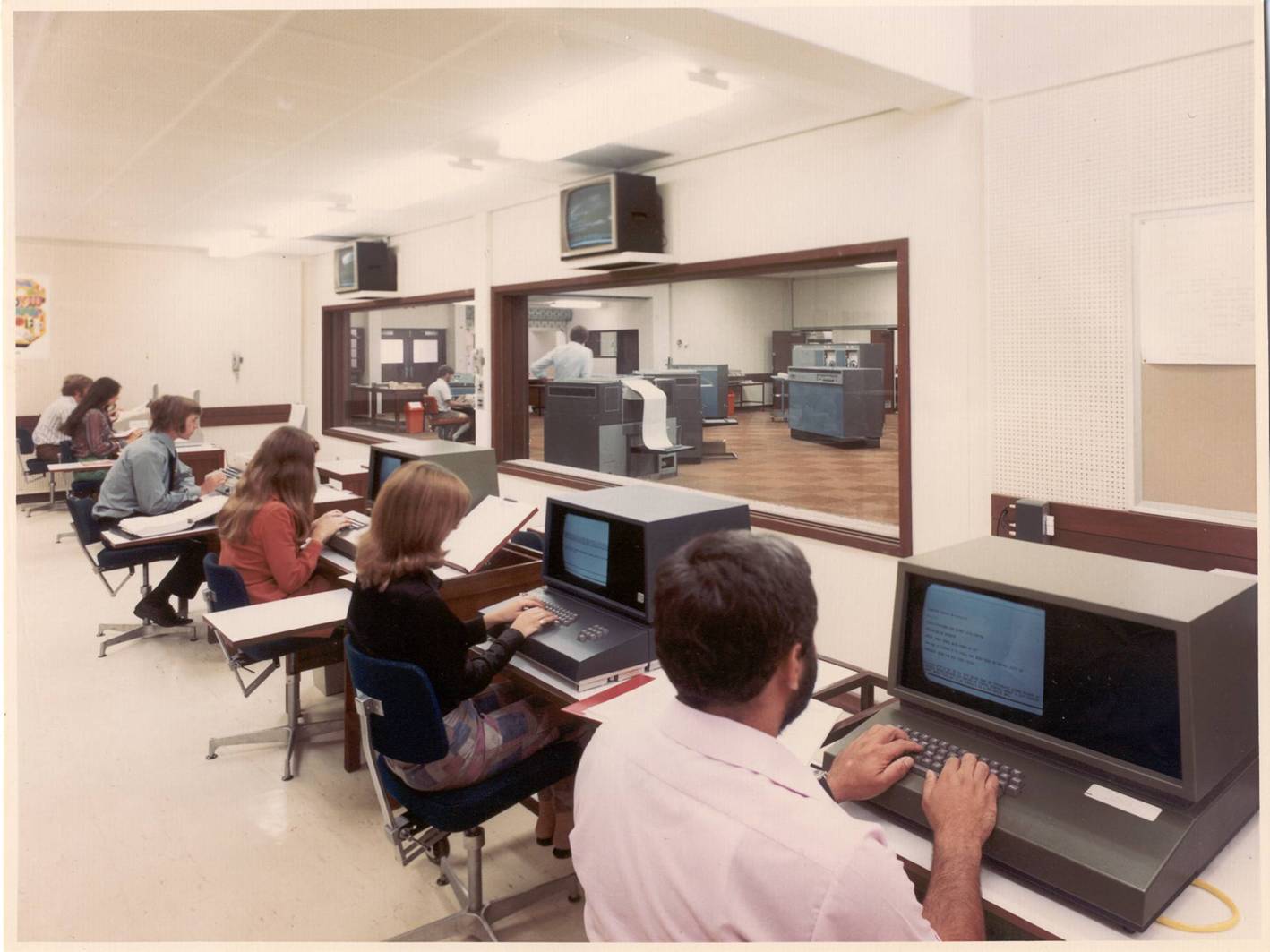
The operational support function of the Computer Centre in 1975 was focussed on the transition of punch card use to on-line editing, a software support service for academics, building a terminal network and acquiring large processing and storage machines.
Students in the WAIT computer centre.
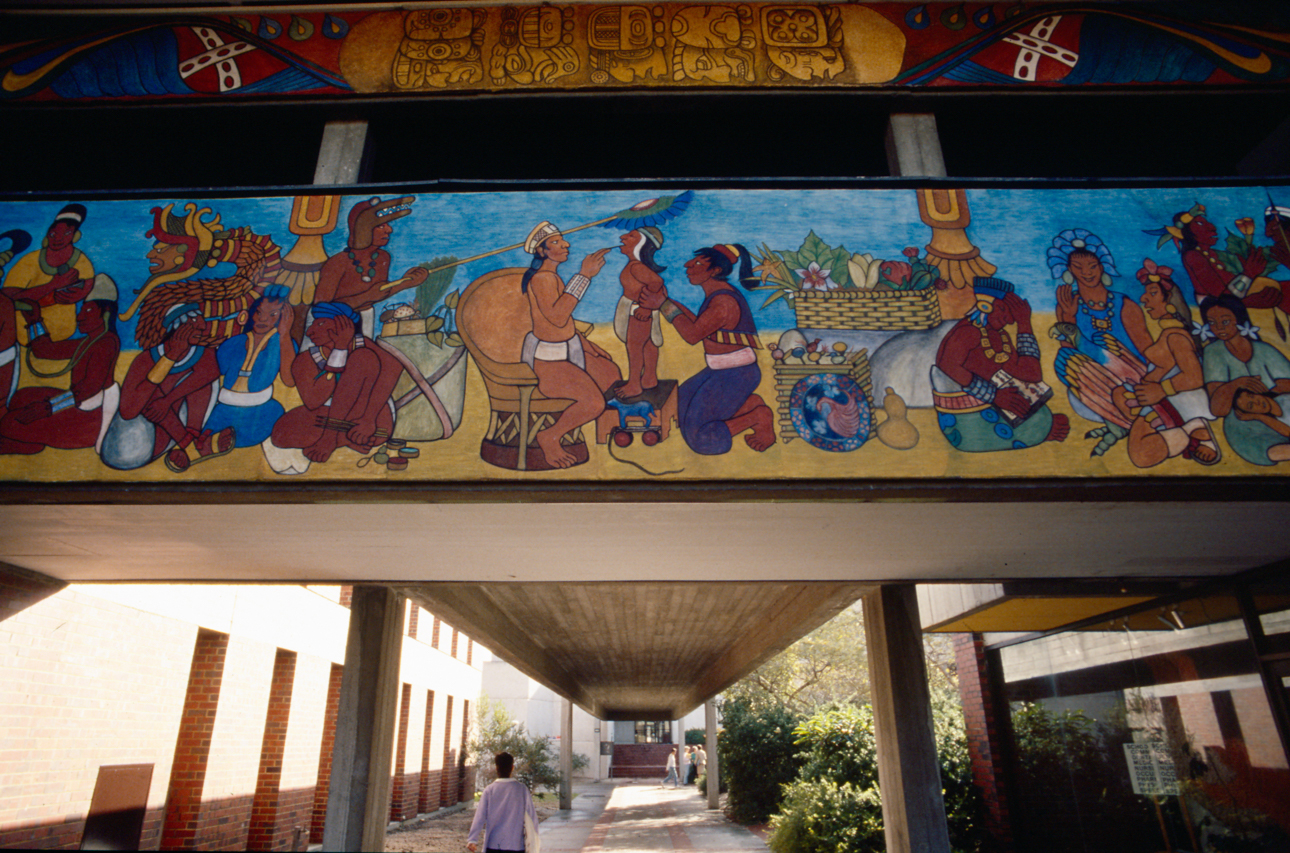
The School of Art and Design was also formed after separating from Architecture. In 1975 Andres Sanches-Flores created a large-scale Hispanic mural as part of an Artist in Residence program set up to bring a diverse series of artists to work on special projects. The artists also worked with students, transferring knowledge and sharing their experience through lectures and workshops.
The Andre Sanchez-Flores mural was unveiled on 18 July 1975 (south of the walkway linking the then School of Health Sciences and the School of Social Sciences).
Dietetics was transferred from Royal Perth Hospital to Health Sciences and reshaped, with its graduate diploma acquiring an uplift in entry qualifications and introducing more academic rigour to the course.
A new course in speech and hearing began in the Department of Occupational Therapy with an enrolment of 20 students. The course was approved as a bachelor’s degree in applied science (speech and hearing). Students commenced the degree course in 1976.
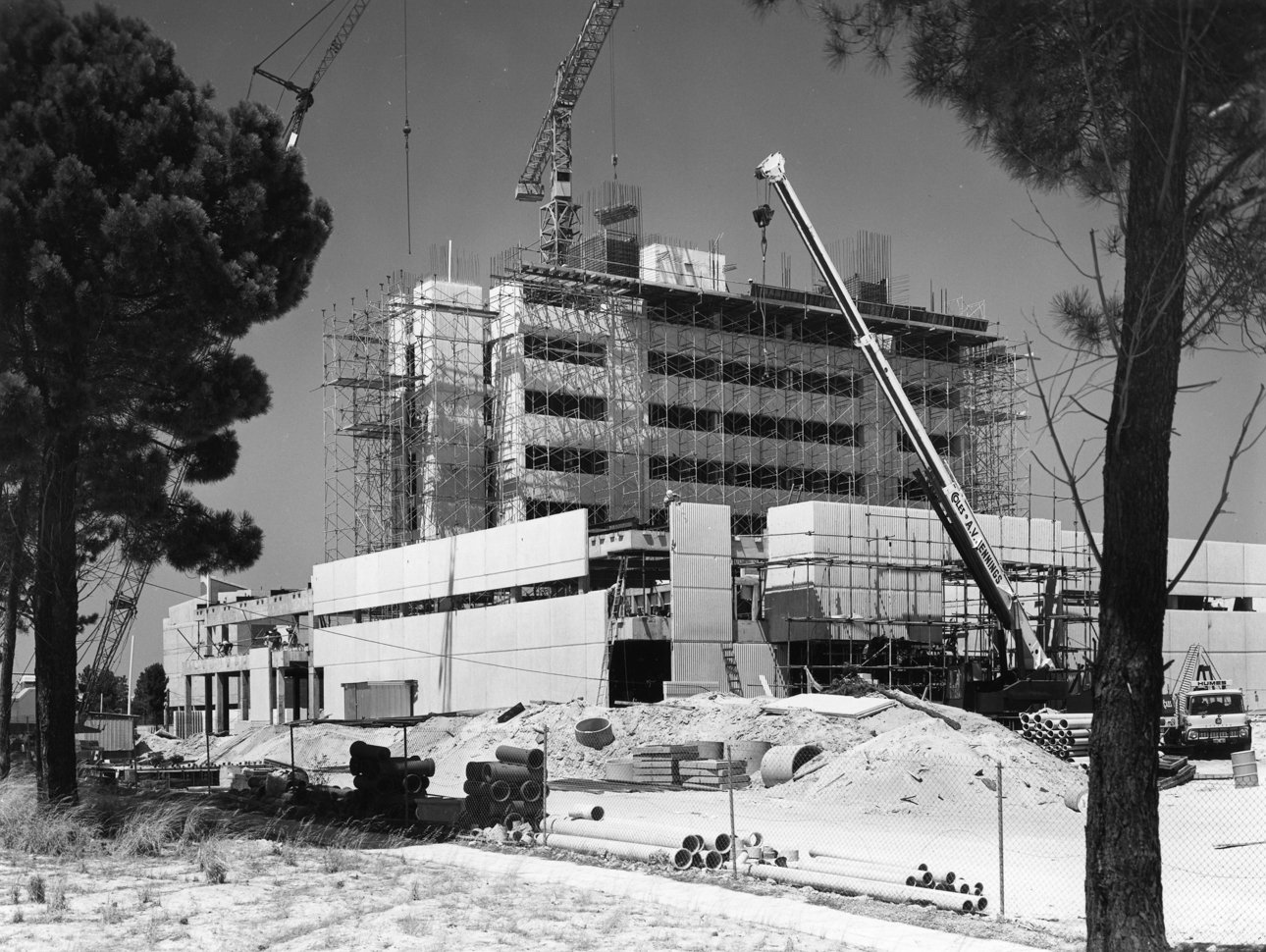
A significant new building opened this year too. After two years in construction, the Business and Administration (Building 402) was the largest building thus far completed on campus. The building could accommodate 1000 students across nine floors. It represented the bringing together of business, commerce, accounting and administration studies in one location.
Business and Administration building under construction, 1974.
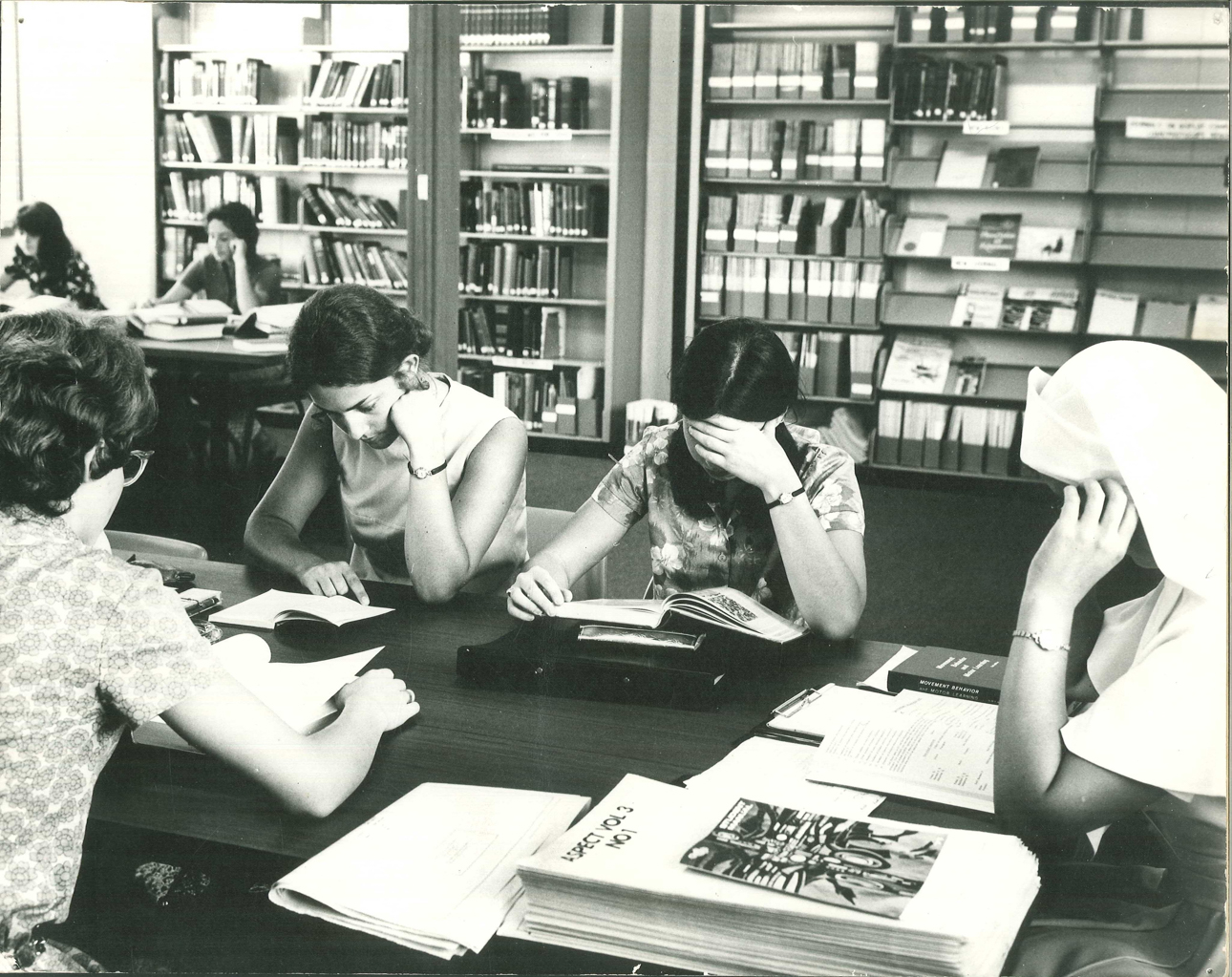
And the T L Robertson library introduced polaroid photo ID cards and opened seven days a week for the first time.
Students in the T. L Robertson Library in 1975.
1975 degree accreditations approved by the Australian Council on Awards in Advanced Education
Bachelor of Applied Science Civil Engineering
Bachelor of Applied Science Occupational Therapy
Bachelor of Applied Science Psychology
Bachelor of Arts English
Bachelor of Business Information Processing
Bachelor of Engineering Civil Engineering
Bachelor of Engineering Communications Eng.
Bachelor of Engineering Electronic Engineering
Bachelor of Engineering Electrical Engineering
Associate Diploma Nursing Education
The Western Australian Tertiary Education Commission formally accredited the following courses
Bachelor of Applied Science course in Library Studies
Bachelor of Education course in Teaching
Diploma of Teaching course in Teaching
Diploma of Applied Science course in Diagnostic Radiography and
Therapeutic Radiography
Associate Diploma course in English
Graduate Diploma course in Administration
Law elective within the Bachelor of Business courses.
]]>0Nicolee<![CDATA[Archiving Binar-1 satellite mission artefacts]]>/archives/?p=19852023-12-22T02:13:42Z2023-12-04T03:29:27ZEarlier this year, the Archives recognised the significant nature of Western Australia’s first satellite mission to space and worked with the Space Science and Technology Centre (SSTC) to ensure the long-term preservation of these unique records and artefacts.
The CubeSat was built by Â鶹ֱ²¥ staff and students. Launched on 28 August 2021, the CubeSat’s journey around the earth lasted just over a year before it completed its last orbit on 1 October 2022.
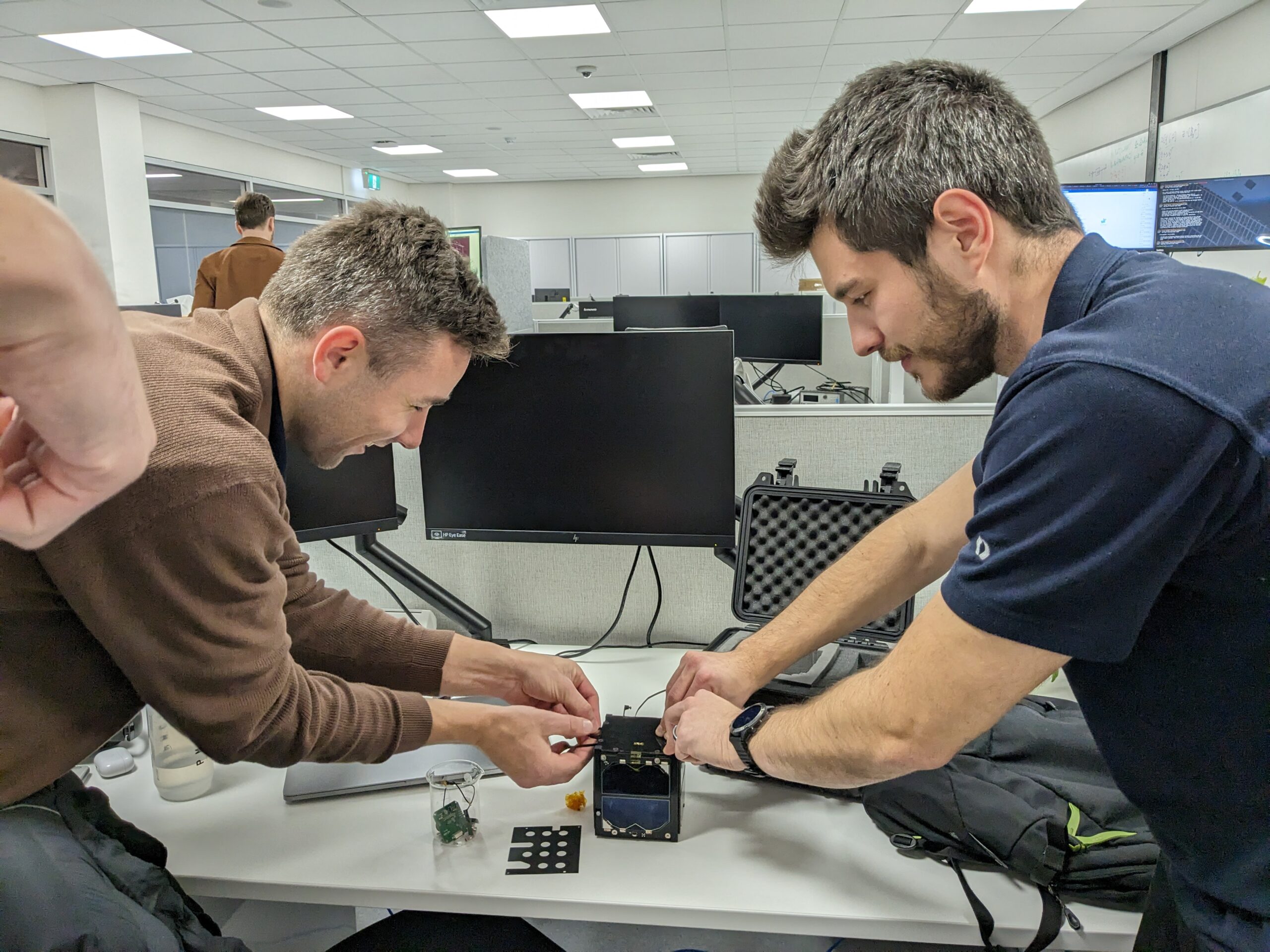
SSTC staff prepared the engineering model of the Binar-1 CubeSat for transfer to the Archives. The purpose of the engineering model was to troubleshoot potential problems with the flight model before and after deployment.
Working with the SSTC team meant we developed a better understanding of the project artefacts and improved archival record description, arranging and housing the objects for posterity.
The Binar-1 CubeSat was launched to the International Space Station in August 2021 from the SpaceX CRS-23 resupply mission. It was then deployed into its own orbit on 6 October 2021 from the Japanese Kibõ module (see image above). This image was taken from the International Space Station by the Japan Aerospace Exploration Agency.
The Binar-1 mission digital and physical objects are now stored to archival standards, ensuring the Binar-1 collection is now part of the State record and can be accessed as needed for activities such as displays or exhibitions.
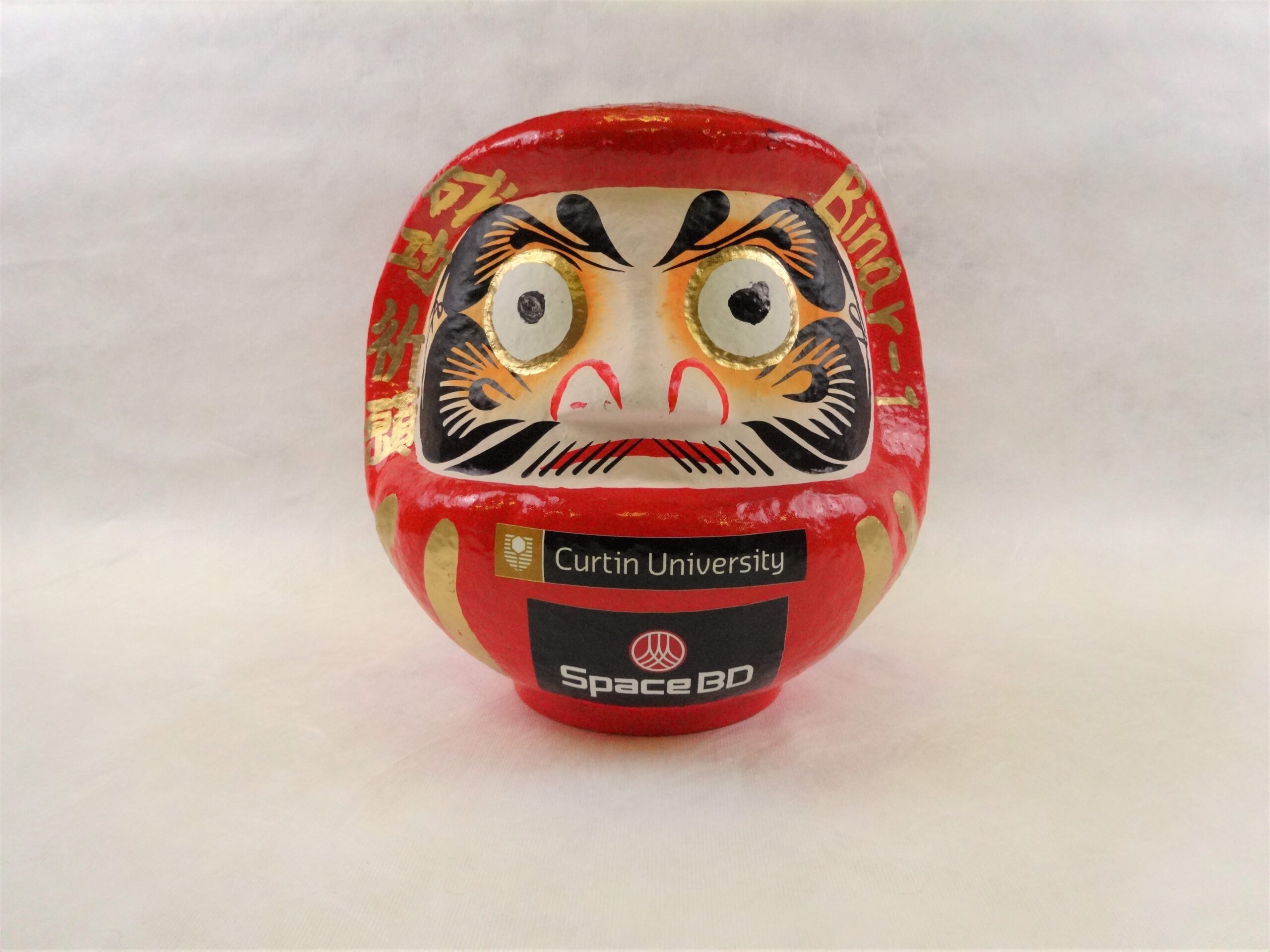
A traditional Japanese Daruma doll was presented to the Binar-1 team by Curtin’s Japanese partner SpaceBD. A daruma is typically hollow, red, round and depicts the Indian monk Bodhidharma. Seen as a symbol of perseverance, it is also meant to encourage and help with goal setting. Upon receiving the Phase 3 Safety assessment approval from SpaceBD, the team coloured one eye of the Daruma then shipped it to the Curtin SSTC team. After deployment of Binar-1, the other eye was coloured in to finish the process.
More Binar missions are planned, and we will continue to capture these significant records to ensure Western Australians can access this part of our shared history. In years to come the collections will be a way of revisiting Curtin and WA’s early achievements in developing the capability, expertise and industries needed to access space.
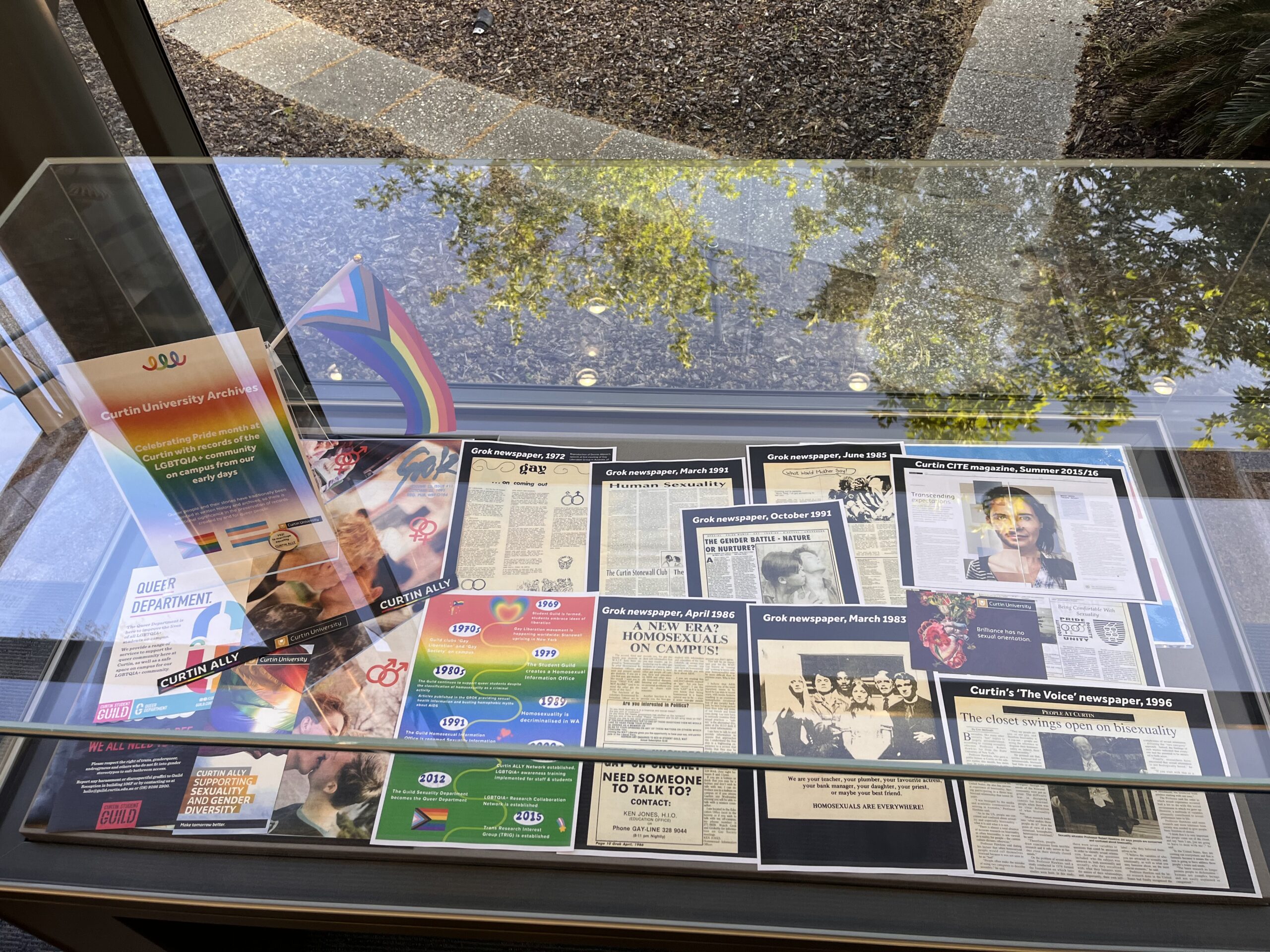
]]>0Nicolee<![CDATA[Celebrating Pride: LGBTQIA+ community at Curtin]]>/archives/?p=18892023-10-17T01:10:51Z2023-10-13T04:37:59ZWe are celebrating Pride Month with records of the LGBTQIA+ community on campus from our early days. Queer people and their stories have traditionally been left out of written history and archives, so there is additional significance when it comes to the preservation of records created by and for queer people.
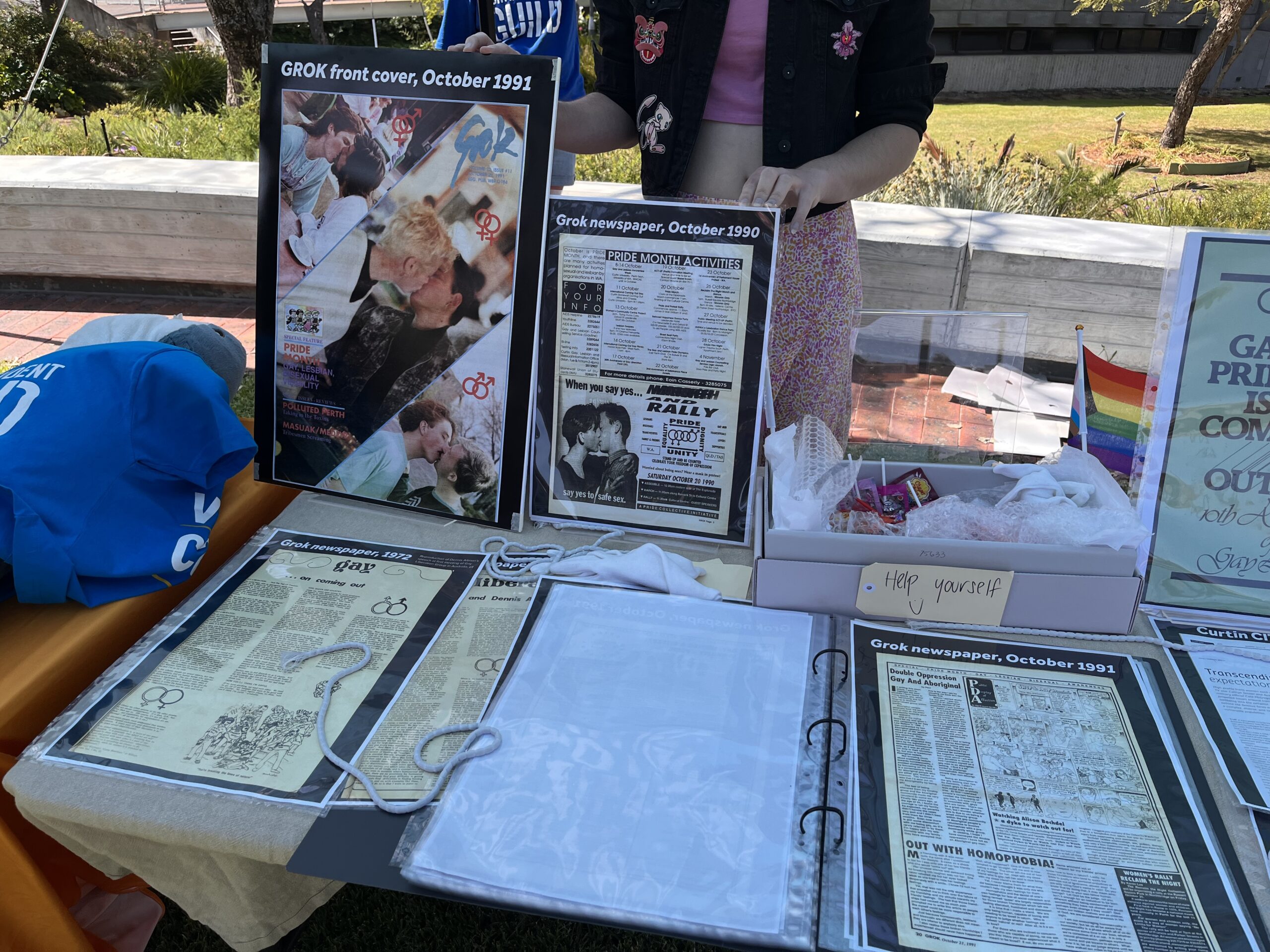
The Archives celebrated at the on-campus Pride event with the Queer Department on Wednesday 11 October with a stall of visual material from the Archives to show students & staff the LGBTQIA+ history on campus.
Some of the items displayed in archival sleeves and binder (acid-free).
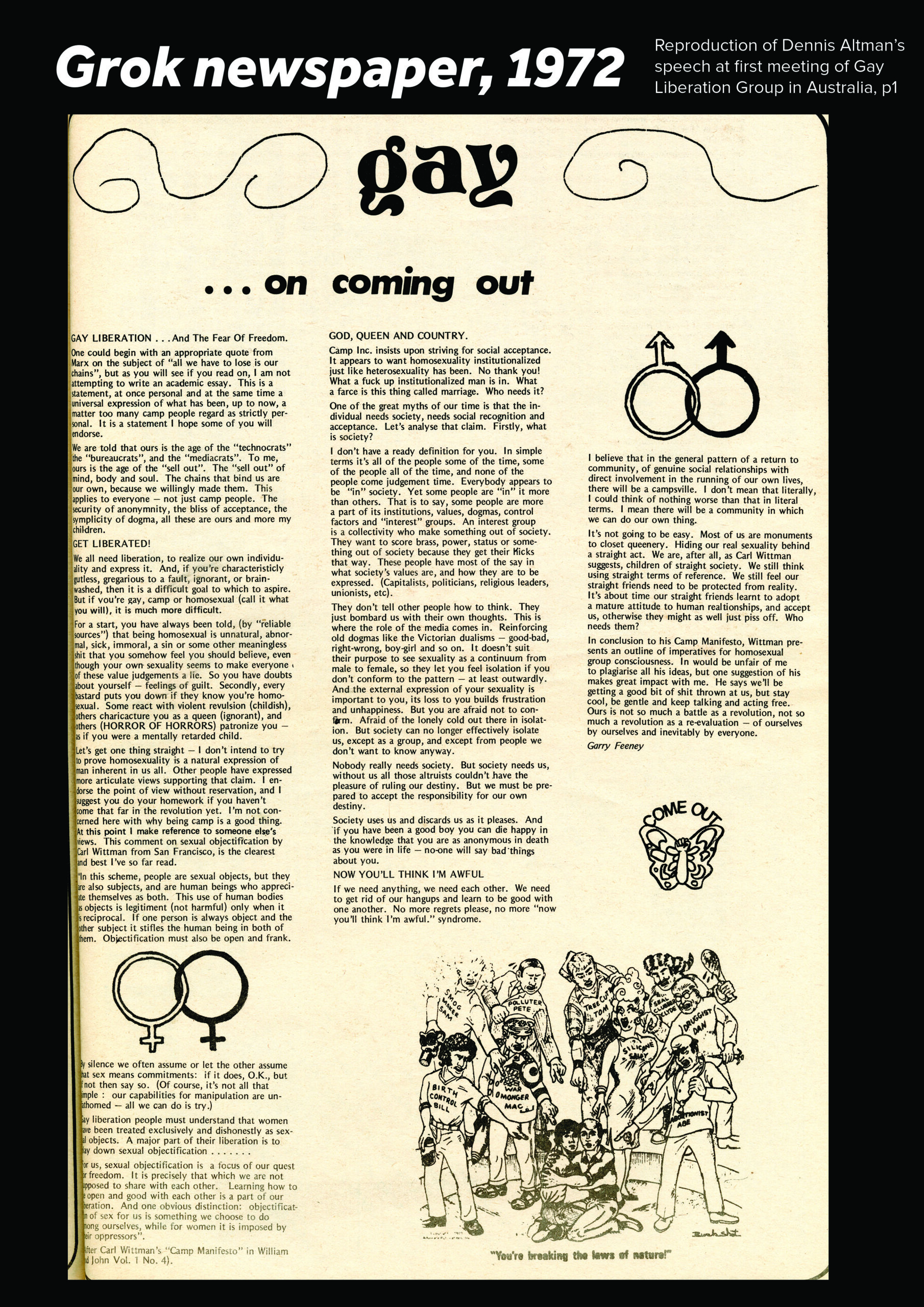
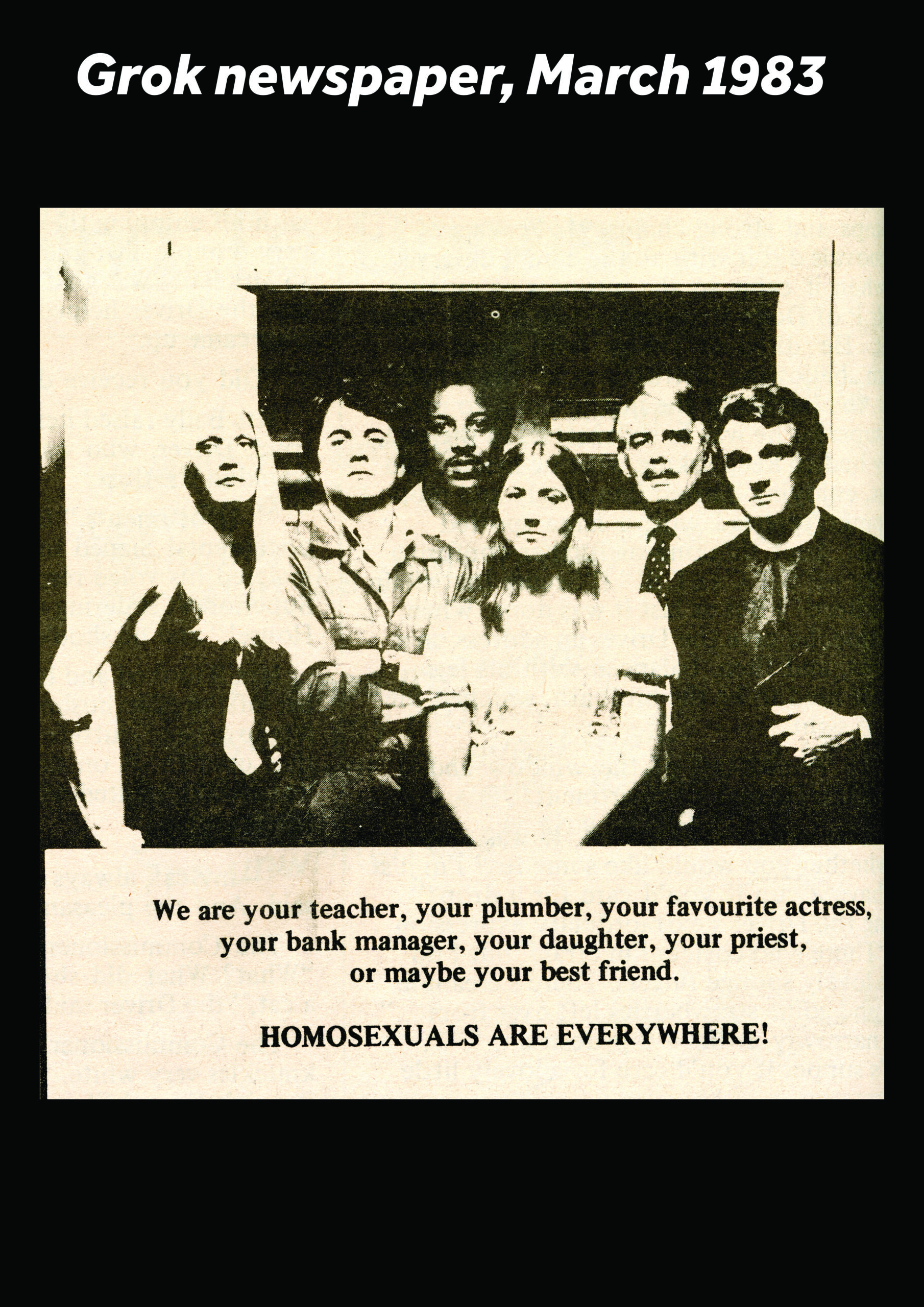
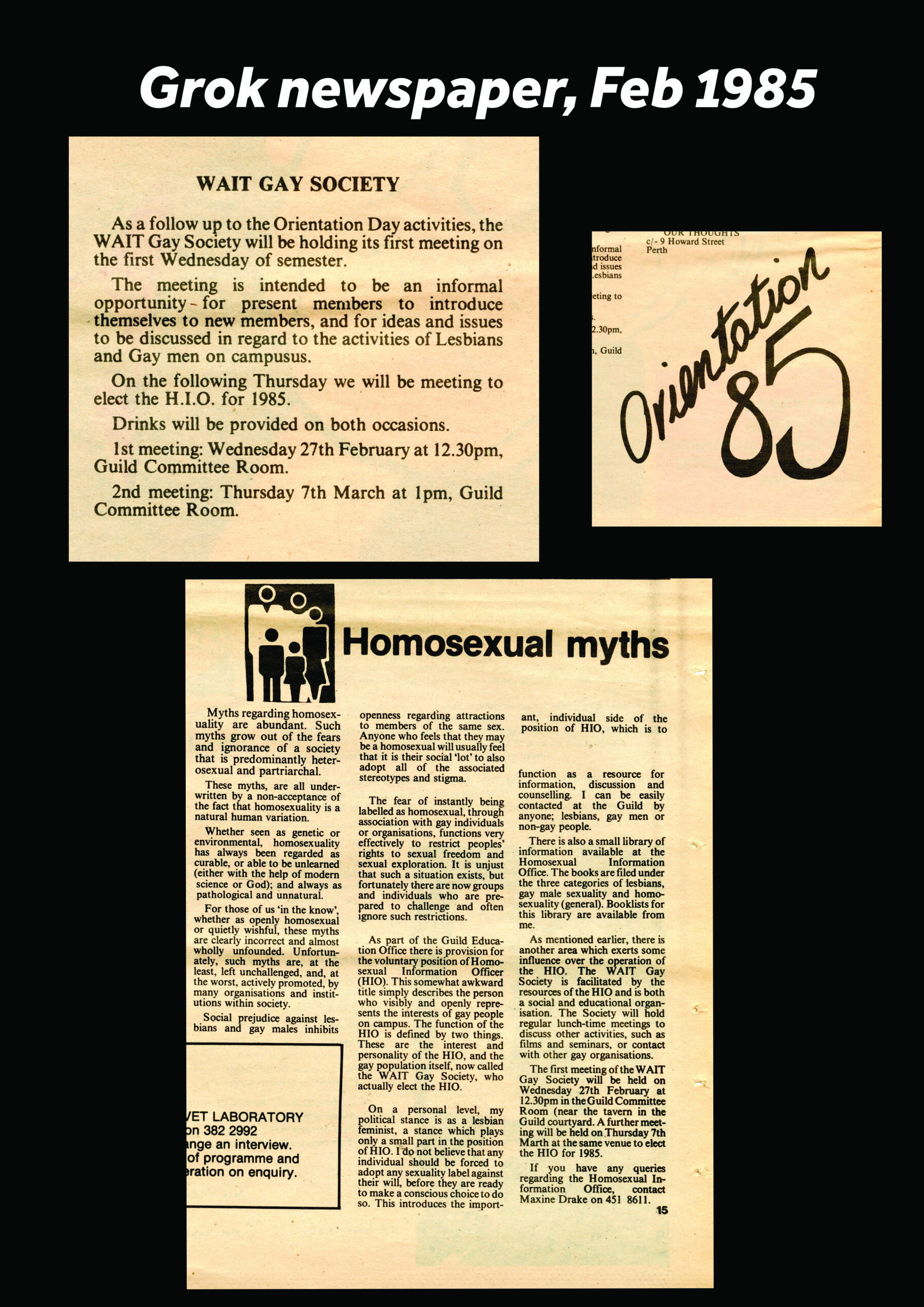
The earliest and most prominent records are from the students themselves. Articles written in the Guild student newspaper GROK show us the changing mindset and attitudes towards homosexuality during the 1970s onwards. The earliest is a reproduction of gay Australian activist Dennis Altman’s speech at the first Gay Liberation Group meeting in Sydney, 1972.
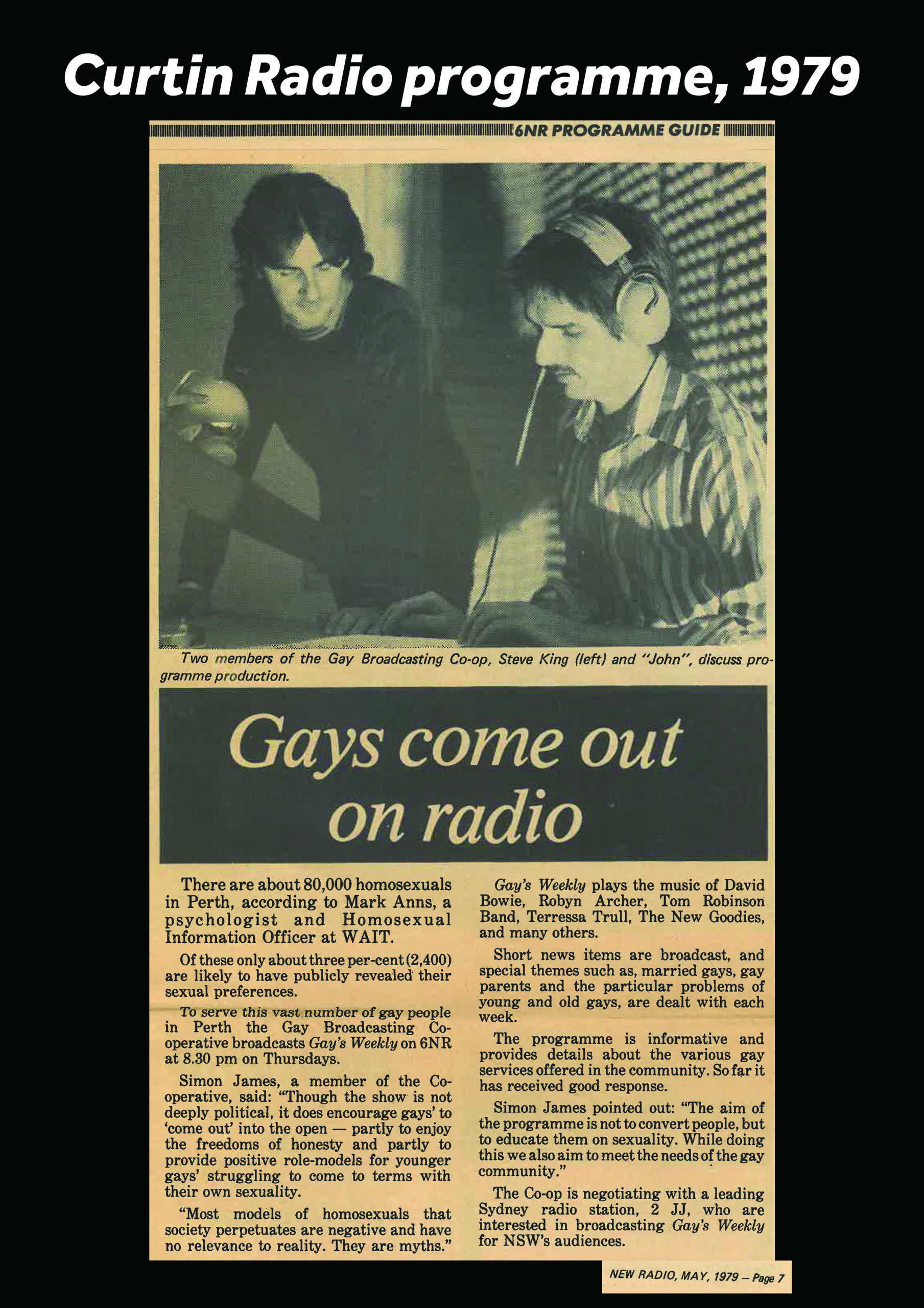
Gay’s Weekly program on 6NR (now CurtinFM) in 1979.
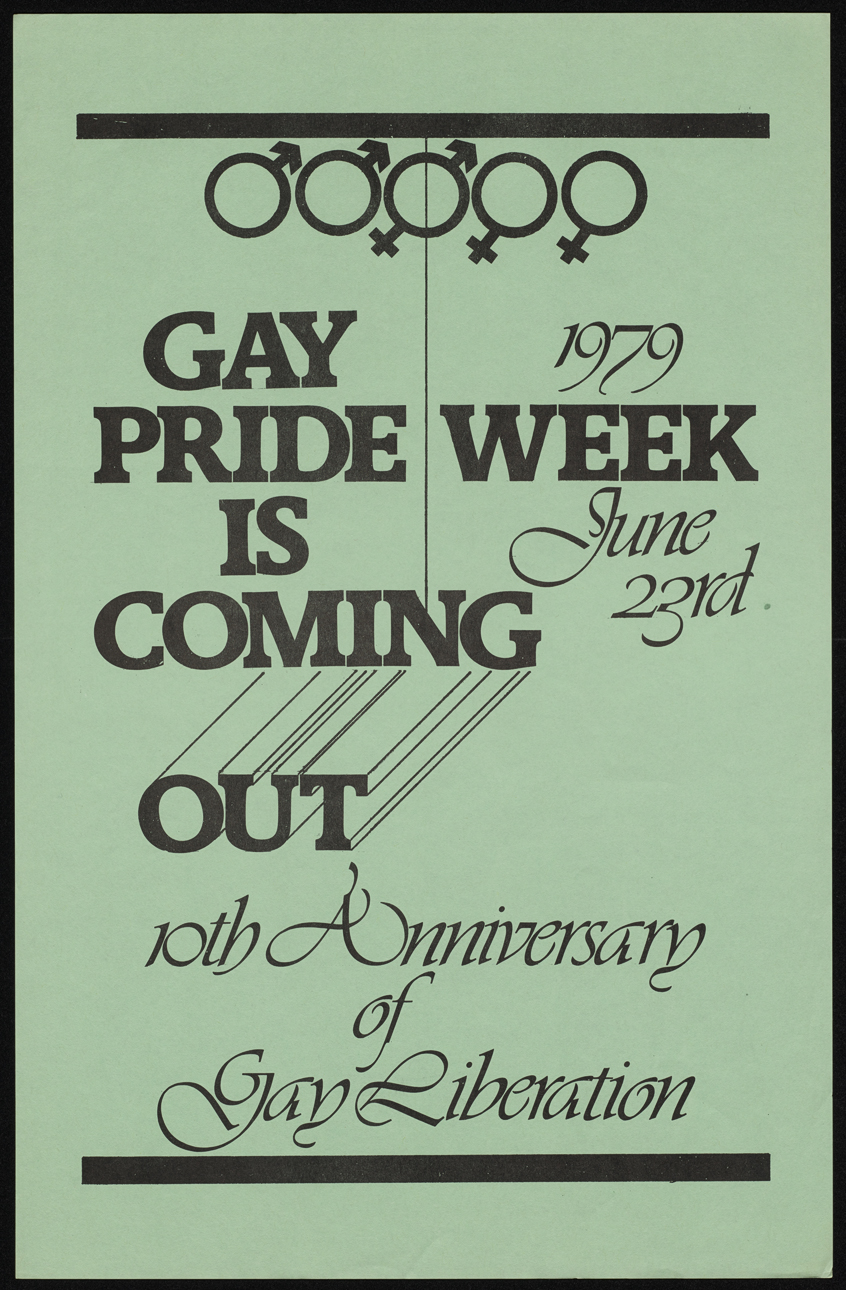
This poster was displayed on campus in 1979
“10th Anniversary of Gay Liberation” appears to refer to the Stonewall riots that occurred in New York in June 1969. Though the Gay Liberation Movement had already began, this event is seen as a turning point in the Gay Liberation Movement occurring worldwide.
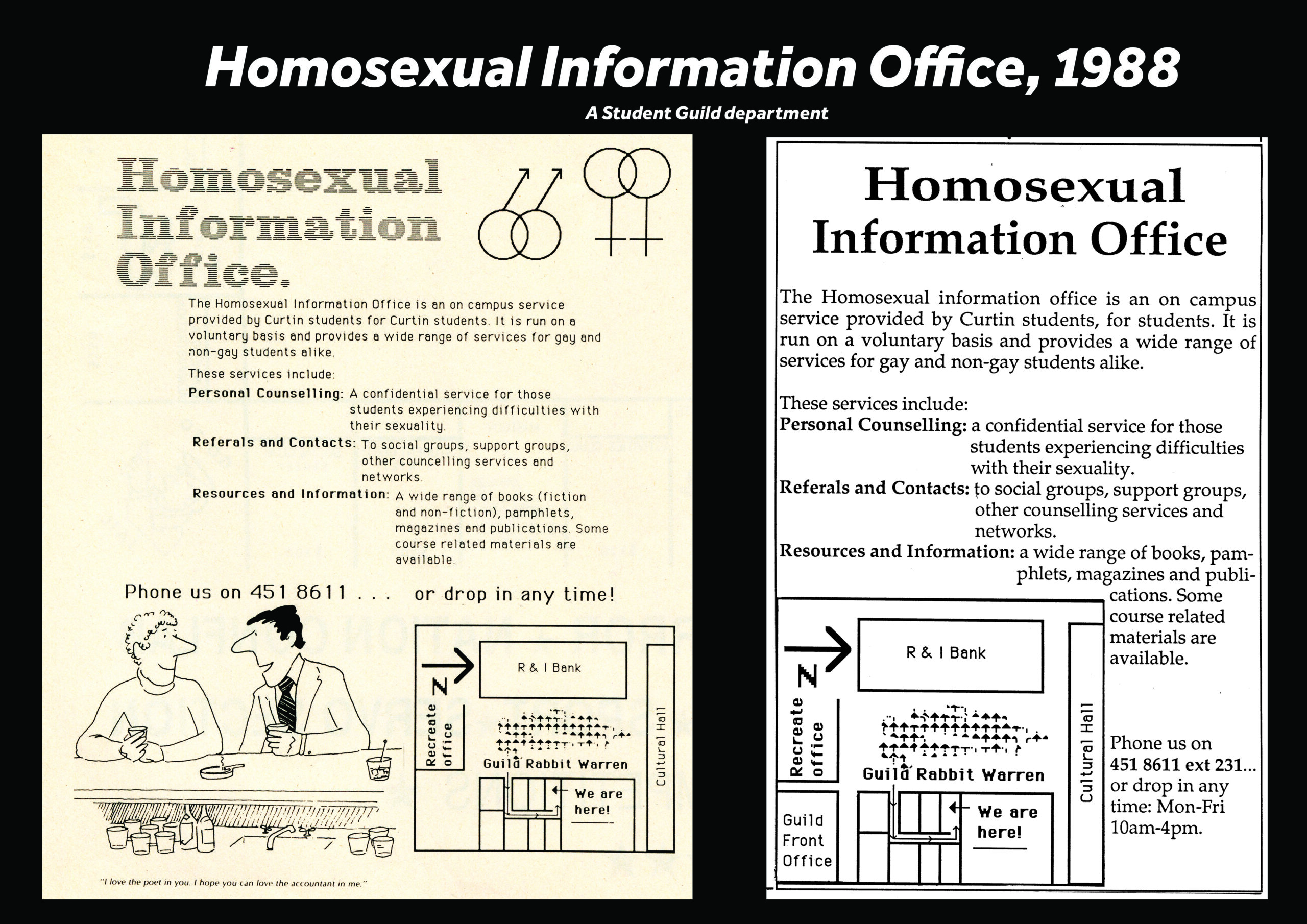
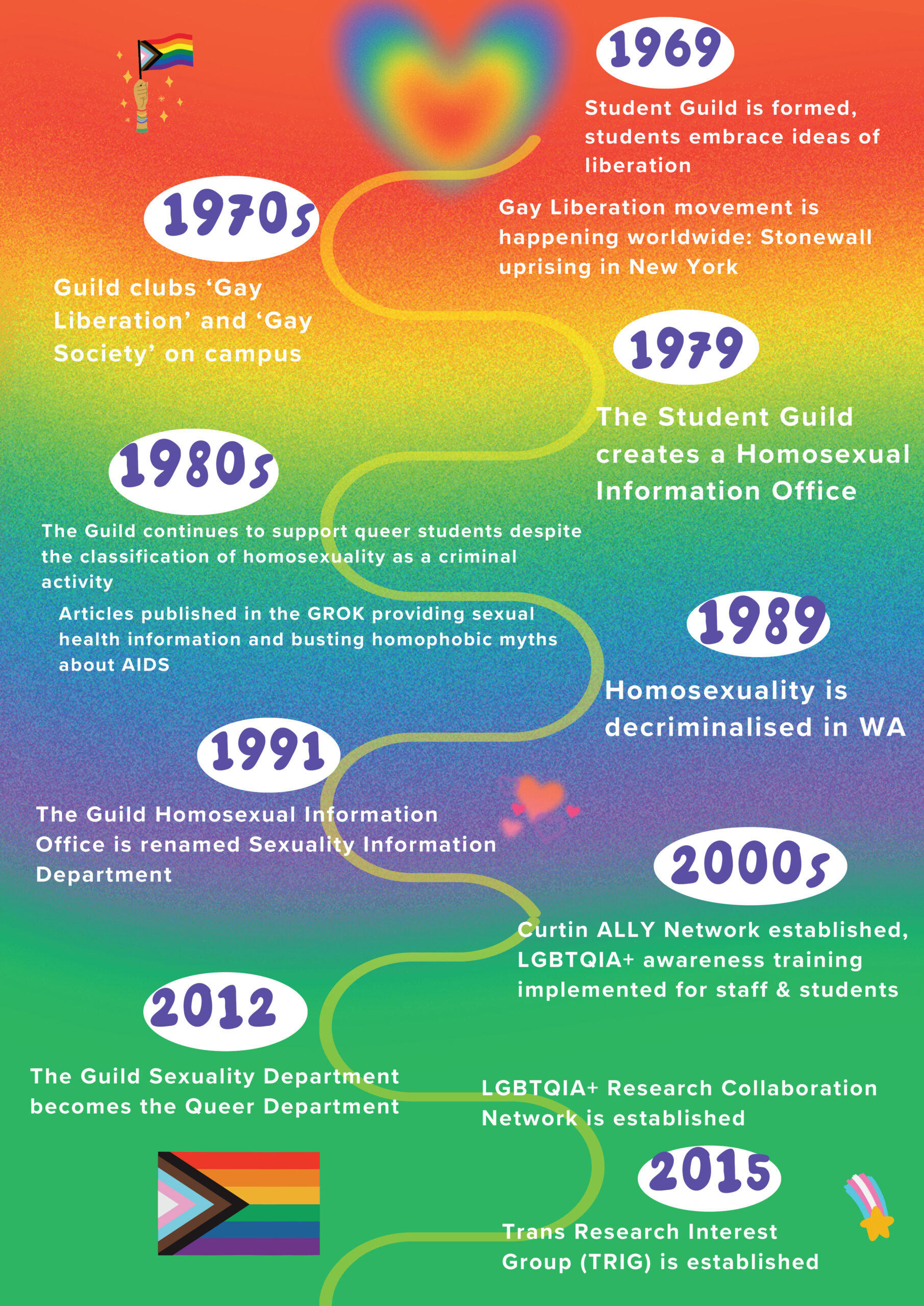
In 1979, the Student Guild created the Homosexual Information Office (HIO) as a department. The Guild recognised the responsibility to support all students in feeling welcome on campus, and to disseminate accurate information about sexuality and sexual orientation (Student Guild annual report, 1979).
Homosexuality was not decriminalised in Western Australia for another 10 years. It is significant that the Student Guild publicly showed their support for queer people during 1979-1989 despite the classification of homosexuality as a criminal activity in WA at the time, and alongside discrimination faced by homosexual people during the HIV/AIDS epidemic, officially declared in 1981.
The Homosexual Information Office provided a safe space for queer students on campus to make friends, access support services, learn about sexuality, or just have a confidential chat with the Homosexual Information Officer. The HIO was open to both “gay and non-gay students alike”.
Advertisements for the Homosexual Information Office in GROK, 1988
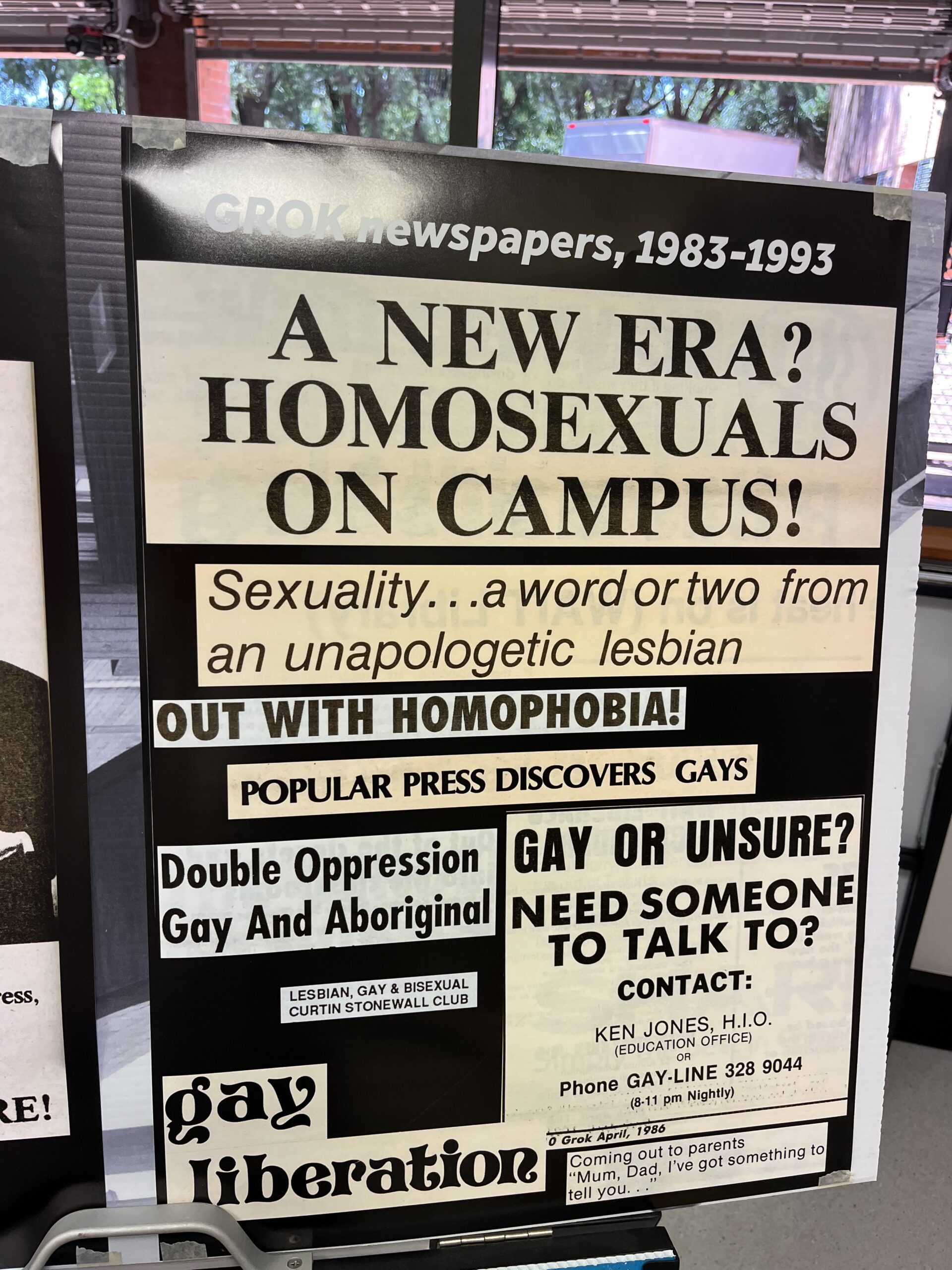
The poster below was on display at our Archives stall at the Campus Pride event, showing students and staff a few examples of the headlines of articles written by queer students in the GROK newspapers.
Snapshot of headlines written by queer students in GROK newspapers, 1983-1993
The developing mindsets and attitudes towards sex, sexual orientation and gender expression from the early 1970s to now have been very apparent during this project. The earlier records from the 70s and 80s show a binary way of thinking when it comes to sexual orientation and gender: heterosexual/homosexual and man/woman.
There is a gap in the records of that time when it comes to representation of people who do not fit within those two binaries. References to bisexuality, transgenderism, sex differences in humans and other sexualities are found in later records, ranging from the mid-90s to the late 2010s, depending on the topic.
The Equal Opportunity Act 1984 (WA) was amended in 2002 to include sexual orientation, legally protecting LGB people from discrimination in areas of employment and education in public life (Acts Amendment (Gay and Lesbian Law Reform) Act 2002).
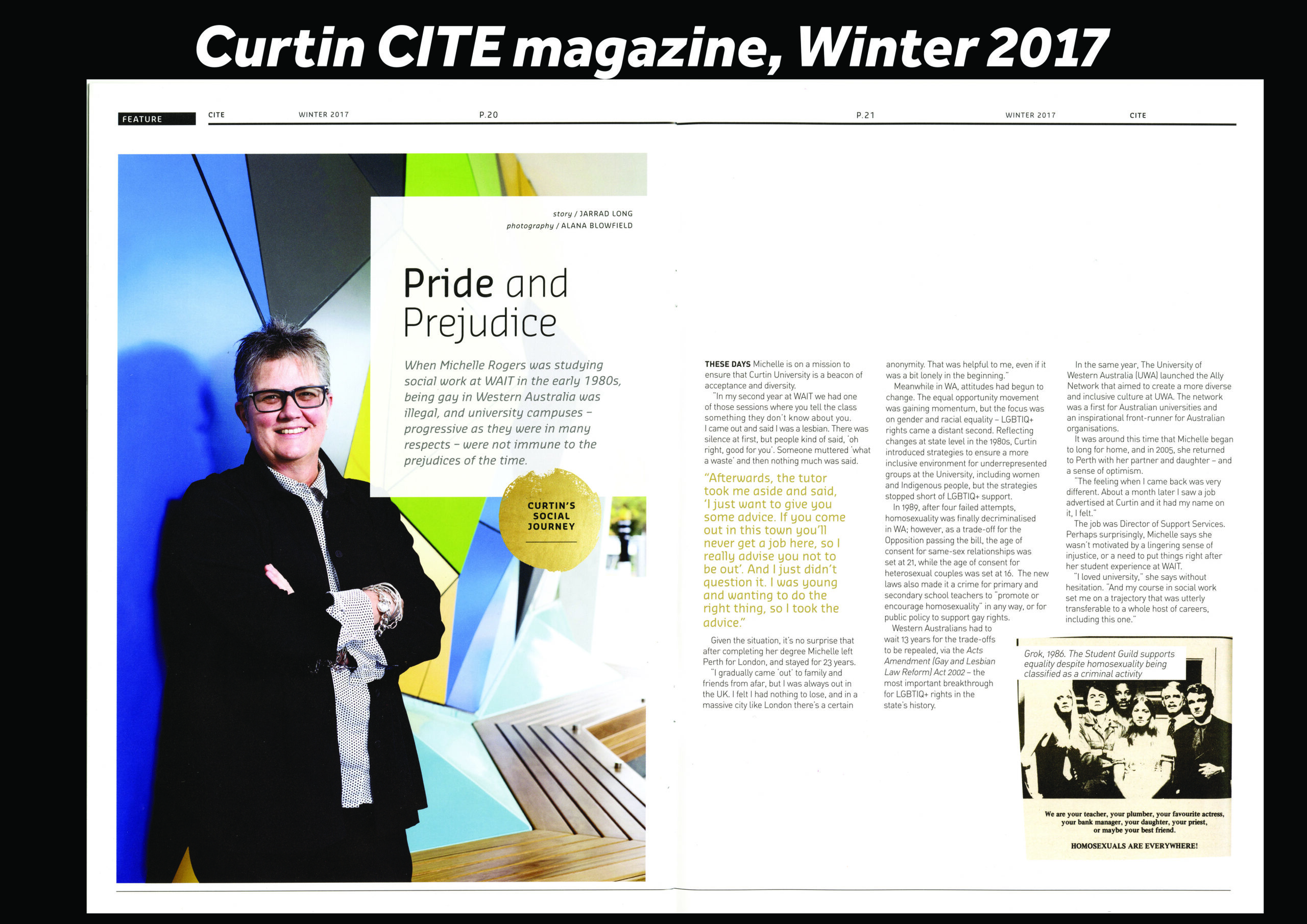
In the early 2000s, Curtin appointed Michelle Rogers as Director of Support Services. With a background in social work she introduced the Ally Network at Curtin, and implemented awareness training for students and staff on issues facing LGBTQIA+ people (CITE magazine, Winter 2017).
The work of Michelle Rogers as a member of the LGBTQIA+ community and WAIT alumni has had an ongoing impact for queer staff and students. The changes in the last 20 years have been significant at Curtin in its inclusivity. For three consecutive years 2013-5, the annual Pride in Diversity Awards named Curtin as the top Australian university for LGBTQIA+ inclusion (CITE magazine, Winter 2017).
Snapshot timeline of key events at Curtin
Recent records in the LGBTQIA+ archival collection relate to Curtin’s campaign supporting marriage equality in 2017.
Vote Yes campaign: Curtin Vice-Chancellor Professor Deborah Terry AO (middle), 2017.
You are welcome to view the display cabinet on B100 Level 2 with some of the articles and items in this collection. It will be on display into November 2023. Many thanks to the Queer Department, Queer Collective members, and the Diversity, Inclusion and Belonging team at Curtin.
]]>0Nicolee<![CDATA[The origin of the Â鶹ֱ²¥ logo]]>/archives/?p=18192025-01-23T07:30:51Z2023-10-06T02:02:40ZÂ鶹ֱ²¥’s logo still carries with it a connection to our days as the Western Australian institute of Technology (WAIT) and the symbol we used then.
The original WAIT design was developed in 1967 by David Walker, a WAIT art and design teaching staff member:
“The symbol represented the cross-disciplinary nature of the new Institute, its technology focus and the evolving and changing nature of tertiary education,� said David Walker. “Although fairly abstract, the symbol provided a visual essence of an Institute of Technology. There were to be no rampant swans entwined with kangaroo paws.�
Source: WAIT Gazette, July 1968
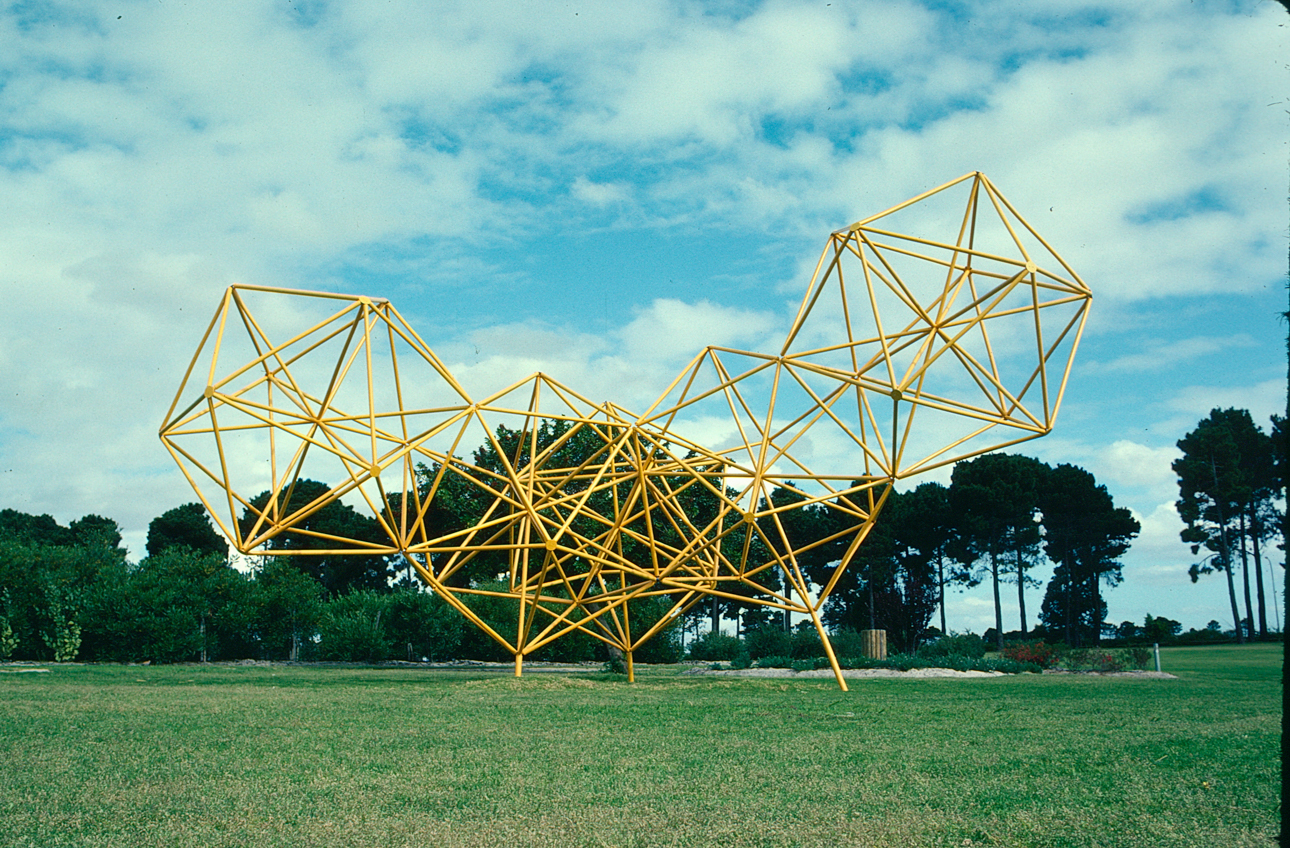
The WAIT logo sculpture on campus circa 1979.
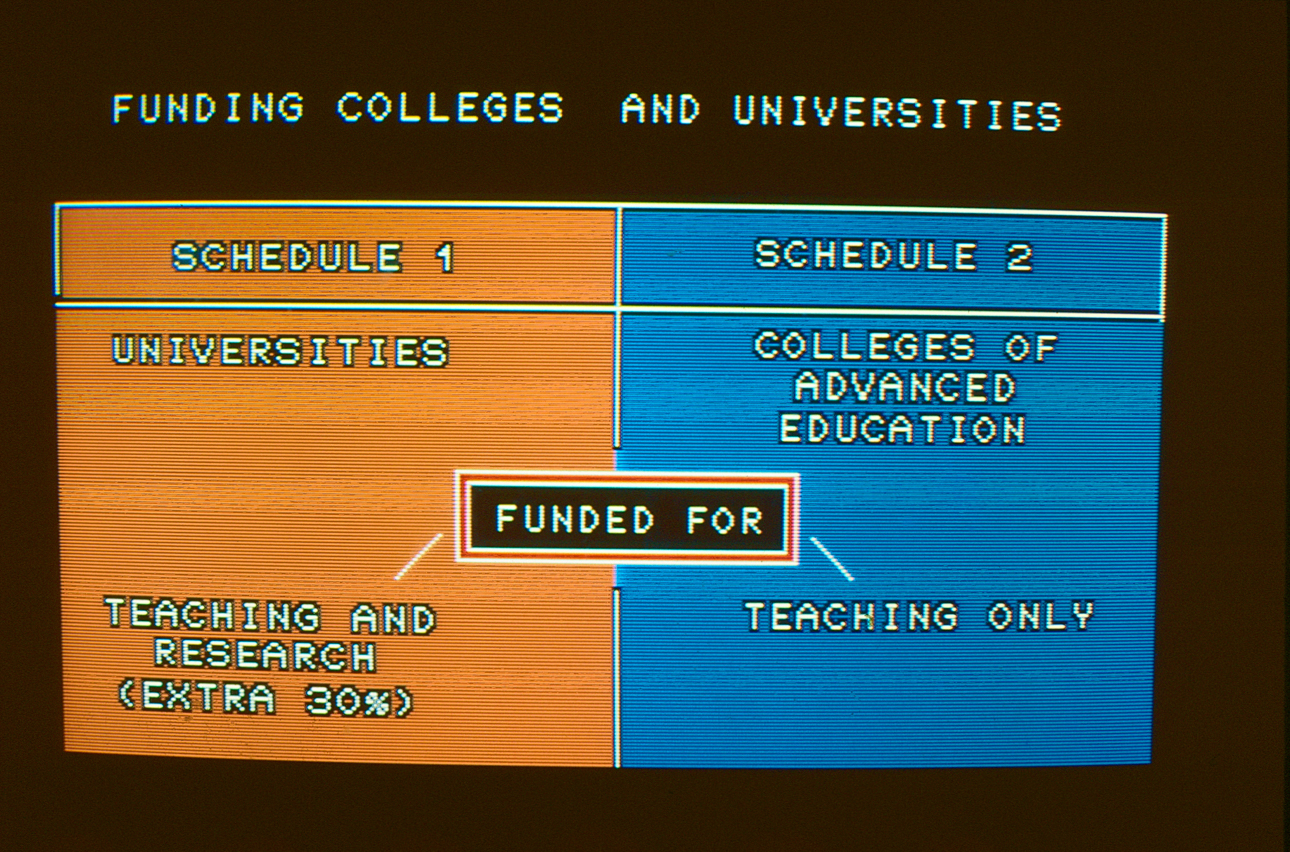
In 1986 work progressed on changing the status of WAIT to that of a university. A number of reasons were behind this change. At this time WAIT was generating research outcomes commensurate with university level standards or results. However, as a College of Advanced Education there was no recurrent government funding to support WAIT research. As seen by the slide below, elevation to university status would unlock access to increased Commonwealth funding.
Source: Director Don Watts letter to staff, June 1986.
Slide depicting Commonwealth funding arrangements. University Marketing Library: 1986.
During 1986 and in preparation for our change in status, we began developing a new symbol and logo design. One of the first ideas was a shield in the shape of a star. In a lengthy discussion at its 1986 November meeting, the WAIT Council resolved there should be more connection to the WAIT symbol. The proposed star shape was replaced with a device that referenced the original WAIT tetrahedron design. Council saw retaining elements of the WAIT symbol as an integral element of the new design.
Moving on from the WAIT symbol was also described by the WAIT sub-committee tasked with the design work, as a practical solution to technical problems with reproducing and printing the three-dimensional shape in a flat two-dimensional format (i.e. on business cards).
The new 1987 Â鶹ֱ²¥ of Technology corporate style manual described how the new design would denote our new university status through a shield design. This would be in keeping with the form adopted by other universities, yet maintain our connection to our history as:
the two halves of the shield were derived from the WAIT symbol; and
the technological shape provided connection with our former structure.
The logo circa 1987.
The new logo circa 2004.
In 2010, we became Â鶹ֱ²¥, removing the words “of technology” in our name.
]]>0Nicolee<![CDATA[A brief history of the Faculty of Health Sciences at Â鶹ֱ²¥]]>/archives/?p=17712024-02-14T07:50:13Z2023-08-29T05:53:14ZThe family tree that evolves into Â鶹ֱ²¥ begins with the various trade schools and technical colleges in the early 1900s in Perth and surrounds, especially the Perth Technical School (later renamed Perth Technical College in 1929). These were merged and incorporated into the Western Australian Institute of Technology (Â鶹ֱ²¥’s predecessor organisation) at Bentley.
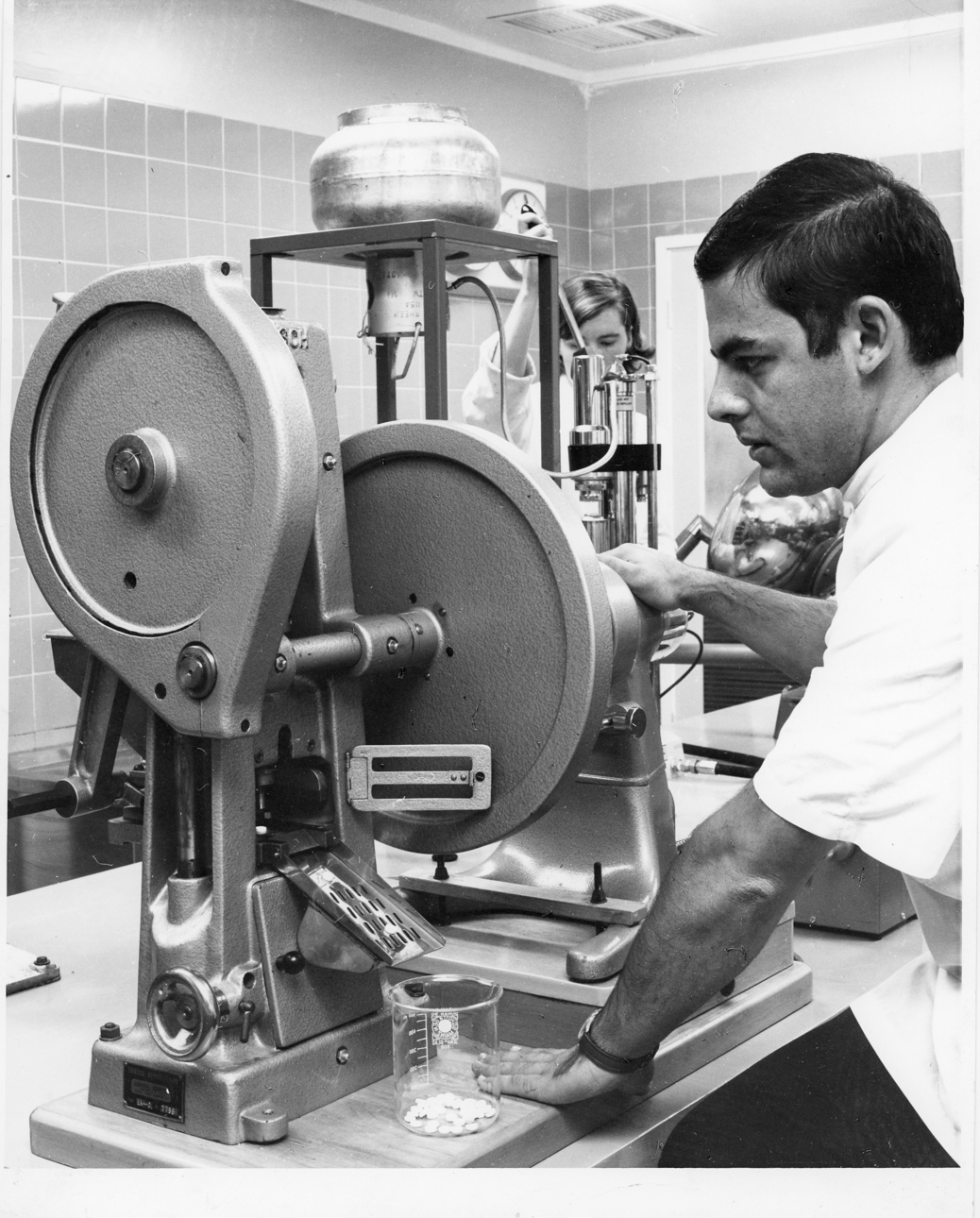
WAIT’s first intake of students was in 1967, with an official enrolment of 2,891 students. Of the health sciences, the associate qualification of pharmacy transferred from Perth Technical College is one of the first disciplines taught in our inaugural year.
WAIT Pharmacy student, 1971
WAIT’s first teaching areas included the Division of Applied Science, the Division of Architecture and Engineering, and the Division of Commerce and General Studies. Although there is no official School of Health Sciences, in 1967 pharmacy was included under Applied Science, and General Studies included psychology and social work, viewed as Social Sciences at the time.
Early education in health sciences in Perth also included the School of Physiotherapy established in 1950 at the Shenton Park annex of Royal Perth Hospital, and later the School of Occupational Therapy in 1960.
Occupational Therapy students at the Royal Perth Hospital Shenton Park annex, 1967.
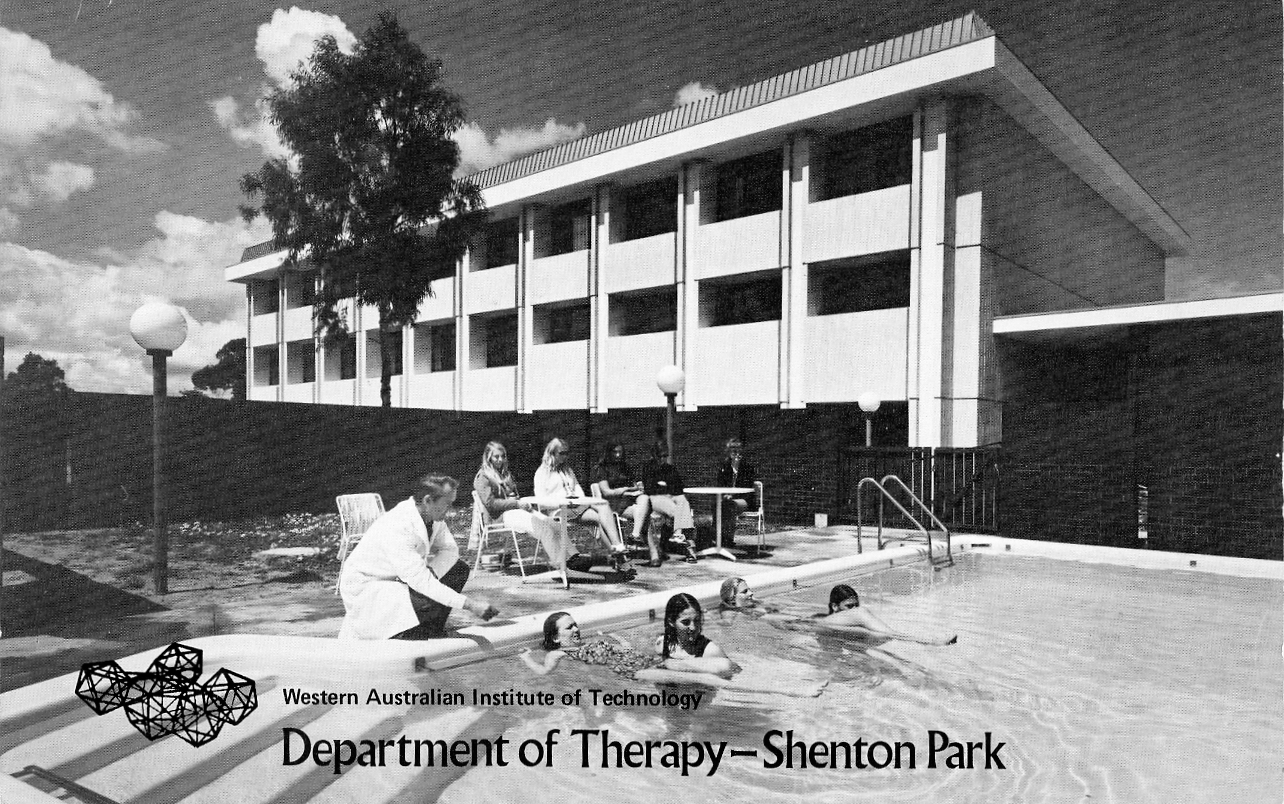
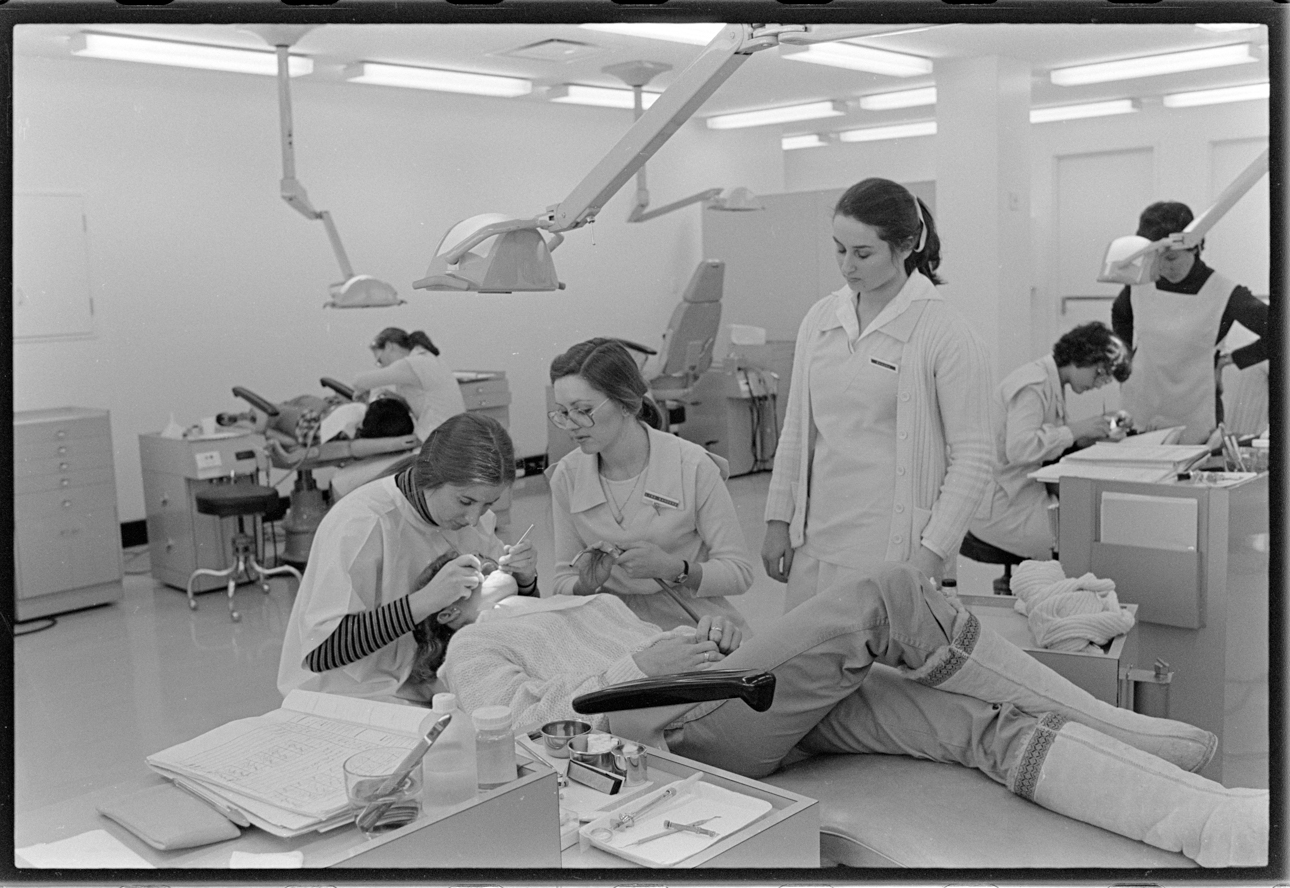
In 1969, the Schools of Physiotherapy and Occupational Therapy at Shenton Park are merged with WAIT, to form the Department of Therapy. Teaching continues from the Shenton Park campus. Plans for a qualification in Speech Therapy are raised. 1971 saw the introduction of a course in dental therapy at WAIT, which continues to be taught today as Oral Health.
WAIT Department of Therapy, Shenton Park
Dental therapy students at WAIT in 1979.
The School of Health Sciences
In 1973 the School of Health Sciences at WAIT is officially formed, under Head of School Mark Liveris. It includes three departments: the Departments of Medical Technology, Pharmacy and Therapy. The School also conducts the Institute’s courses in Environmental Health, Dental Therapy, Pharmacy, Physiotherapy, Occupational Therapy, and Chiropody.
The Department of General Studies became the Department of Psychology and Social Work, moving from the General Studies Division to Health Sciences.
The 1970s also saw the opening of new dedicated health sciences buildings on campus and transfers of more courses to the WAIT School of Health Sciences, including Dietetics, Nutrition and Nursing.
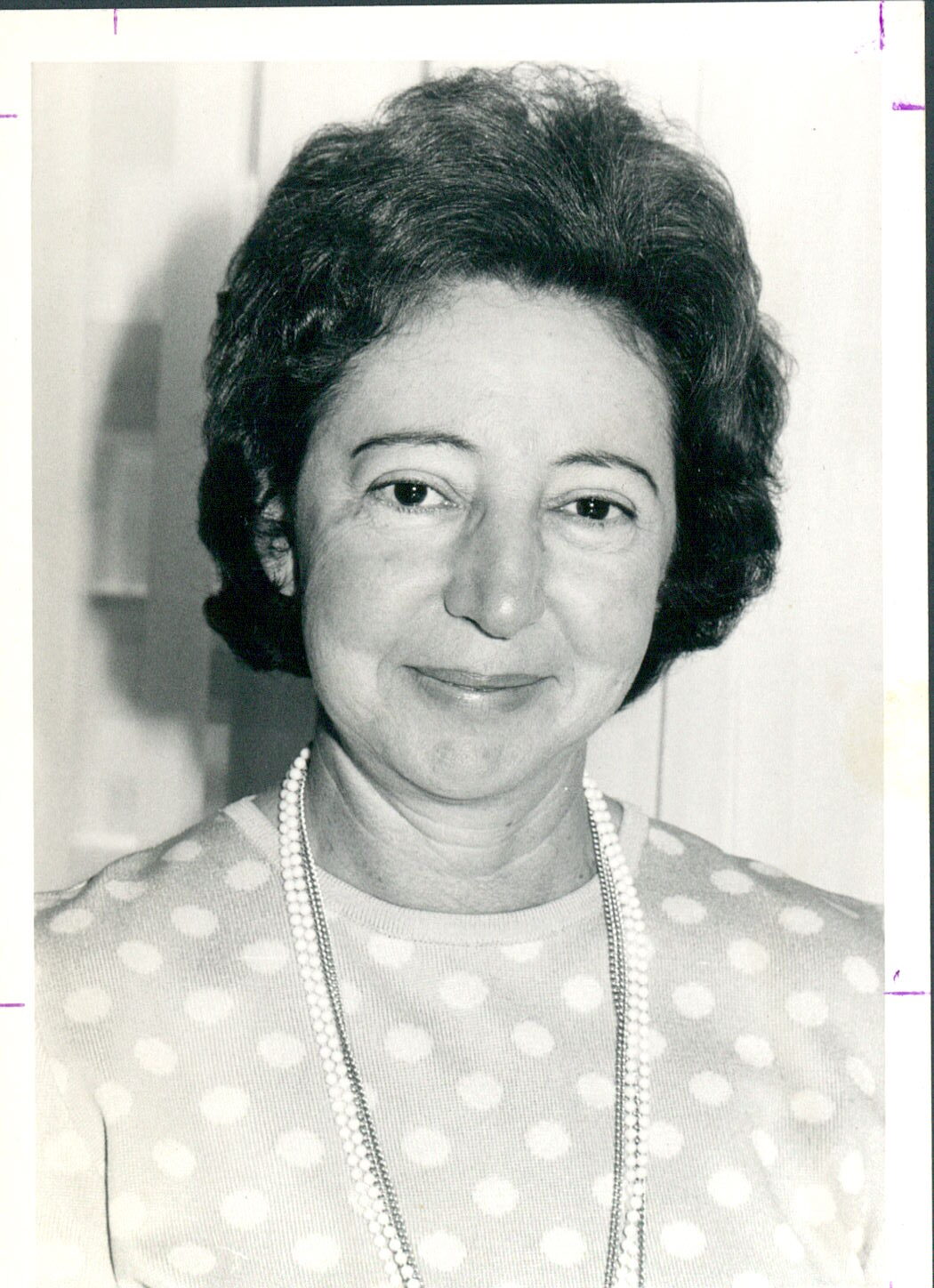
Former College of Nursing principal Merle Parkes becomes the first Head of the new Department of Nursing at WAIT.
In 1975, 79 students enrolled in the undergraduate nursing course for the first time (57 full time and 22 part time). Courses are at associate or diploma level. By 1979 the course is accredited as a Bachelor’s degree and the first official cohort is 74 nursing graduands.
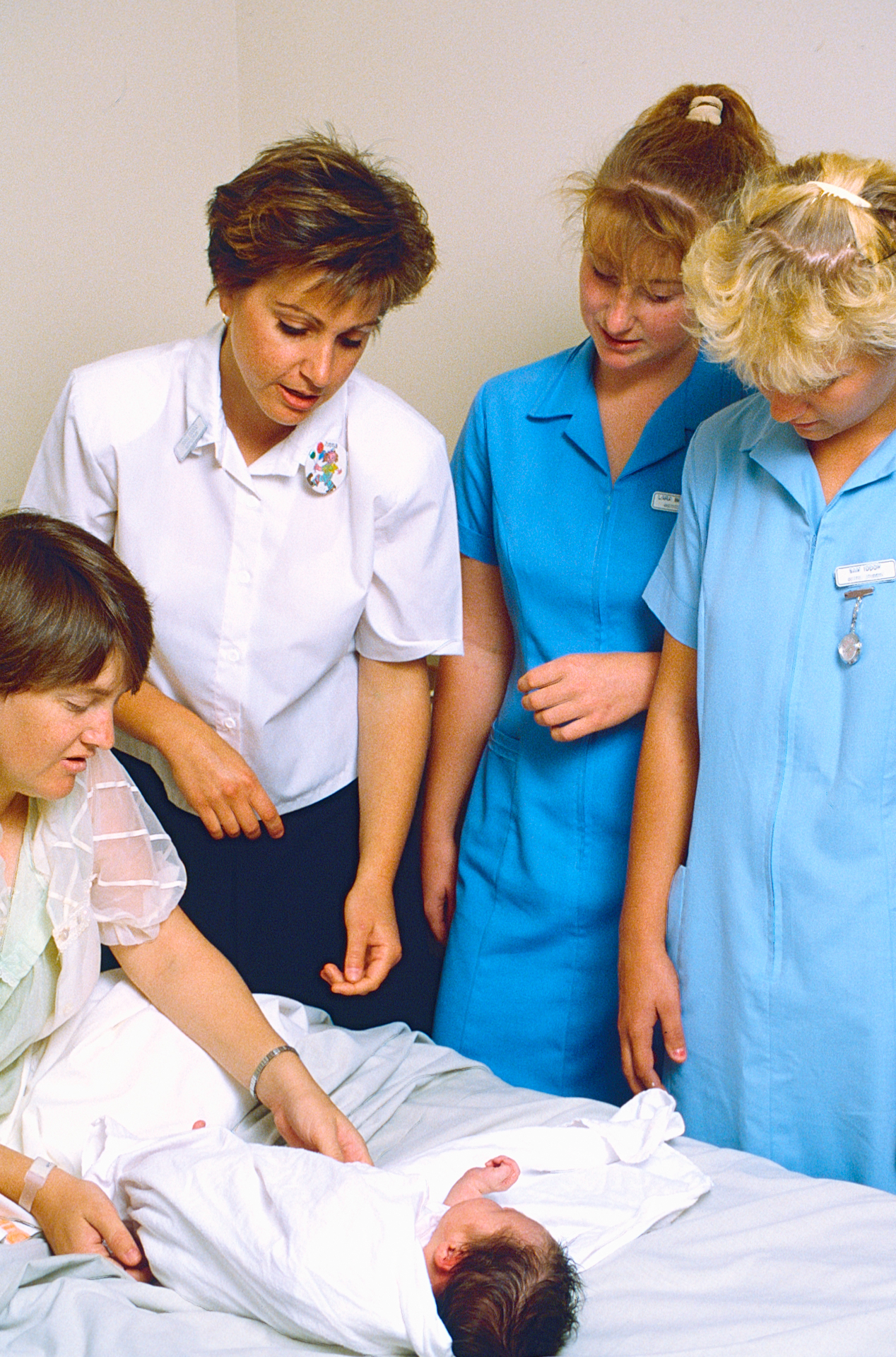
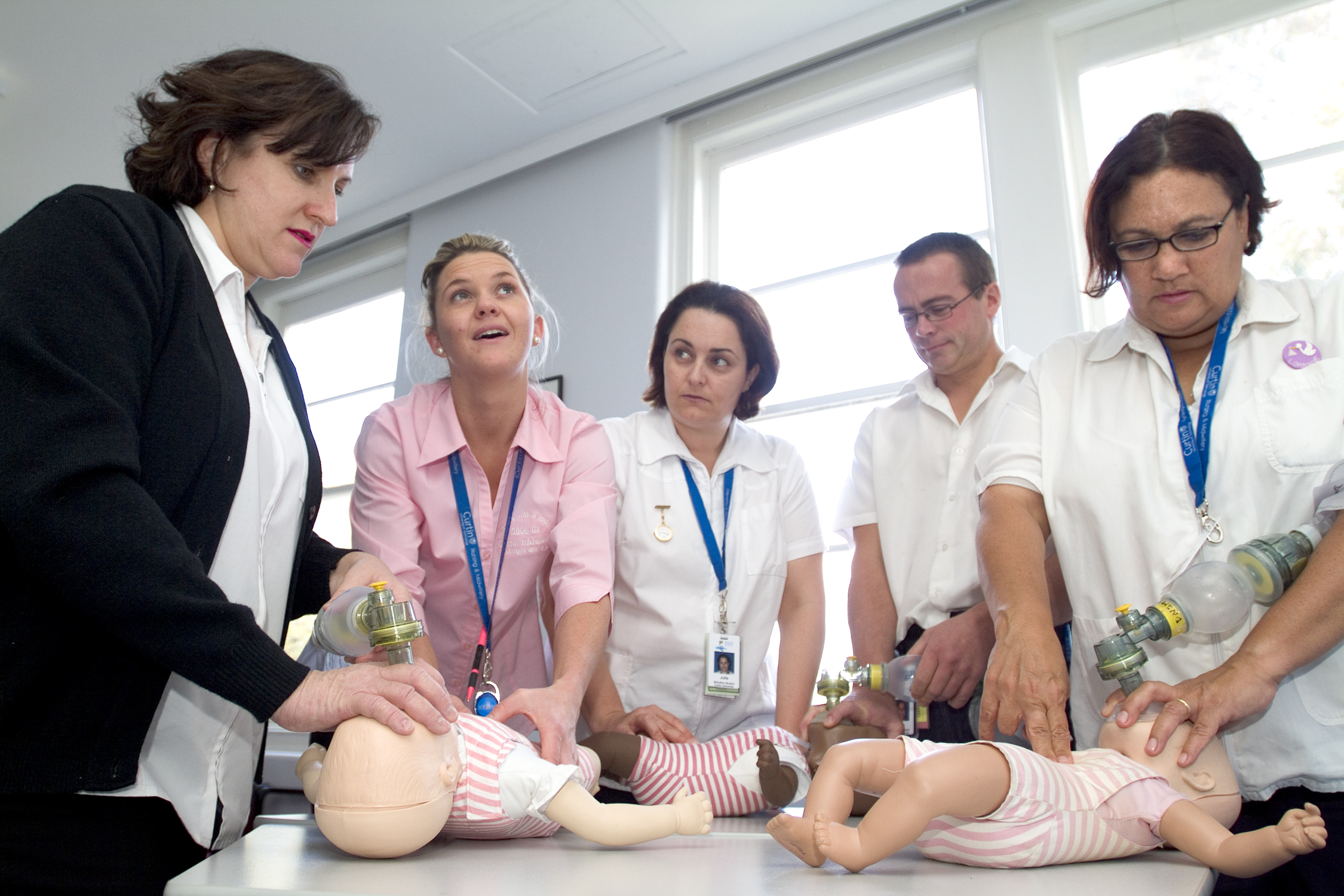
Midwifery studies are taught with nursing, with students taking specialised courses at King Edward Memorial Hospital for Women in 1978 to inform future midwifery specialisation options at WAIT. Midwifery is offered as a postgraduate qualification until 2008, when the undergraduate Bachelor of Science (Midwifery) is also launched to meet the shortage of midwives and increasing number of births in WA.
Midwifery studies at Curtin, circa 1990s.
Midwifery studies, 2008.
In 1987, WAIT becomes Â鶹ֱ²¥ of Technology. The large Division of Health Sciences has broadened to include schools of occupational therapy, physiotherapy, nursing, medical technology (biomedical sciences), psychology, pharmacy, and community health. It also includes departments of home and consumer studies, speech and hearing science, radiography, and units in sexology.
In 1994, Curtin prioritises Aboriginal health in training new graduates. All health students are required to complete foundational unit in Indigenous Health, which continues today for new medical students.
By 2001, Curtin enrolments are at 31,393. Female students now account for 54% of total enrolments, vastly different from the WAIT days when female students accounted for about one quarter of enrolments.
A research university
Under strong strategic leadership from Vice-Chancellors John Maloney and Lance Twomey, research and development grows astronomically in the 80s, 90s and 2000s to see Curtin grow from not just a tertiary education provider but to a fully-fledged research university as well.
In 1990 a Curtin research team in the School of Medical Technology identify a unique insulin receptor in mammary tissue. This receptor plays a vital role in lactation.
One of Vice-Chancellor Jeanette Hacket’s major initiatives is the $35 million , opened by Prime Minister Julia Gillard in 2012.
Curtin Medical School
A feasibility study report of the establishment of a Curtin Medical School is completed in 2009 by Dr Neale Fong to increase the number of doctors in the state and better meet the needs of under-serviced areas of health care in WA.
In March 2017, Curtin’s new Medical School is opened with the first intake of Medicine students – offering the State’s first undergraduate degree in primary health care.
This first cohort of Medicine undergraduates (53 students) celebrate at the end of 2021 after completing the five-year, full-time Bachelor of Medicine, Bachelor of Surgery (MBBS).
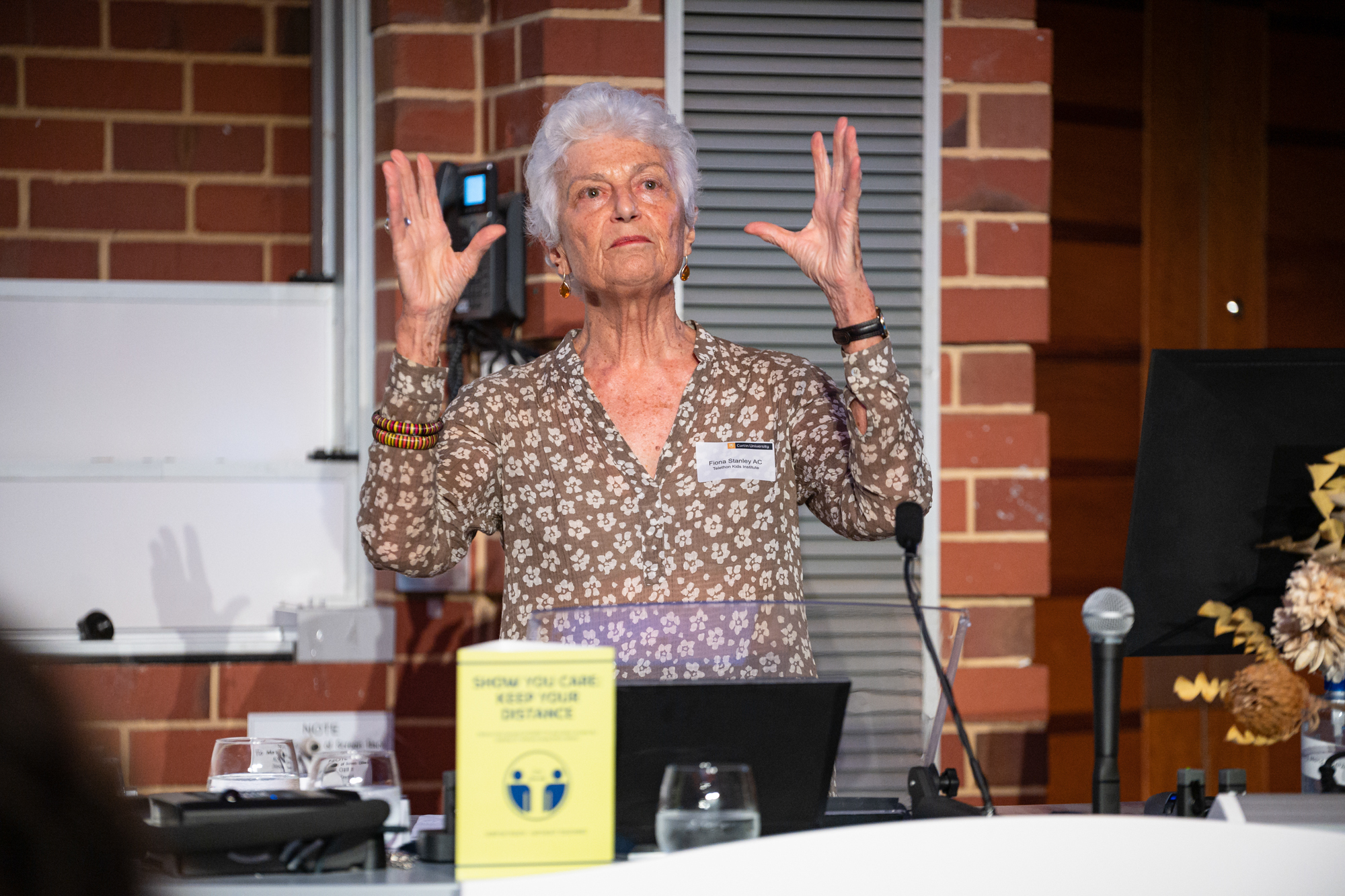
Fiona Stanley speaks to new graduands at the Medical School first graduation celebration and award ceremony, 2021.
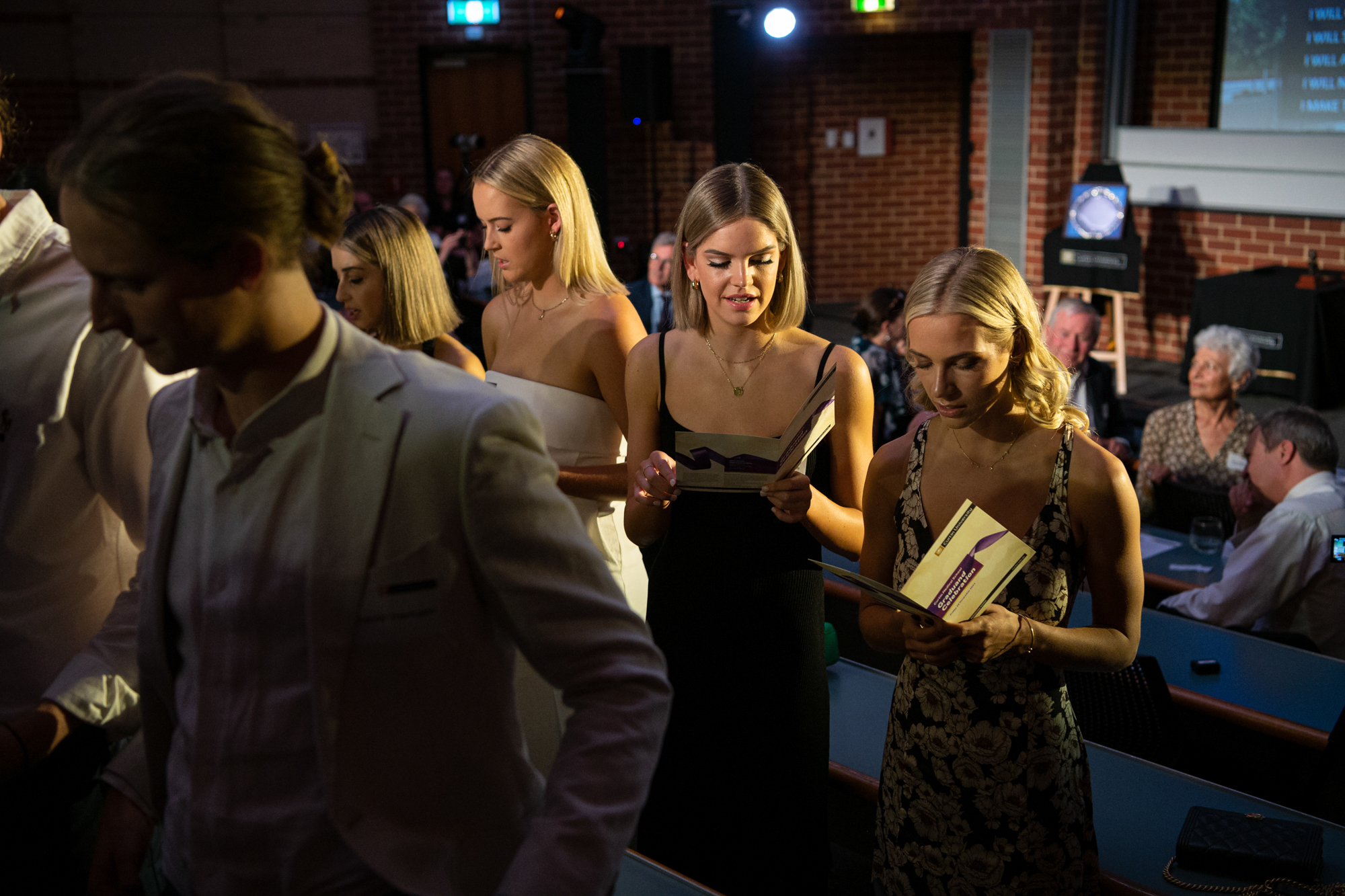
Medical School graduates recite the Doctor’s Oath, 2021.
Four academic schools and multiple health sciences facilities
Curtin medical students are supported by the opening of the Curtin Midland campus in 2019, with simulation environments for health science disciplines. The space is used by medicine and allied health students carrying out clinical placement in nearby health facilities.
Curtin’s Kalgoorlie Rural Health Campus was launched in 2021 to support healthcare in regional areas with the continual population growth in WA, and in 2022, places offered at Curtin Medical School have increased from 60 in 2017 to 120 (110 domestic and 10 international).
The dedication and hard work of health sciences students & staff at the early WA technical colleges, WAIT and Curtin have grown to become the current Faculty of Health Sciences, focusing on discipline-based course delivery and real-world learning.
Today, the Faculty of Health Sciences at Â鶹ֱ²¥ includes four academic Schools: Curtin Medical School, Curtin School of Allied Health, Curtin School of Nursing and Curtin School of Population Health.
]]>0Nicolee<![CDATA[More recently digitised negatives from 1979-1980]]>/archives/?p=17202023-08-29T08:06:37Z2023-08-25T06:29:55ZWe are continuing to send a selection of 35mm film negatives to the for professional digitisation services. Our aim is long-term physical preservation as well as to provide the community access to these records of the university’s foundational years as the Western Australian Institute of Technology.
This selection of images were originally taken by photographers in 1979-80 for publication in our early university journal The Reporter, created by the WAIT Public Relations Department. The Reporter documented the goings-on at the Institute across teaching faculties, student life and Bentley campus.
Aboriginal and Torres Strait Islander readers should be aware that this story contains names and images of deceased persons.
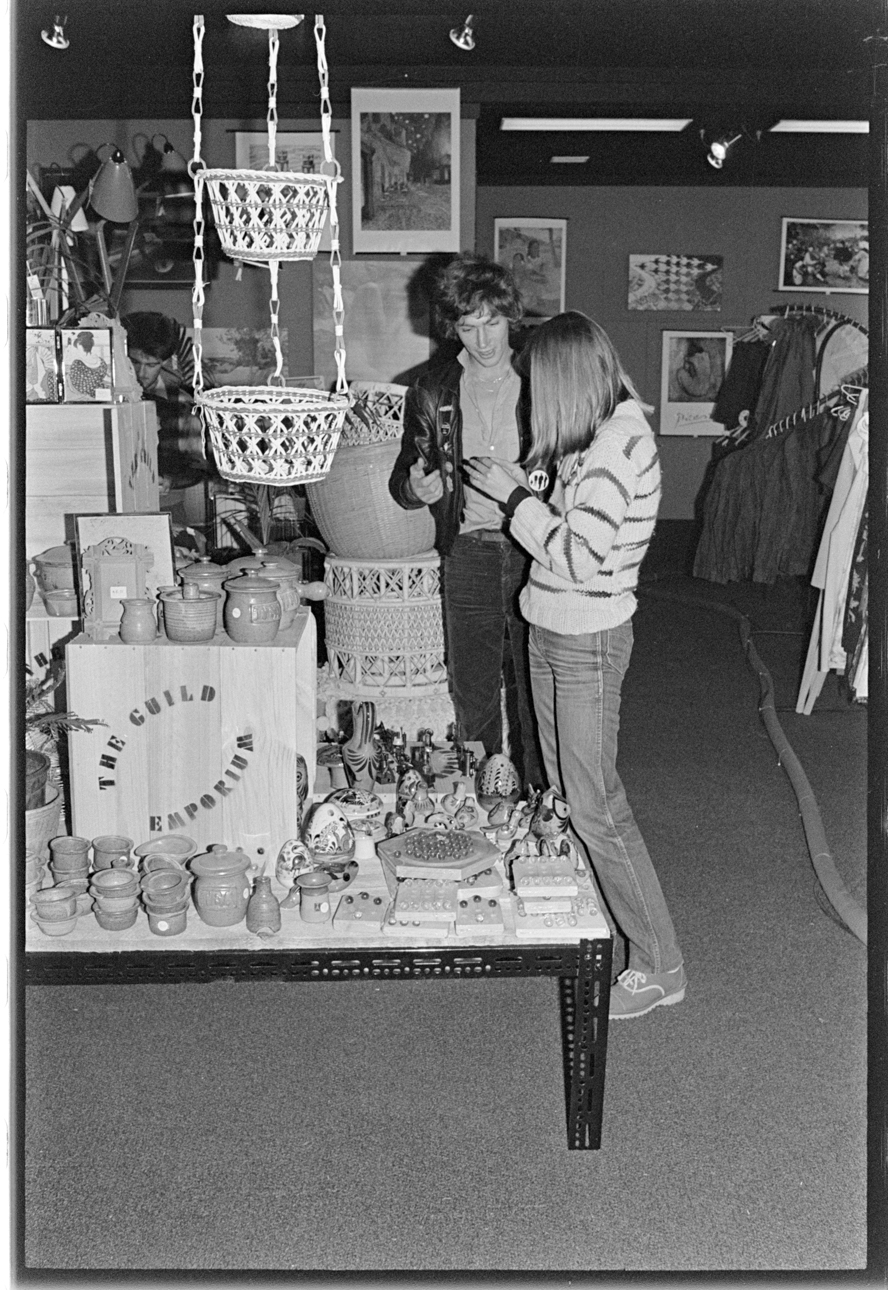
Sleeve 95. Guild Emporium (market jumble sale).
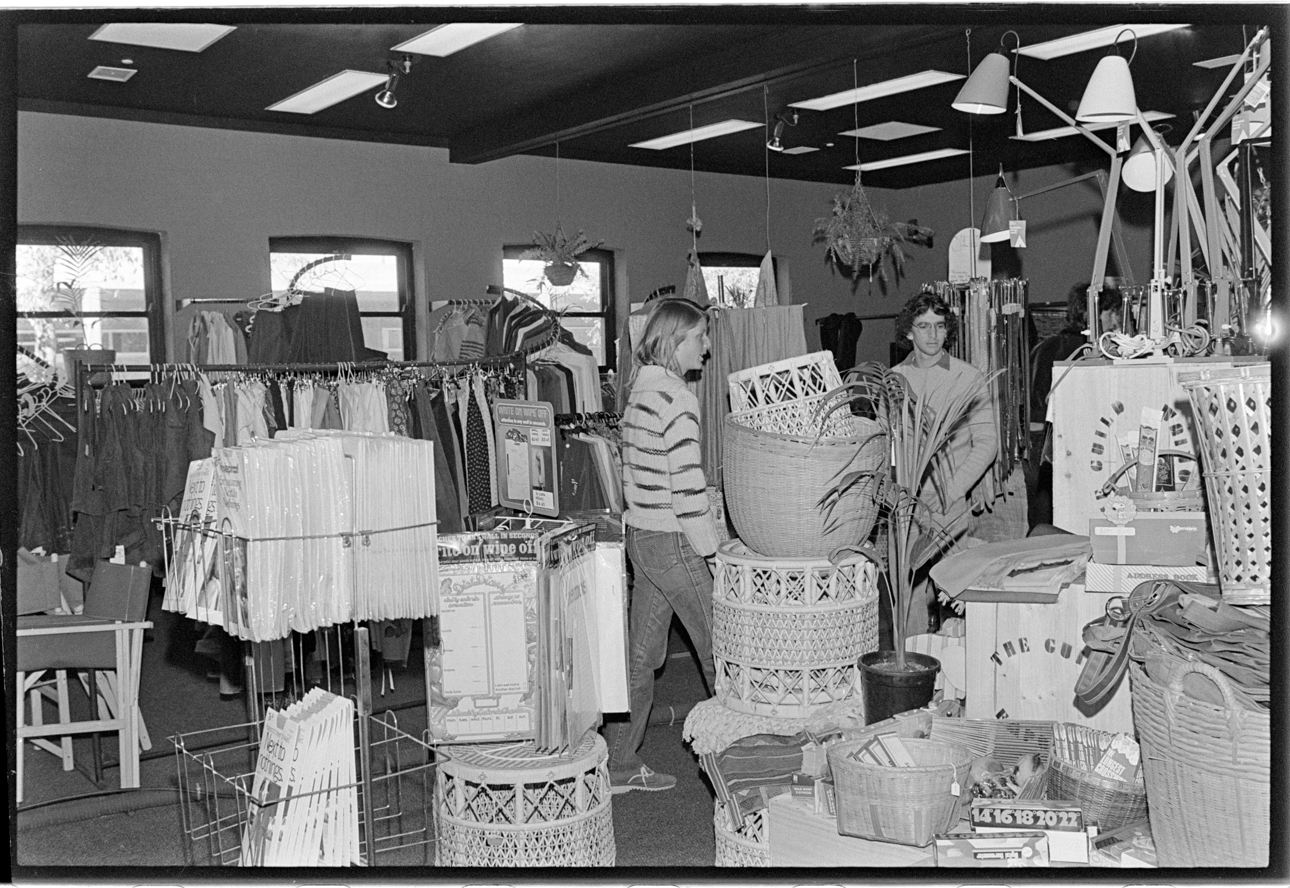
The Guild Emporium, where you can get anything and everything on campus. This was likely in B103 facing Atkinson Forum, built in 1977. Today this building is still a retail service as ‘The School Locker’, providing stationery, books, branded uniforms and equipment that students require for their specific teaching discipline.
Sleeve 95. Guild Emporium (market jumble sale).
Sleeve 93. Library Studies.
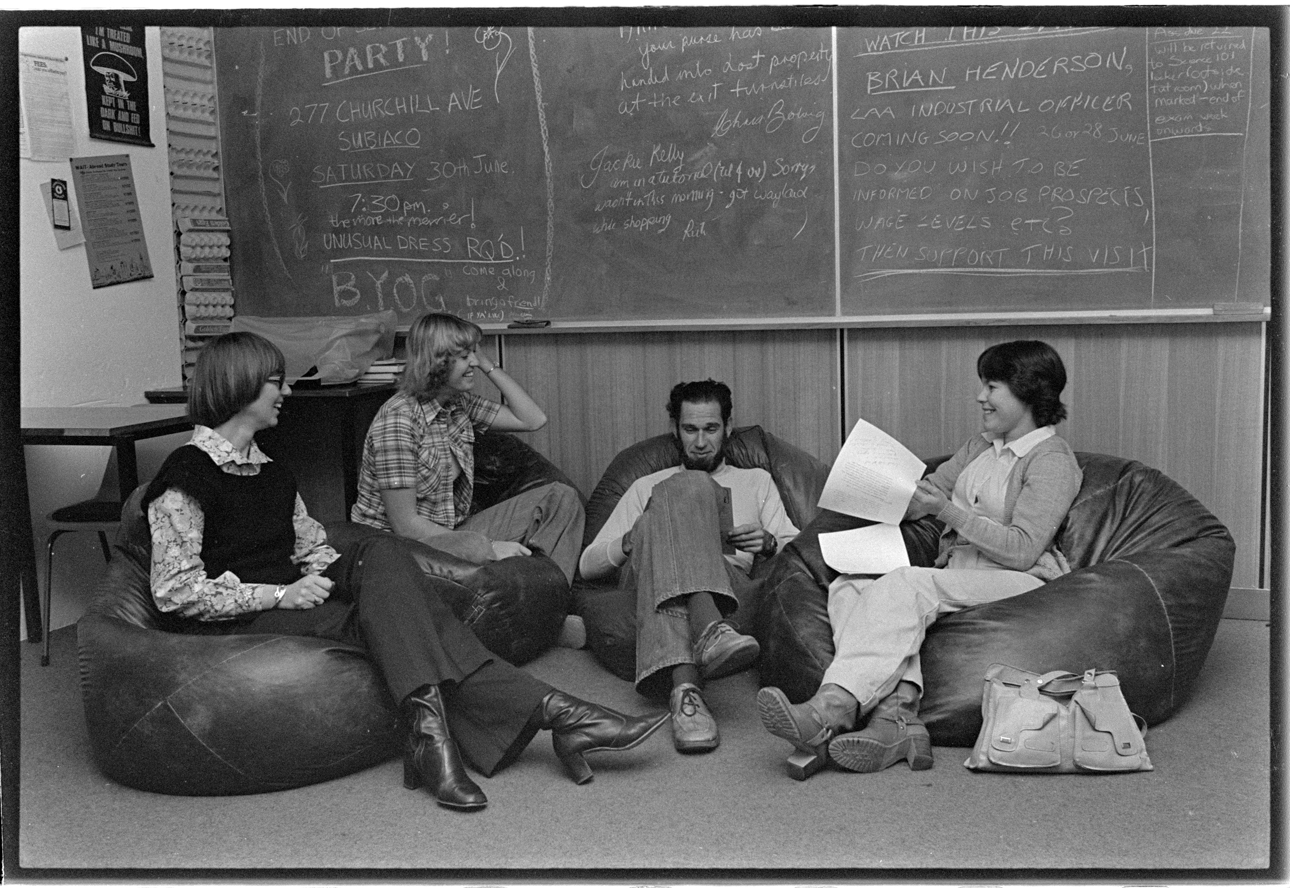
Library Studies students studying in a common room. The blackboard behind gives an insight into the activities on campus too. A smaller student body and physical campus than we have now meant leaving notes on the blackboard was obviously a successful method of communication.
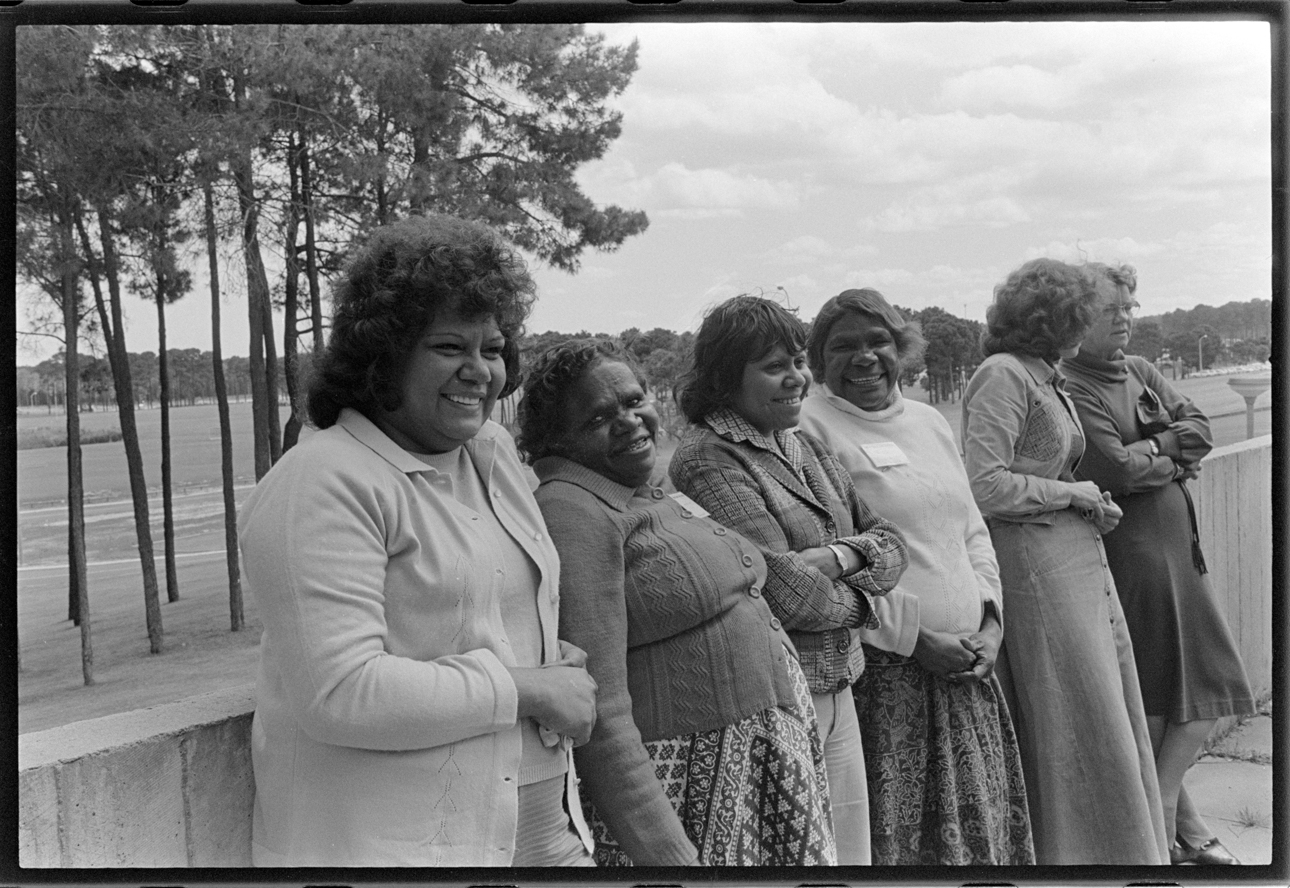
Sleeve 87. 6NR Aboriginal program broadcast.
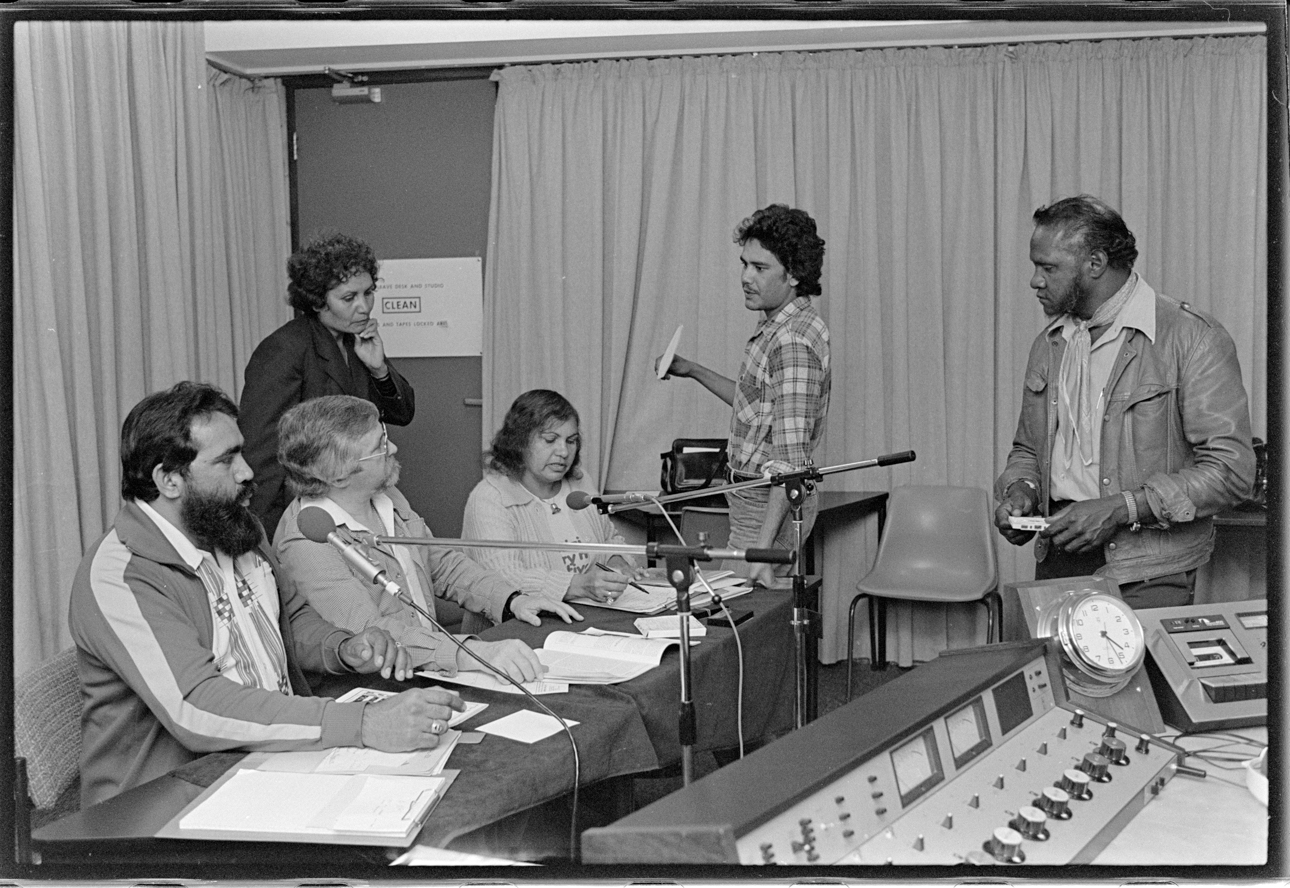
6NR radio station was the home for community broadcasting programs in Perth when it was started in 1976 at WAIT. In 1979, Yamatji indigenous elder Vi Chitty was a regular broadcaster with her program ‘Wanju Banburru’. Along with Ken Colbung, Vi’s radio work created the foundations of Aboriginal Radio, later known as Noongar Radio which continues to broadcast today on 100.9FM.
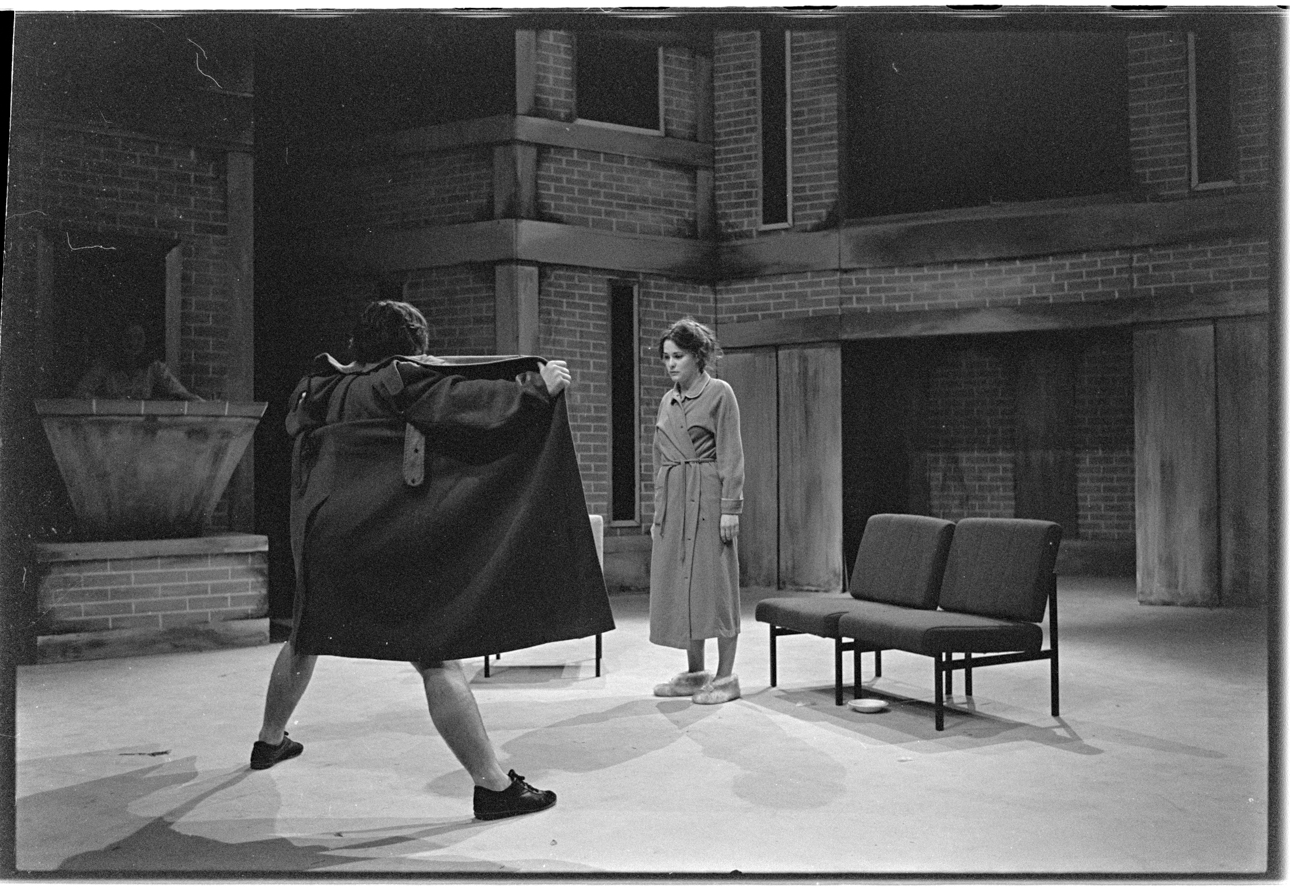
Sleeve 88. Stage production WAIT on Revue.
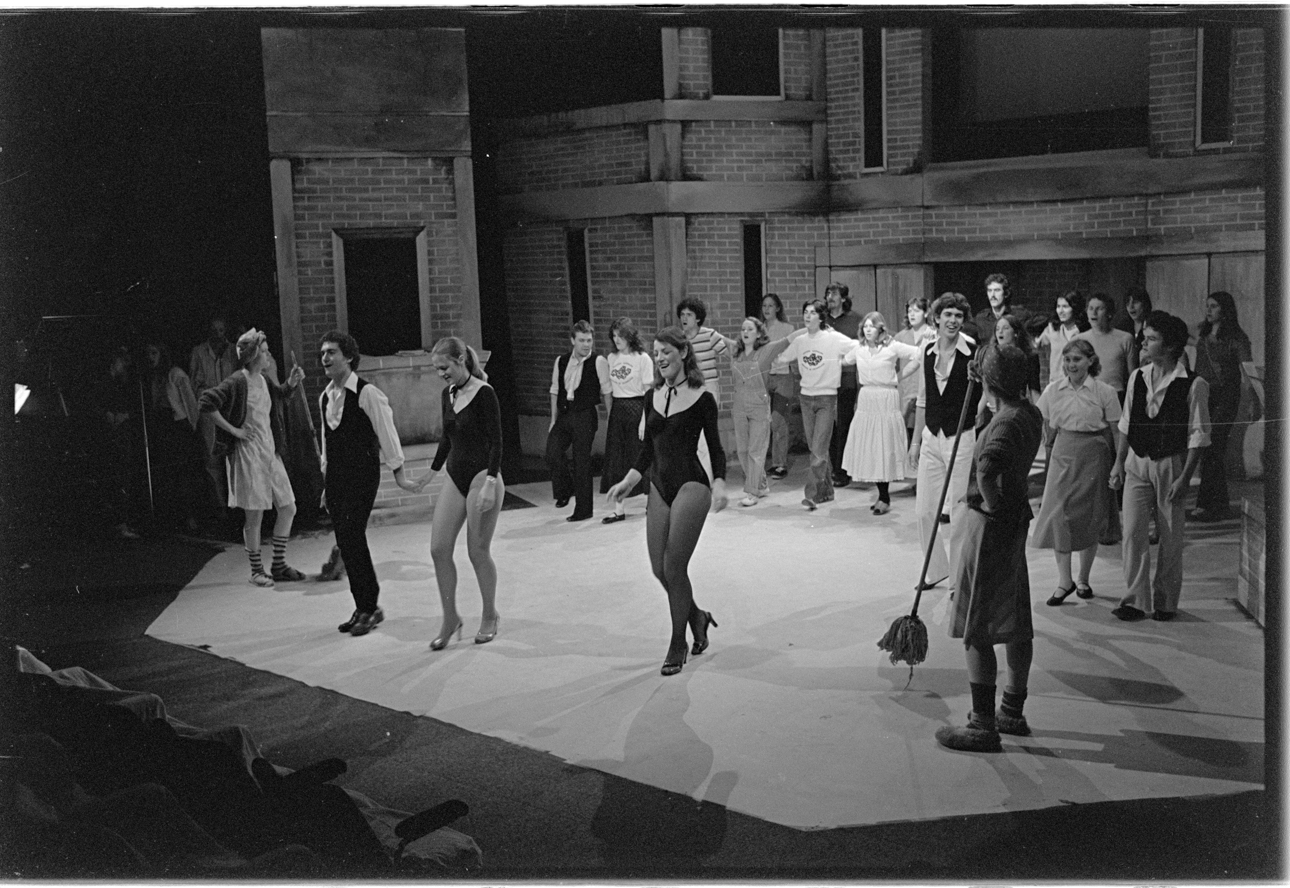
The WAIT Theatre production company kicked off in 1972 and put on multiple productions throughout the year with WAIT students and professionals from the industry. 1979 saw the production ‘WAIT! On Revue’ – a revue show with a showcase of skits, singing and dancing. Note the WAIT logo on the white jumpers of two performers in the back row.
Sleeve 88. Stage production WAIT on Revue.
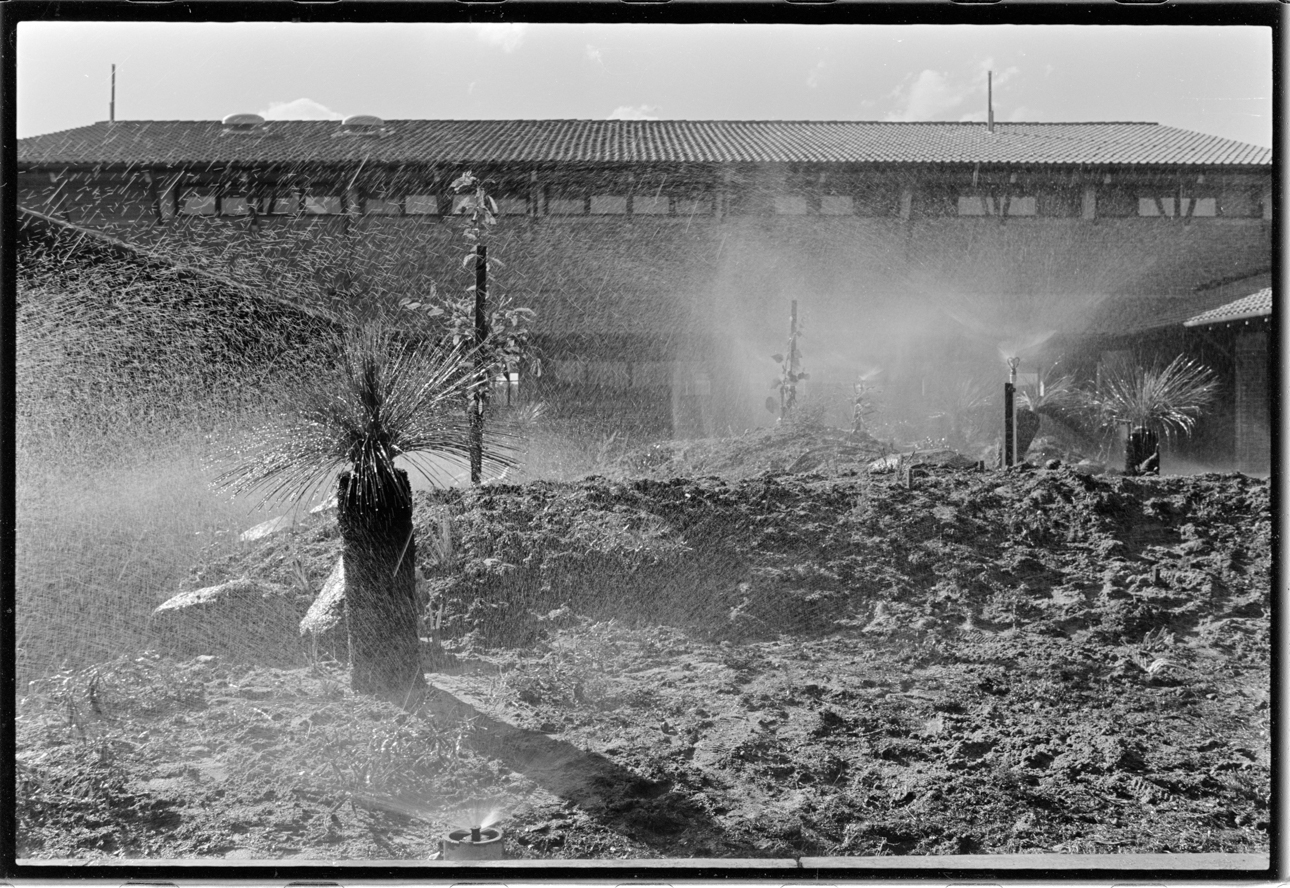
Sleeve 84. Nature garden in Guild buildings.
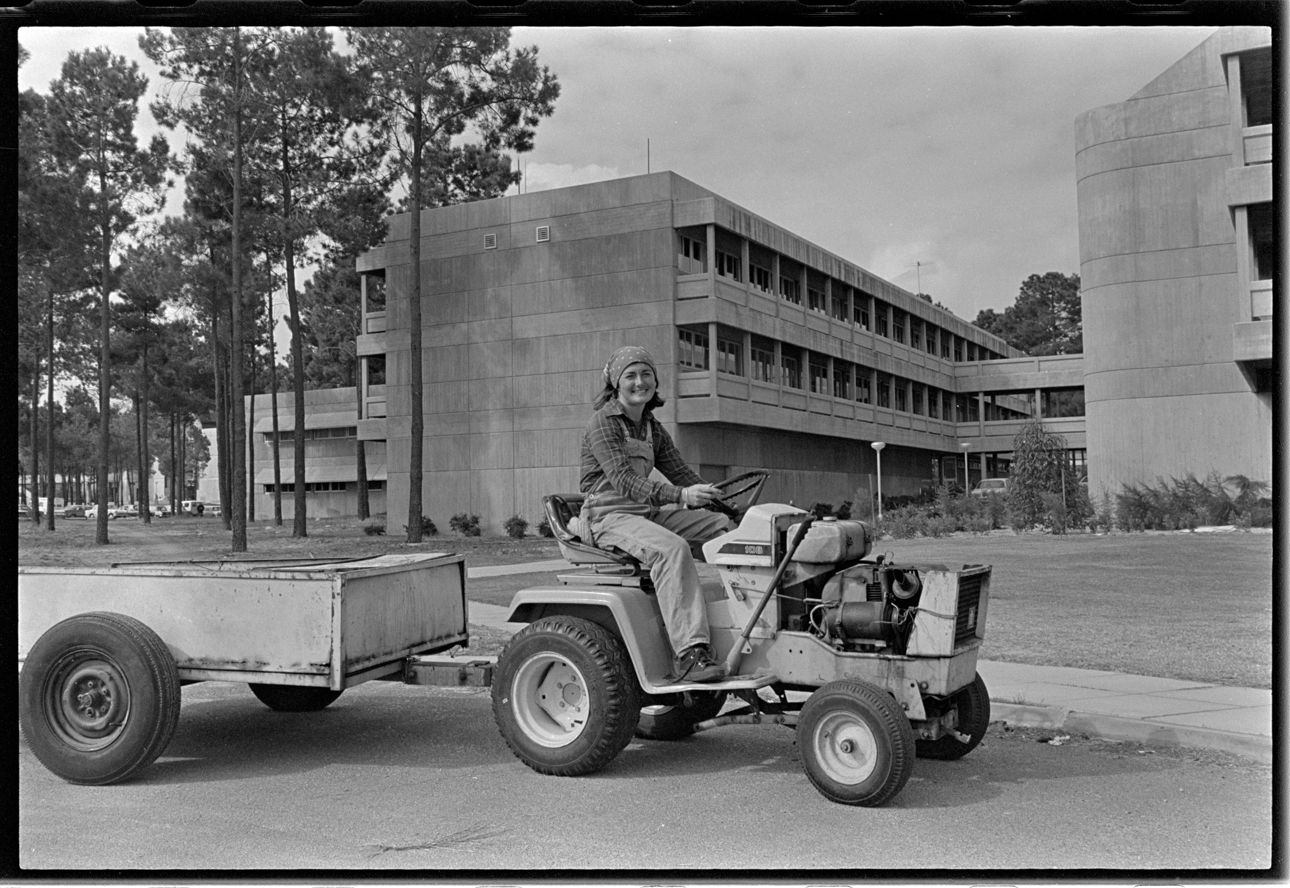
Above is documentation of the installation of a nature garden in the courtyard of the Guild precinct, and below is Edith Young, one of the WAIT gardeners on staff outside buildings 501 & 208 on the South end of campus.
Sleeve 81. Edith Young (gardener) on a small tractor with trailer.
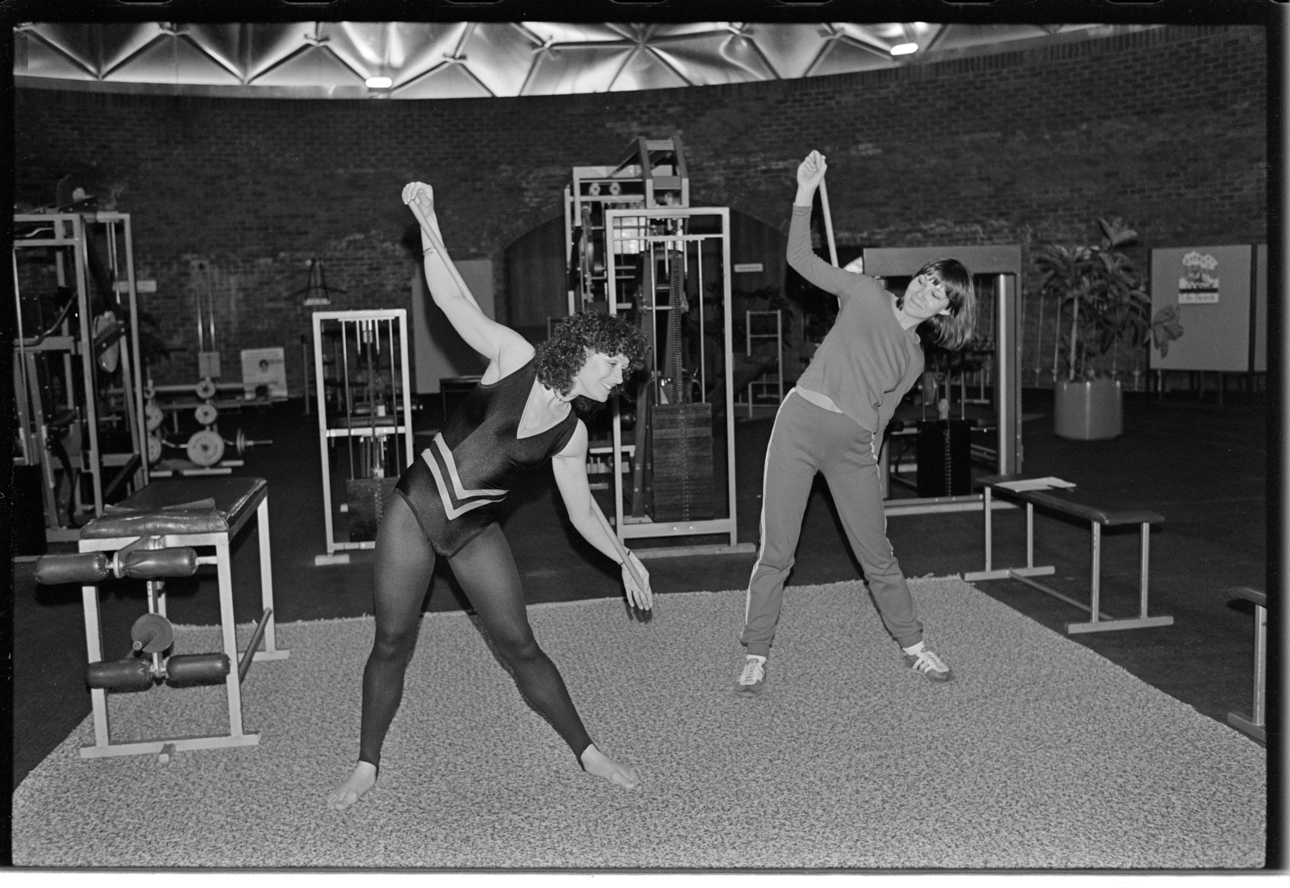
Sleeve 95. Exercising in the geodesic dome (Curtin Stadium).
A visit to campus nowadays always means sighting the large Curtin Stadium building built in 2013. Next to it resides the geodesic dome with a silver metal roof, which can be seen at the top of this image. It was built in 1977 and is still in use to this day.
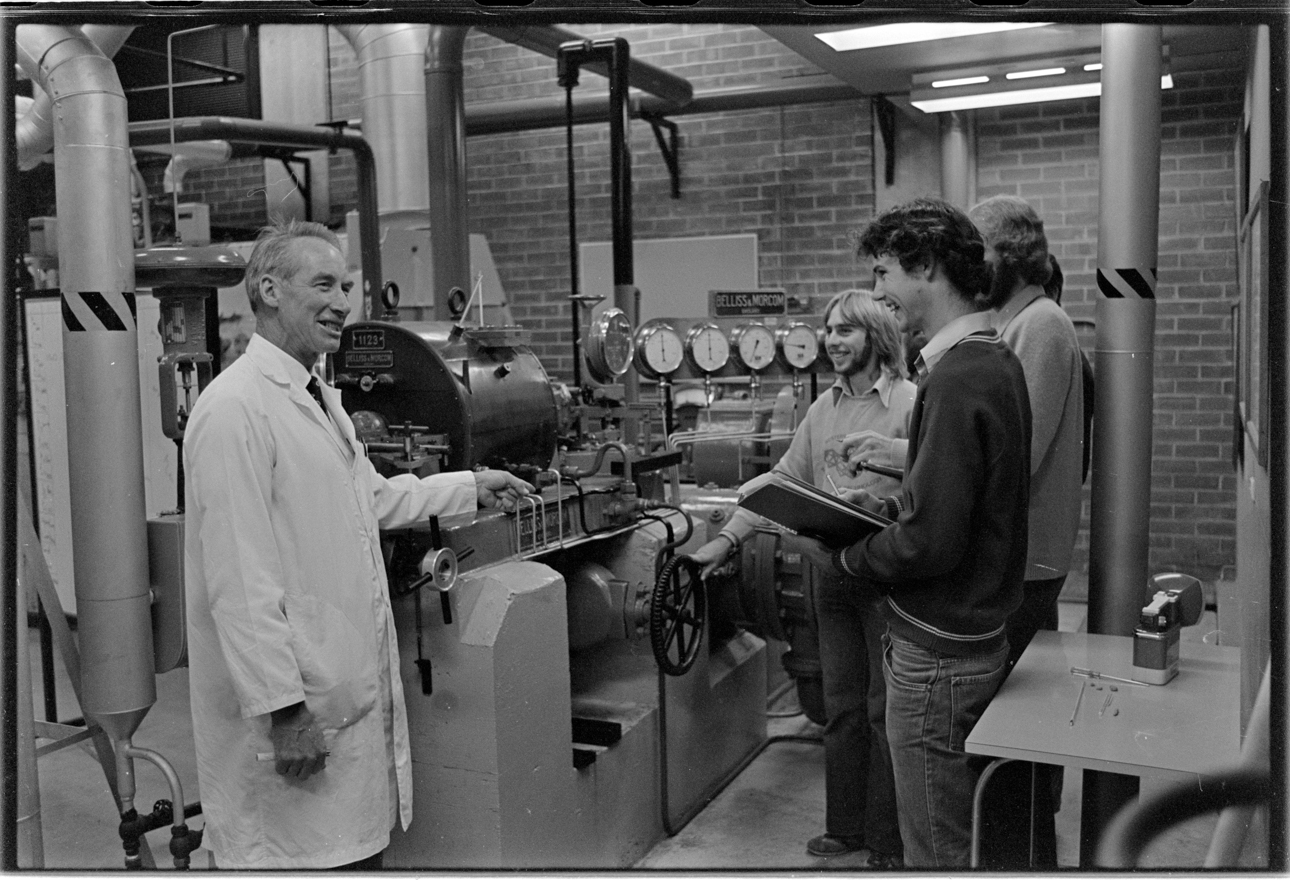
Sleeve 85. Bill Munro from Mechanical Engineering (in workshop).
Sleeve 108. Open Day.
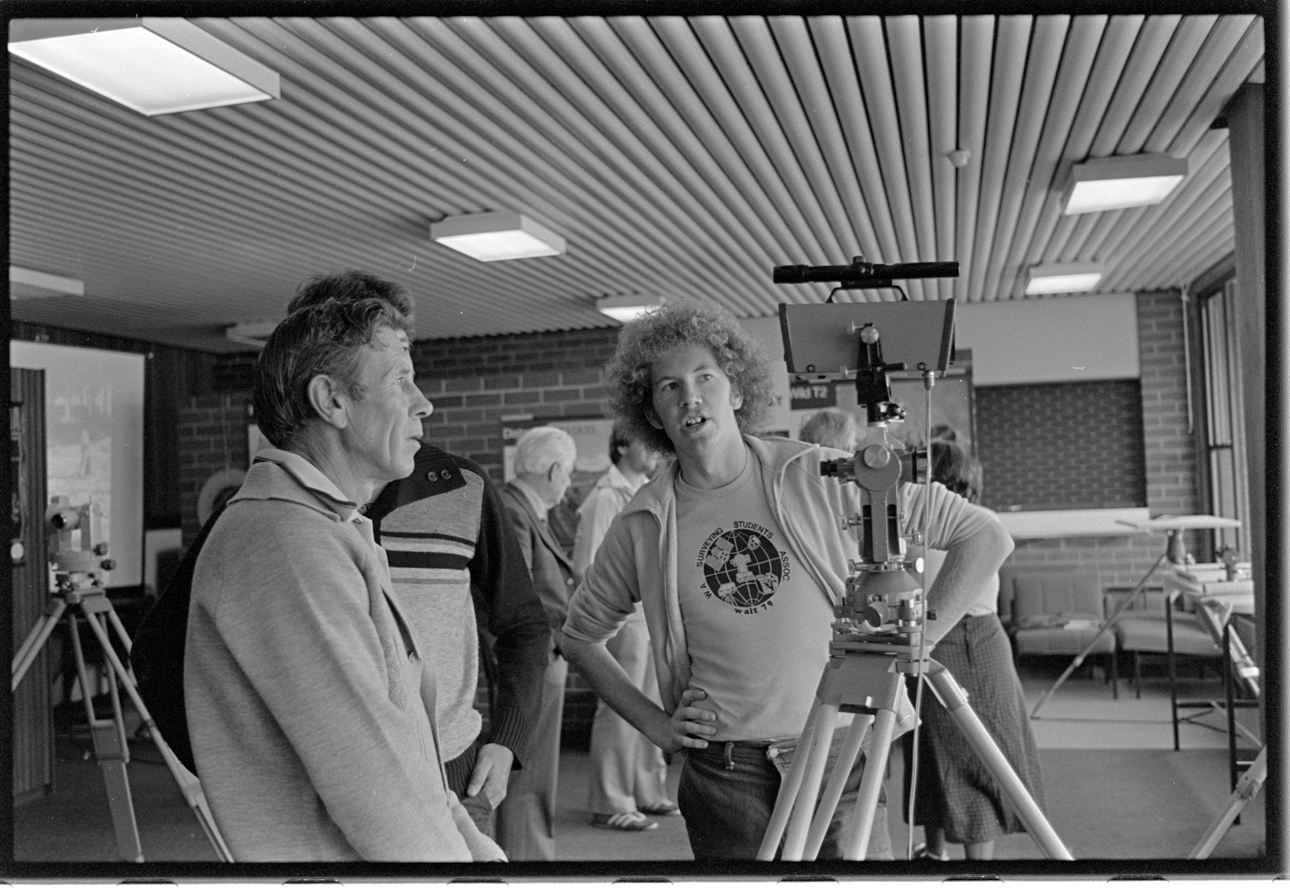
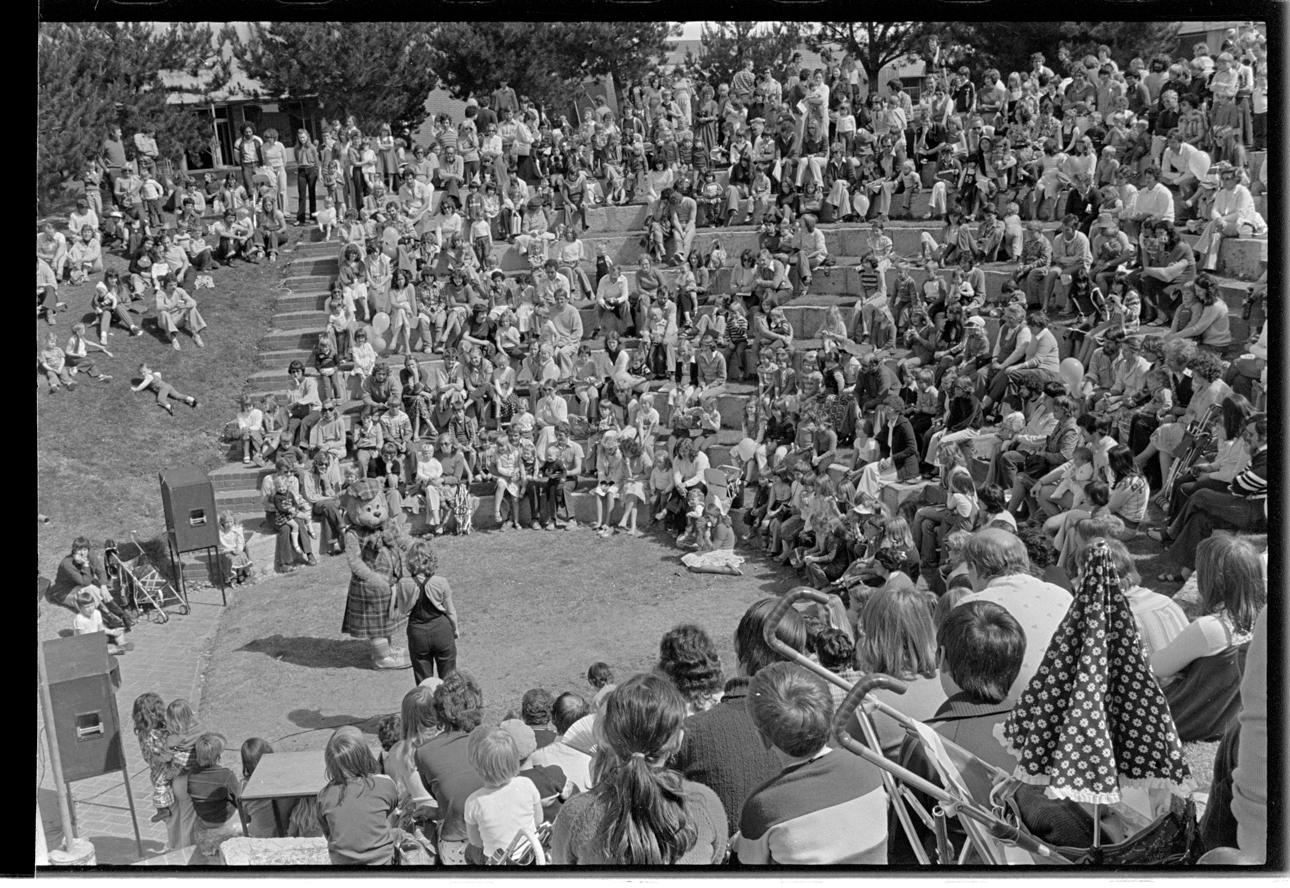
WAIT had an annual Open Day so members of the community could visit each department and learn from staff and students about what studying there was like. Above is a look into the Department of Surveying, established in 1970 at WAIT and continues to be taught at Â鶹ֱ²¥ today. Note the student’s shirt that reads “WA Surveying Students Association, WAIT 1979”.
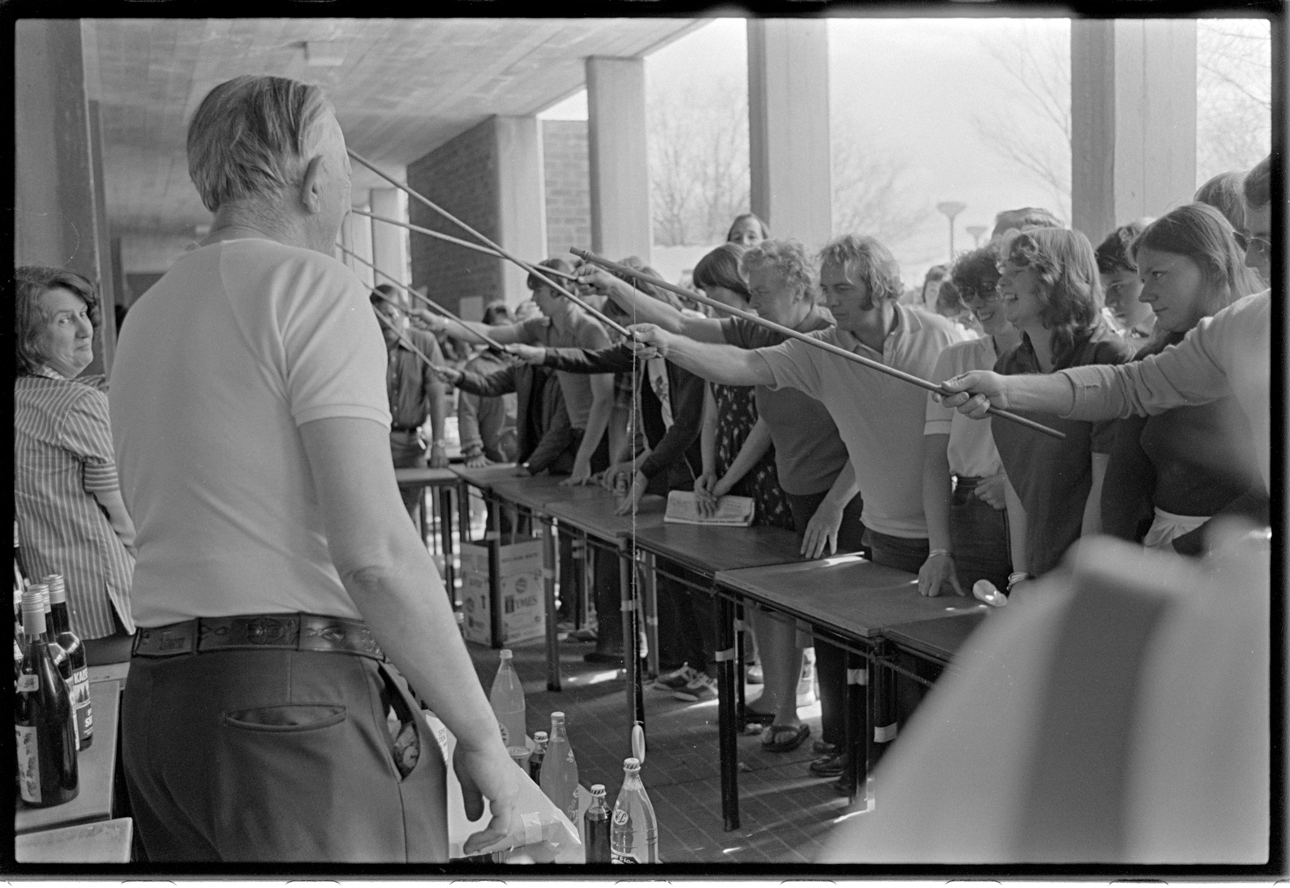
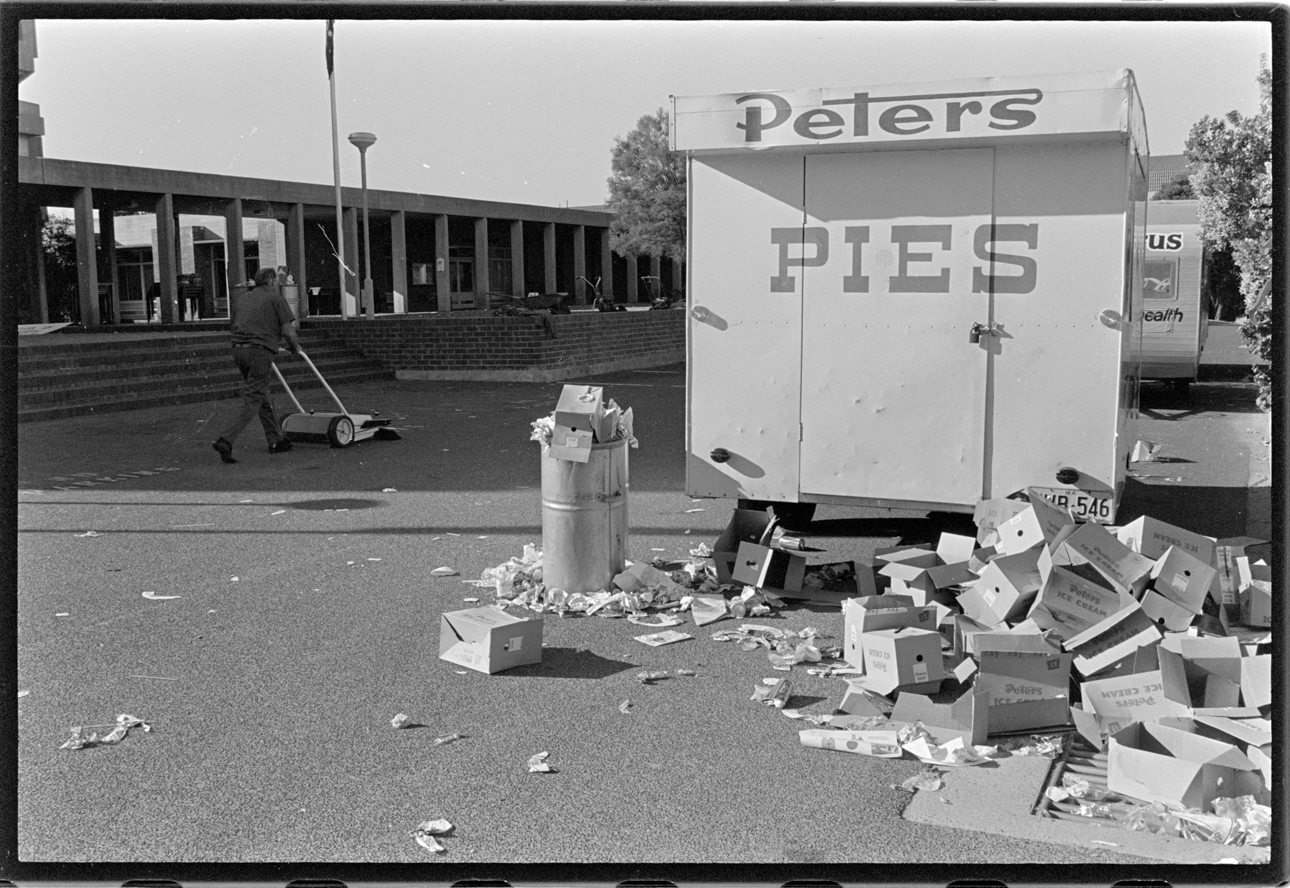
A major part of Open Day were the games, activities and performances scheduled, providing entertainment for the community.
Sleeve 108. Open Day.
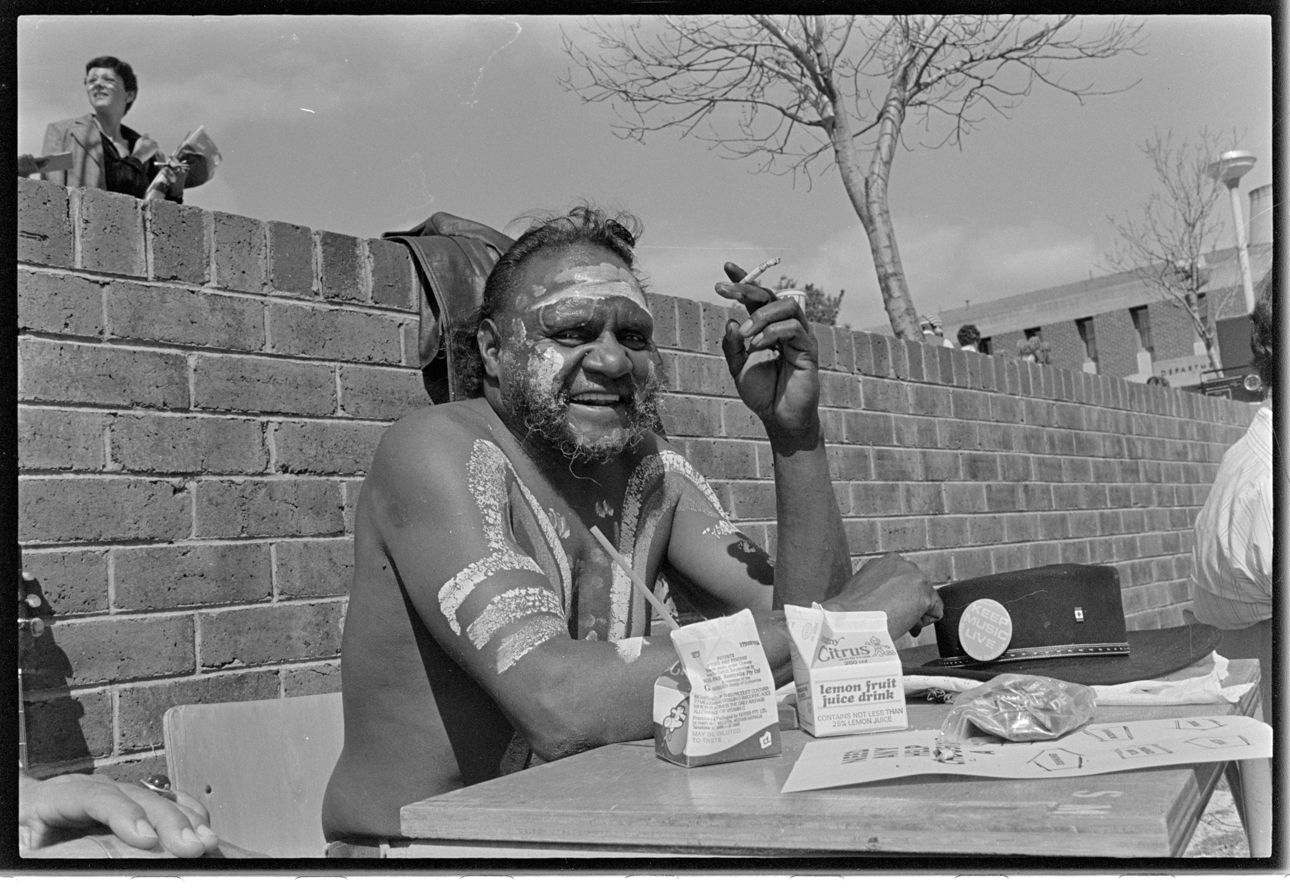
Sleeve 107. North West Aboriginal dancing troupe breaktime.
Sleeve 109. North West Aboriginal dancing troupe yarn with Aboriginal Bridging Course graduates.
Sleeve 107. Open Day and Fat Cat.
WAIT Open Days were for the whole family, children included. A visit from Fat Cat in Atkinson Forum is a headline event.
Sleeve 107. After Open Day.
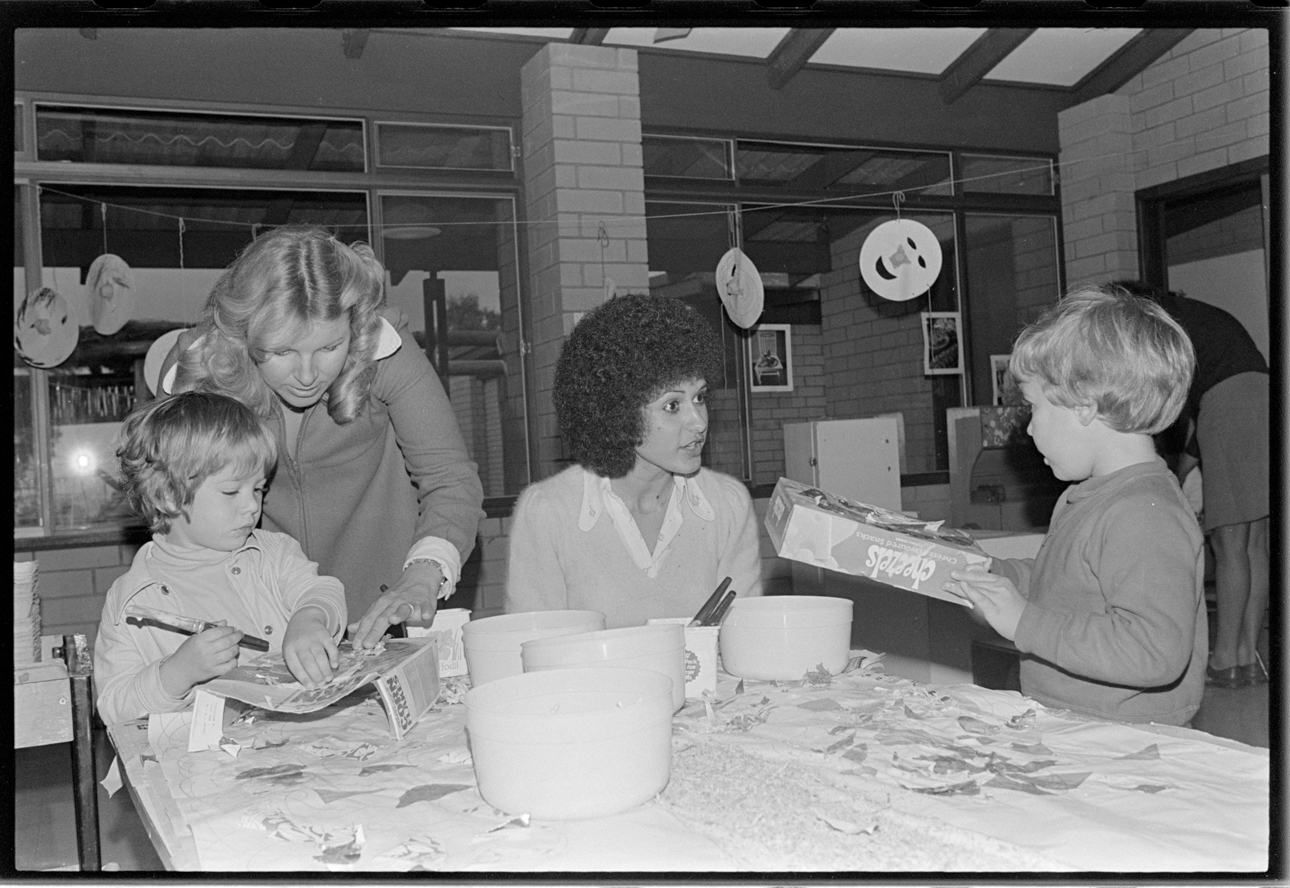
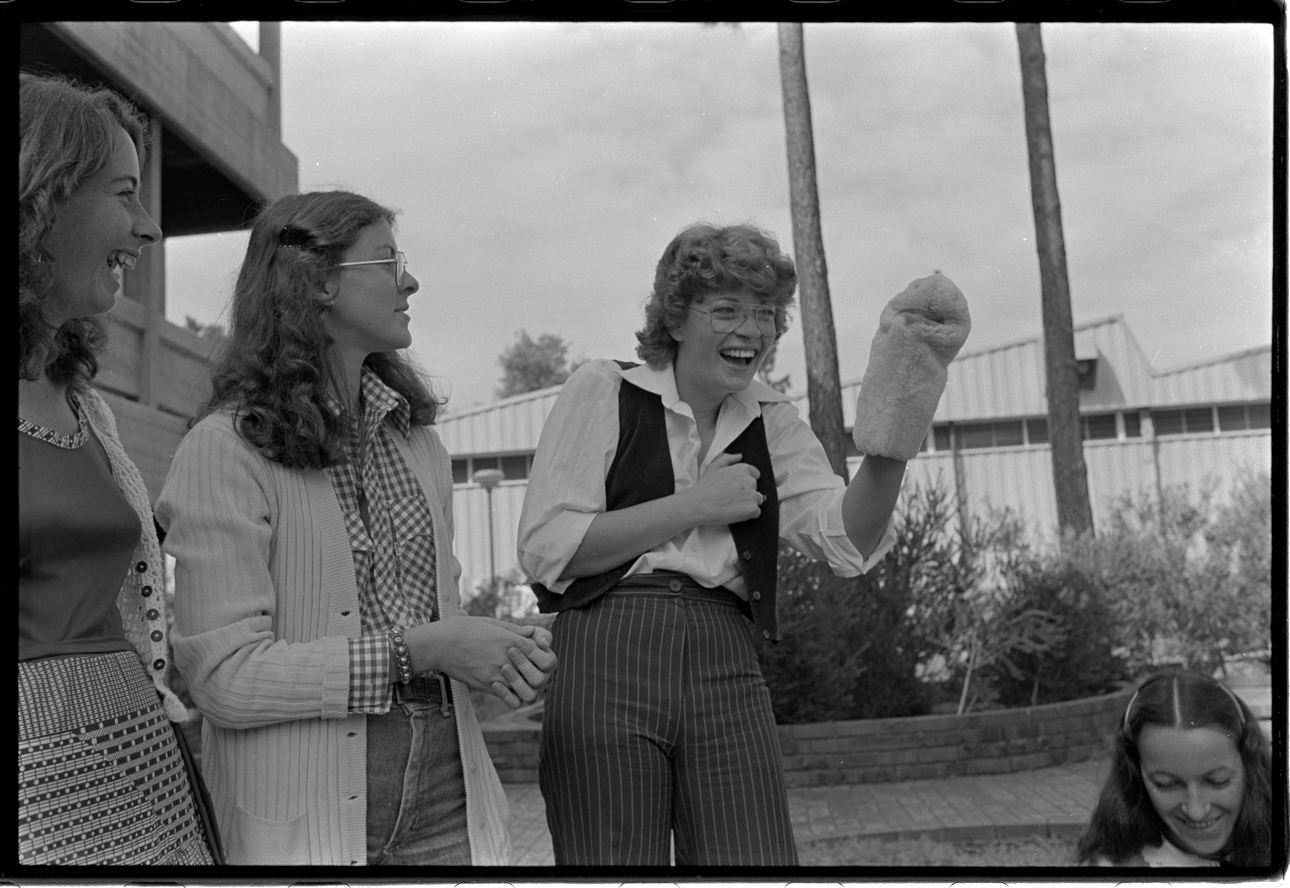
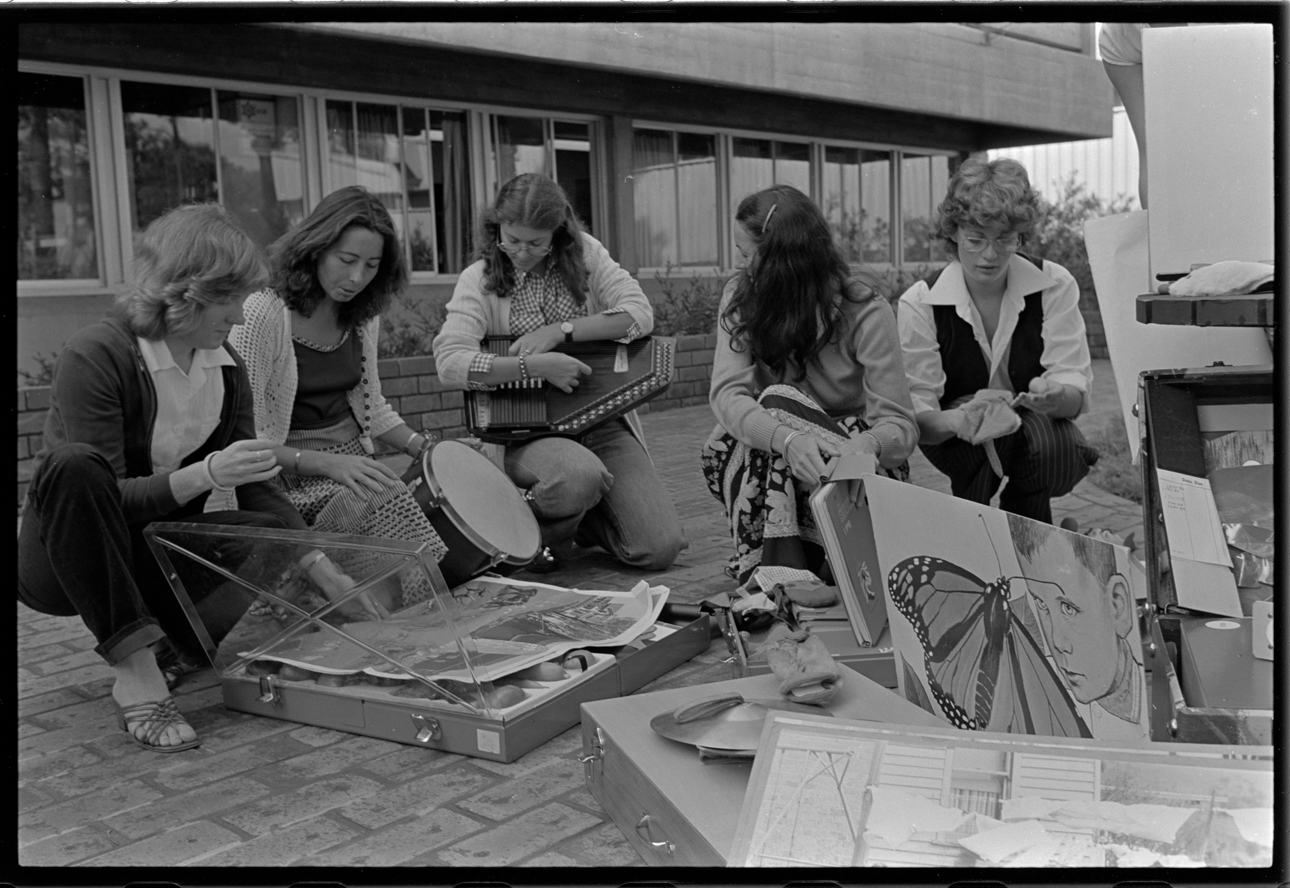
Sleeve 80. Louise Hodell and teacher education students creating materials for ”Knee High” presentation.
Sleeve 80. Louise Hodell and teacher education students creating materials for “Knee High” presentation.
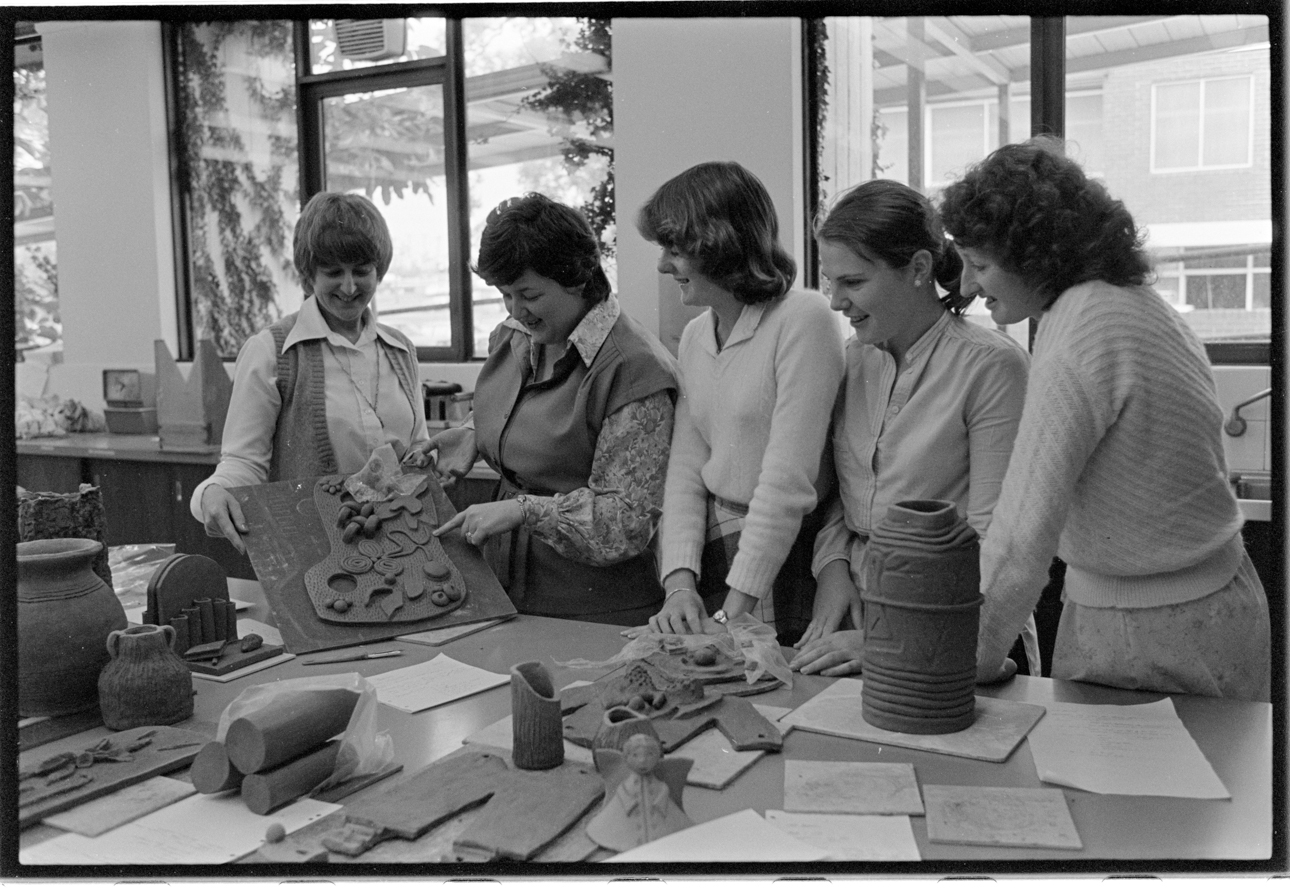
Sleeve 101. Joanne Barkel (Occupational Therapy) with clay work.
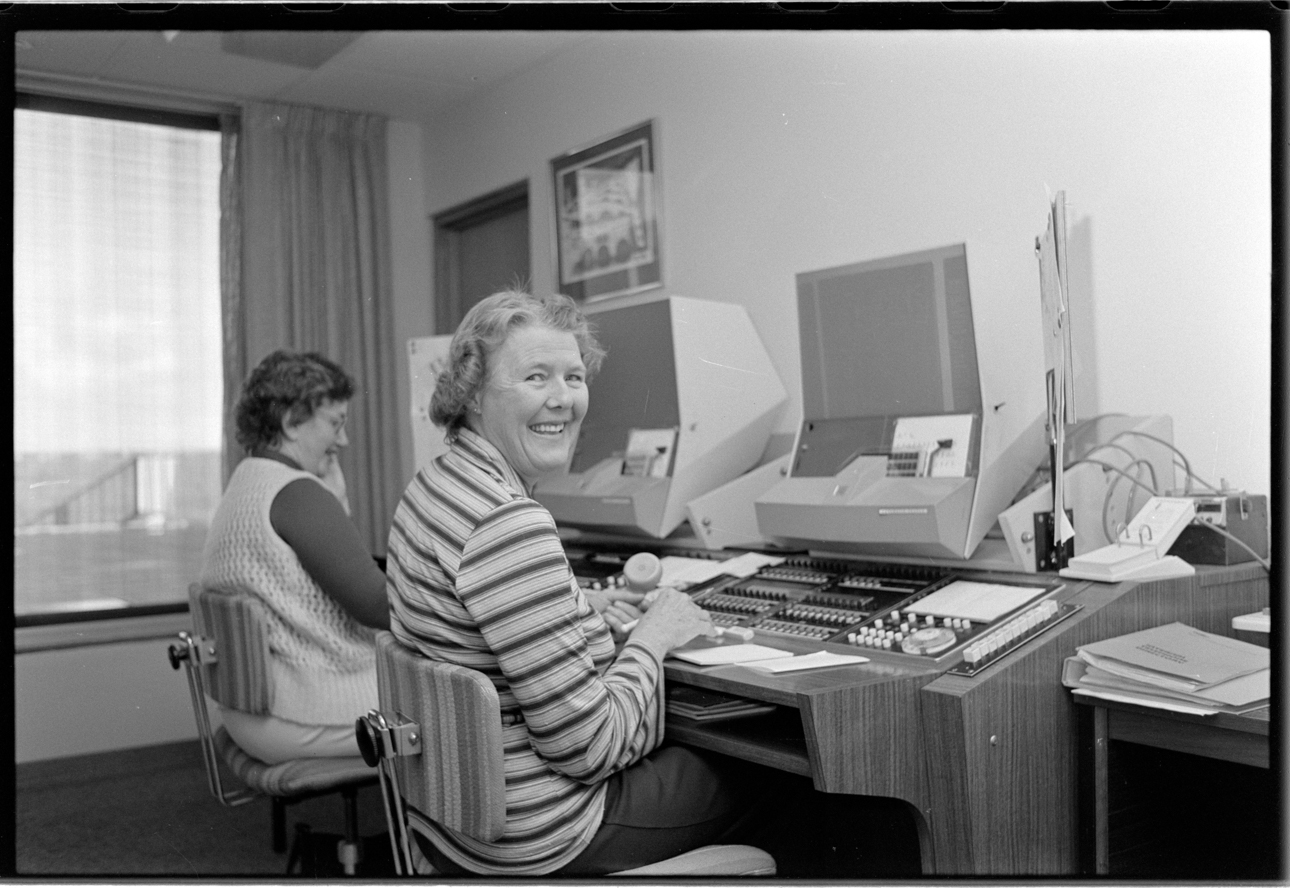
Sleeve 96. Norma the telephonist.
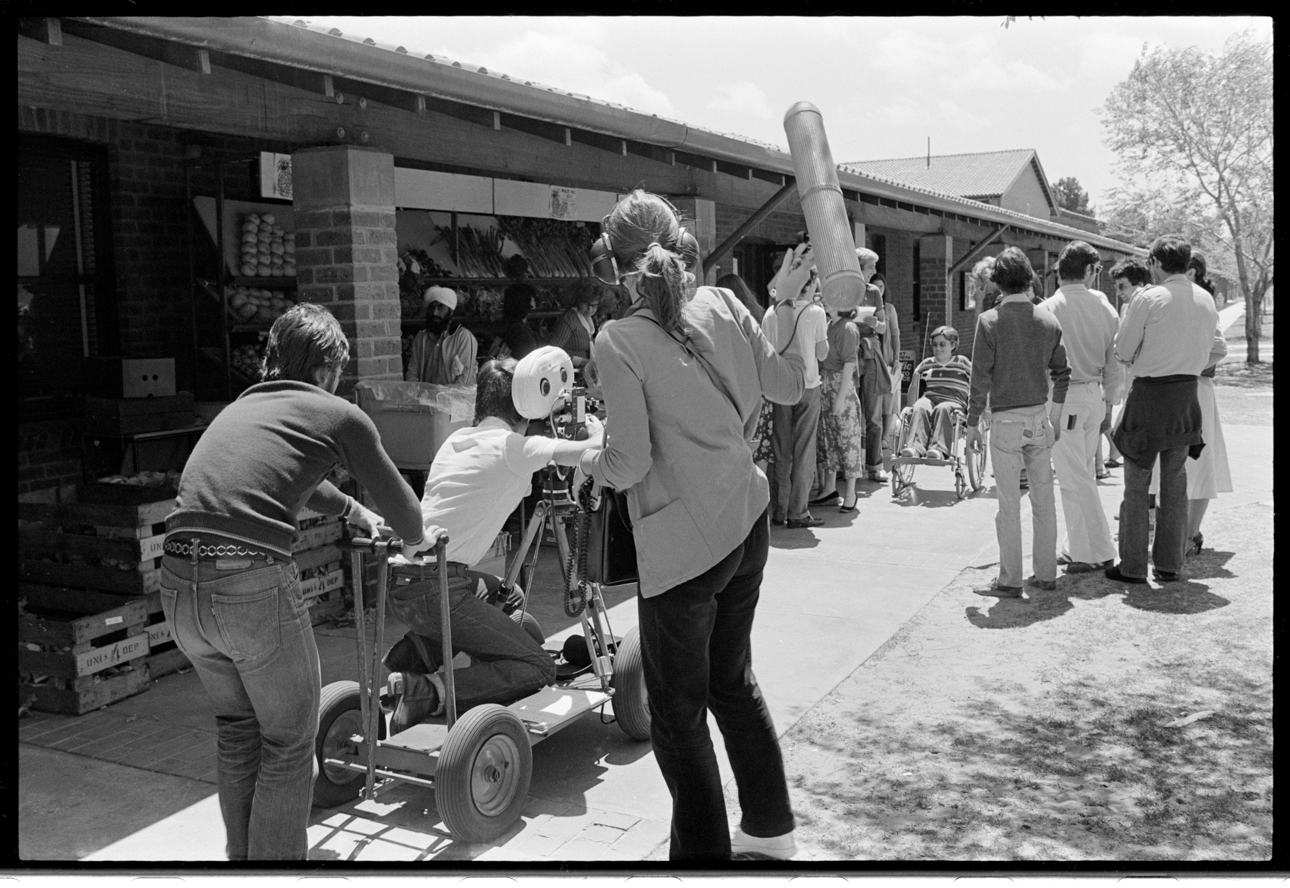
Sleeve 121. Film and TV students filming on campus.
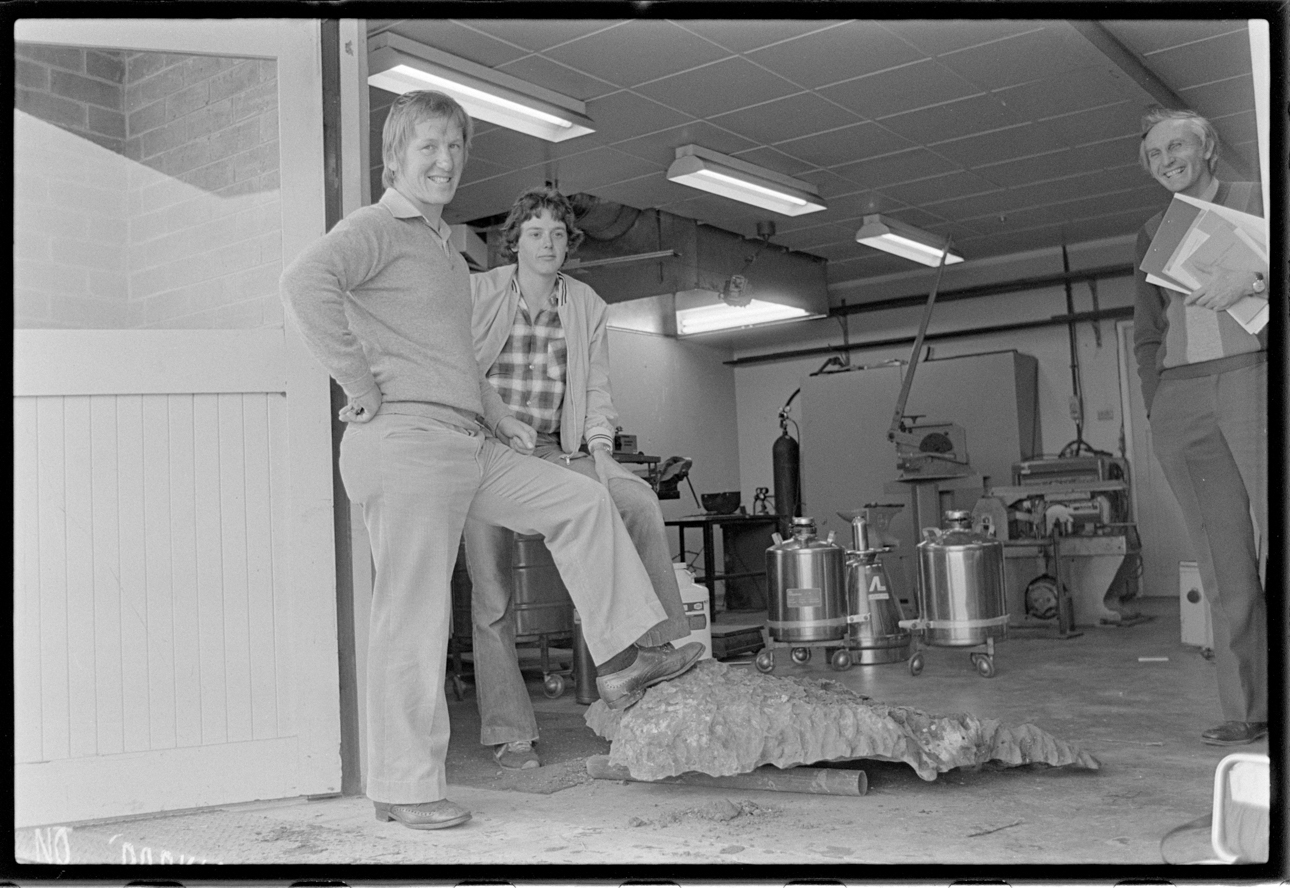
Sleeve 103. Dr John de Laeter and meteorite.
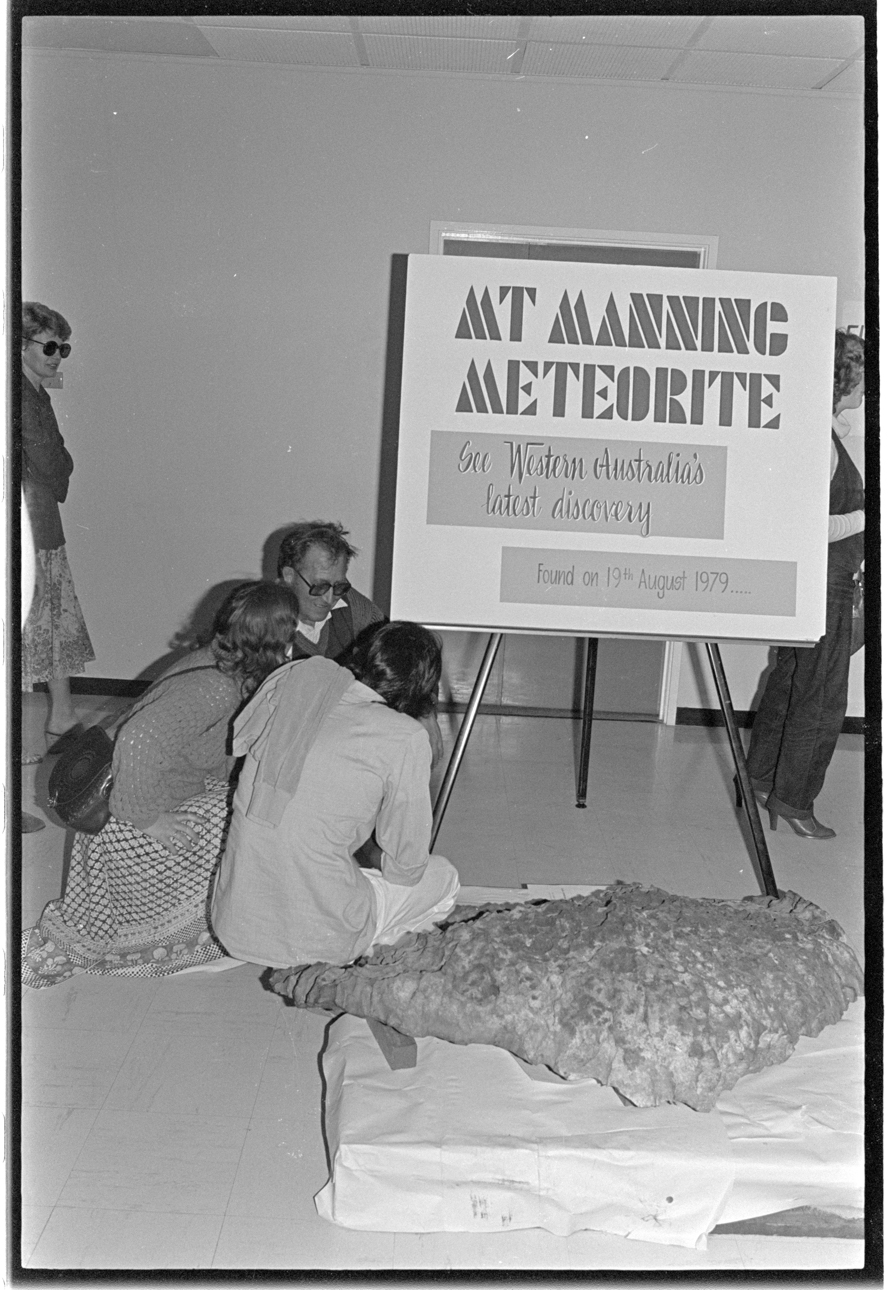
Professor John de Laeter (right) of the WAIT Department of Applied Physics was instrumental in the discovery and study of the iron meteorite found near the Mount Manning ranges in 1979. John de Laeter was at WAIT from its beginning days in 1967 and later became Acting Vice-Chancellor in 1987, retiring in 1995.
Sleeve 108. Open Day.
The meteorite now resides at the WA Museum.
Sleeve 145.
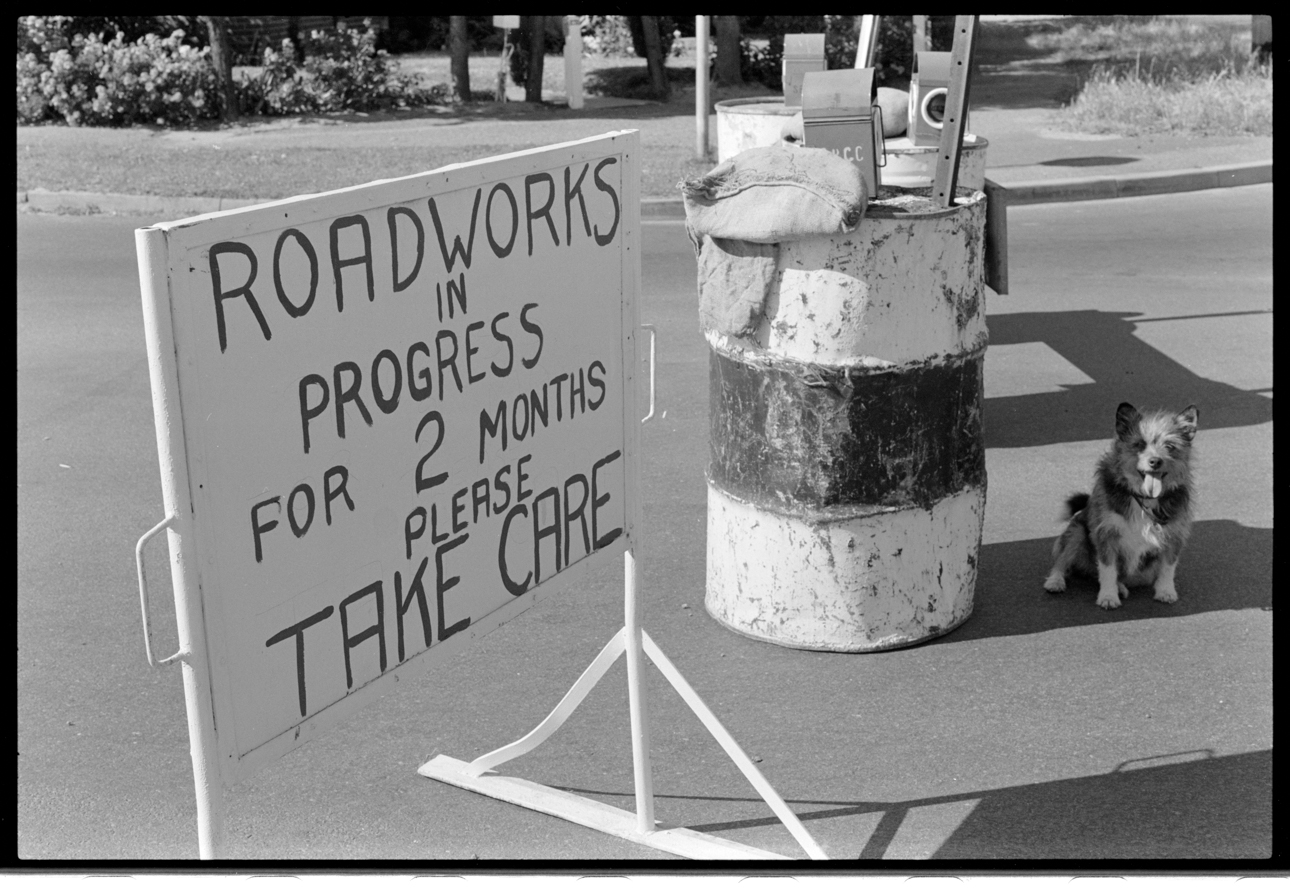
This kind of construction sign may be familiar in nature to Curtin staff and students: development and growth is always happening on campus to make way for new activities, students and spaces. This photo of a hand-painted road sign and somebody’s pet dog is a testament to the relatively small community WAIT was in its formative years compared to Â鶹ֱ²¥ today which has a systemised approach to the management of its campuses.