Curtin-led research has for the first time precisely dated some of the oldest fossils of complex multicellular life in the world, helping to track a pivotal moment in the history of Earth when the seas began teeming with new lifeforms – after four billion years of containing only single-celled microbes.
Lead author PhD student Anthony Clarke, from the Timescales of Mineral Systems Group within Curtin鈥檚 School of Earth and Planetary Sciences, said to determine the age of the fossils, researchers used volcanic ash layers like bookmarks in the geological sequence.
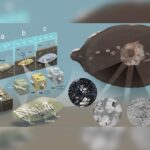
鈥淟ocated in the in Wales, which contains the richest occurrence of shallow marine life in Britain, we used outfall from an ancient volcano that blanketed the animals as a time marker to accurately date the fossils to 565 million years, accurate down to 0.1 per cent,鈥� Mr Clarke said.
鈥淲ith similar fossils found at sites around the world including in Australia, dating the fossils identifies them as being part of an ancient living community that developed as Earth thawed out from a global ice age.
鈥淭hese creatures would in some ways resemble modern day marine species such as jellyfish, yet in other ways be bizarre and unfamiliar. Some appear fern-like, others like cabbages, whereas others resembled .鈥�
Study co-author Professor Chris Kirkland, also from the Timescales of Mineral Systems Group at Curtin, said the fossils are named after the Ediacara Hills in South Australia鈥檚 Flinders Ranges, where they were first discovered, leading to the first established in over a century.
鈥淭hese Welsh fossils appear directly comparable to the famous fossils of Ediacara in South Australia,鈥� Professor Kirkland said.
鈥淭he fossils, including creatures like the disc-shaped , showcase some of the earliest evidence of large-scale multicellular organisms, marking a transformative moment in Earth鈥檚 biological history.
鈥淓diacaran fossils record the response of life to the thaw out from a global glaciation, which shows the deep connection between geological processes and biology.
鈥淥ur study underscores the importance of understanding these ancient ecosystems in order to unravel the mysteries of Earth鈥檚 past and shape our comprehension of life鈥檚 evolution.鈥�
Available online , the full research paper, 鈥�U鈥揚b zircon-rutile dating of the Llangynog Inlier, Wales: constraints on an Ediacaran shallow 1 marine fossil assemblage from East Avalonia鈥� will appear in the. (JGS), which is owned and published by the Geological Society of London. JGS publishes topical, innovative and interdisciplinary research with global reach across the full range of Earth and planetary sciences.